




Greying hair is a natural process. Premature greying — grey hair appearing in one's twenties or thirties, well before the biological timeline most people expect — is a different matter. It is a sign of accelerated melanocyte decline, driven by specific identifiable causes that classical Ayurveda understood and addressed systematically.
The melanocytes in each hair follicle produce melanin — the pigment that gives hair its colour. When melanocyte function declines, less melanin is produced and the hair that emerges from the follicle has progressively less colour. Eventually it emerges without any pigment at all, appearing white or grey. This process is irreversible once complete for any individual hair. But the rate at which it progresses across the scalp is significantly influenced by the health of the scalp environment and the protection of the melanocytes themselves.
This is where Ayurveda intervenes — not by restoring colour to grey hairs, but by protecting the melanocytes in follicles that are still actively producing pigmented hair, slowing the rate of greying and preserving natural colour for longer.
|
“Ayurveda cannot restore colour to a grey hair. But it can protect the follicles still producing colour from the conditions that accelerate their decline.” |
The Ayurvedic Cause of Premature Greying
Classical Ayurveda classifies premature greying as a Pitta disorder. Pitta is hot, sharp and transformative — in excess, it creates inflammation, oxidative damage and the accelerated breakdown of tissue structures. In the context of hair colour, excess Pitta damages the melanocytes in the follicle through oxidative stress — the same mechanism that modern research identifies as a primary driver of premature melanocyte decline.
The triggers of Pitta excess in modern life are precisely the triggers associated with premature greying in clinical observation: chronic psychological stress, excess heat, nutritional deficiency, over-processed hair and the use of harsh chemical products on the scalp. The Ayurvedic remedy is to reduce Pitta excess through cooling, antioxidant-rich herbs applied directly to the scalp in a form that reaches the follicle.
The Three Herbs for Natural Colour Preservation
Bhringraj — The Primary Herb
Bhringraj is documented in classical Ayurvedic texts specifically for its role in preserving natural hair colour and delaying greying. Its antioxidant compounds protect melanocytes from the oxidative damage that causes their decline, and its scalp-stimulating action ensures the follicles receiving those compounds are well-circulated and active. The classical title Kesharaj — king of the hair — reflects its comprehensive action across all dimensions of hair health, including colour preservation.
For a complete understanding of bhringraj's mechanisms and its broader role in hair fall and scalp health, read our bhringraj for hair fall and colour guide.
Amla — The Antioxidant Foundation
Amla's exceptional Vitamin C content provides the antioxidant protection that directly defends melanocytes against the oxidative stress driving premature pigmentation loss. Applied topically through a shampoo or conditioner, amla reaches the scalp and delivers this protection consistently with every wash. Its role in natural colour preservation is documented in classical Ayurvedic texts alongside bhringraj and is consistently observed by practitioners across generations of use.
For amla's complete action on both hair and skin, see our amla benefits for skin and hair guide.
Hibiscus — The Supporting Herb
Hibiscus completes the classical trio for colour preservation. Its polyphenols provide additional antioxidant protection to the melanocytes and its anti-inflammatory action reduces the scalp inflammation that creates the Pitta excess environment in which melanocyte decline accelerates. Together, bhringraj, amla and hibiscus address the cause of premature greying through three complementary mechanisms.
For hibiscus's full role in hair health and scalp care, see our hibiscus for hair growth guide.
How to Apply This in Practice
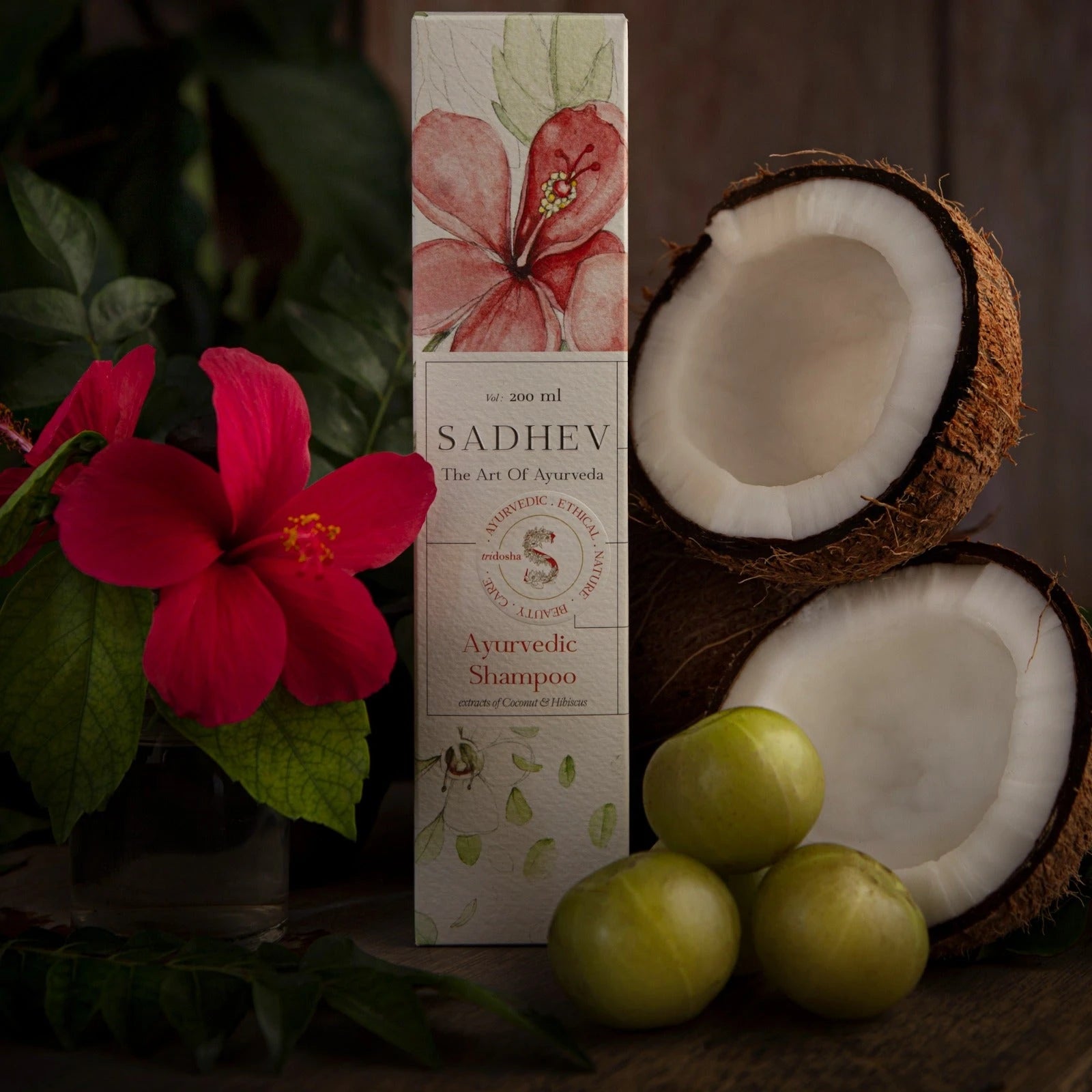
SADHEV Ayurvedic Shampoo contains all three herbs — bhringraj, amla and hibiscus — in a sulphate-free formula that delivers their protective compounds to the scalp with every wash. Switching to this as your only shampoo is the most practical way to consistently deliver the classical colour-preserving trio to the follicles.
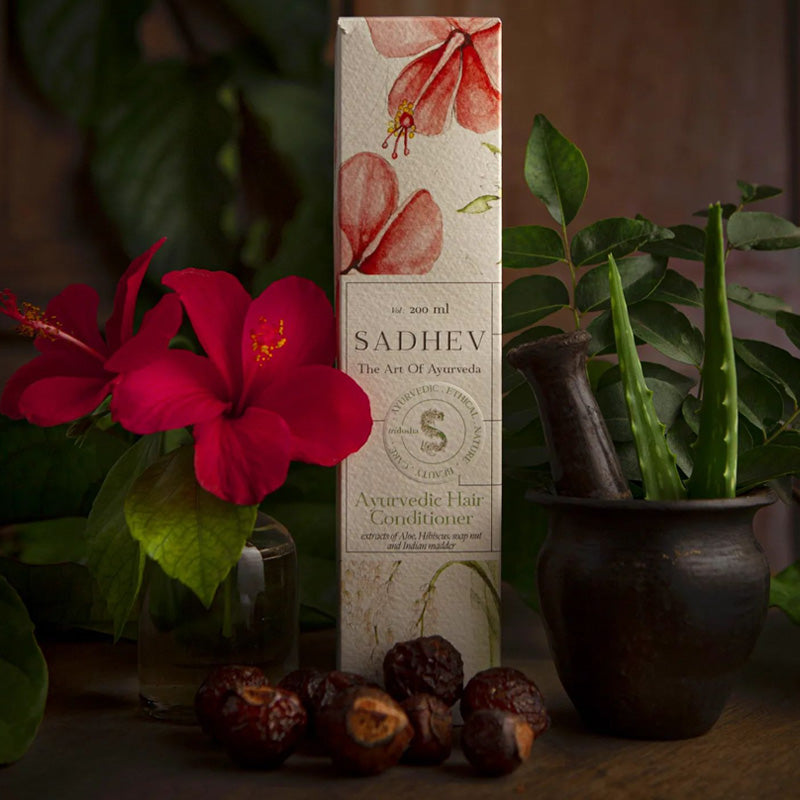
SADHEV Ayurvedic Hair Conditioner extends the contact time and adds additional nourishment to the hair shaft. Used together, shampoo and conditioner provide a complete topical delivery of the herbs that classical Ayurveda has documented for natural colour preservation.
What to Expect
This is a long-term commitment, not a short-term fix. The hairs that have already turned grey will not regain colour. The goal is the slowing of the progression — fewer new grey hairs appearing each month, and the preservation of natural colour in the follicles that are still producing it. Observable results require six to twelve months of consistent use. This timeline reflects the biology of the hair growth cycle, not the strength of the ingredients.
For the complete Ayurvedic hair care routine that incorporates this colour-preservation protocol into a daily and weekly practice, see our Ayurvedic hair care routine guide.
SADHEV. Luxury Ayurvedic Care. Ayurveda in our bloodline.
Begin the Ayurvedic colour-preservation protocol with SADHEV Ayurvedic Shampoo and SADHEV Ayurvedic Hair Conditioner. Explore the full SADHEV hair care range.
— Written by SADHEV Ayurvedic Experts, rooted in a 200-year vaidyar lineage.


