




Ayurveda has become one of the most misunderstood words in modern skincare. It is used to sell everything from genuinely formulated, clinically documented products to poorly made ones with a Sanskrit name on the label and nothing else Ayurvedic about them. This confusion has produced a set of myths that get repeated so often they are treated as fact — by both sceptics who dismiss Ayurveda entirely and enthusiasts who accept any claim as long as it sounds traditional.
The truth sits between both extremes. Genuine Ayurvedic formulation is a documented, mechanism-based system with thousands of years of clinical observation behind it — and it is not exempt from the basic rules of skin biology that govern how any ingredient, natural or synthetic, actually behaves on skin. Here are the ten myths that come up most often, corrected with the actual science.
|
“Genuine Ayurveda is not anti-science. It is an older, observation-based science that modern biochemistry is increasingly able to explain mechanistically — which is different from being exempt from biology altogether.” |
|
MYTH: Natural ingredients are always safer than synthetic ones. |
|
FACT: Safety depends on the specific compound, its concentration and how it is formulated — not on whether it originated in a plant or a lab. Poison ivy, certain essential oils at high concentration, and several plant-derived compounds can cause significant irritation or allergic reaction. Conversely, many synthetic compounds are extensively safety-tested and well-tolerated. What matters is the specific ingredient, its concentration, and whether it has been formulated correctly — not its origin story. |
This is why SADHEV specifies exact sourcing and concentration details rather than simply listing herb names. Our Kumkumadi Tailam specifies Pulwama saffron processed within 24 hours of harvest — because the processing window determines the crocin concentration, and crocin concentration determines whether the product actually works.
|
MYTH: If a product is Ayurvedic, you do not need sunscreen. |
|
FACT: No Ayurvedic formulation, however well-made, blocks UV radiation the way a sunscreen does. Ayurvedic antioxidant ingredients — moringa, amla, saffron — provide a genuinely valuable second layer of defence by neutralising the free radicals that UV generates after it penetrates the skin. But they do not replace the physical or chemical UV-blocking mechanism that a sunscreen provides. Skipping sunscreen because you use Ayurvedic products is one of the most common and most damaging misconceptions in Indian skincare. |
This is exactly why SADHEV Sunscreen Gel SPF 50 PA+++ combines a zinc oxide mineral filter with moringa and liquorice — the filter blocks UV, the Ayurvedic antioxidants address what gets through. Neither replaces the other.
|
MYTH: Ayurvedic products work overnight, or they do not work at all. |
|
FACT: Genuine Ayurvedic formulations work through cumulative mechanisms — antioxidant protection, cellular renewal support, anti-inflammatory action — that operate over the skin's natural 28 to 40 day renewal cycle, not instantly. A product that promises overnight transformation is either using an aggressive synthetic active alongside herbal marketing, or making a claim that does not match how skin actually works. Real results from ingredients like saffron, bakuchiol and amla appear progressively over four to twelve weeks of consistent use. |
Every deep ingredient guide in the SADHEV library states an honest, week-by-week timeline rather than promising immediate results — because that timeline is what the biology actually supports.
|
MYTH: Ayurvedic hair colour is the same as chemical dye, just with a plant name. |
|
FACT: Genuine henna and indigo colour hair through a completely different chemical mechanism than synthetic dye. Lawsone from henna bonds covalently to the keratin in the hair shaft — it does not use ammonia to open the cuticle or peroxide to strip existing pigment the way permanent chemical dye does. The result is genuinely different: no ammonia, no peroxide fumes, and hair that gets progressively stronger with each application rather than progressively more damaged. |
The full chemistry of how this works — and the honest trade-offs, including the fact that natural colour cannot produce blonde or fashion shades — is covered in detail in our natural hair colour guide.
|
MYTH: Sulphate-free shampoo does not clean hair as well as regular shampoo. |
|
FACT: Sulphate-free formulations using saponin-based cleansers like reetha clean effectively — they remove sebum, dirt and product residue just as sulphates do. What they do not do is strip the scalp's protective lipid barrier in the process. The "squeaky clean" feeling that sulphates produce is barrier stripping, not superior cleaning. Hair washed consistently with a sulphate-free, reetha-based shampoo is measurably cleaner in scalp health terms even though it may feel different during the transition period. |
The full explanation of why reetha's saponin molecules clean without penetrating the hair shaft — the mechanism that makes this possible — is in our reetha guide.
|
MYTH: Bakuchiol is just a marketing alternative to retinol — it does not actually work the same way. |
|
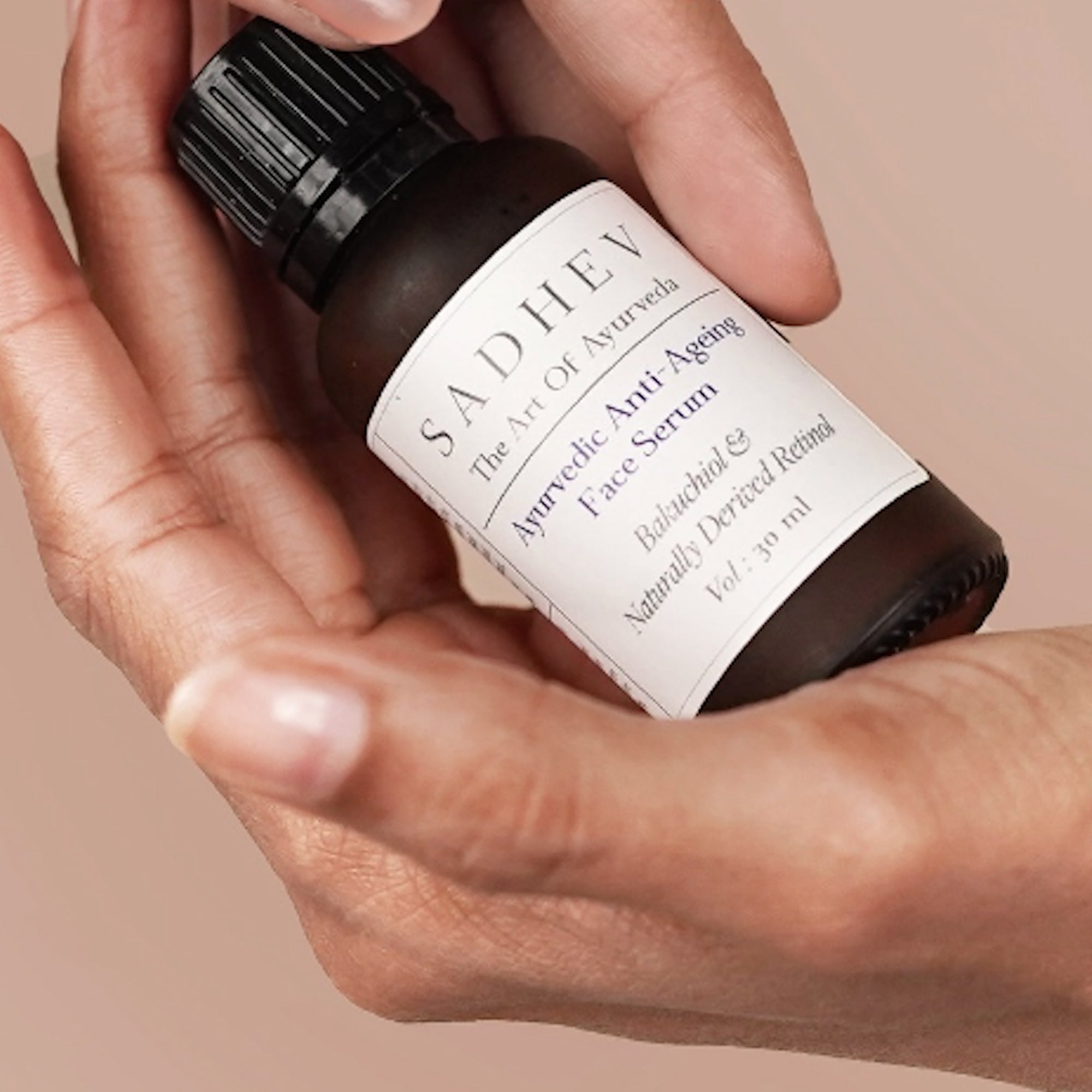
FACT: The 2018 British Journal of Dermatology study directly compared bakuchiol at 0.5% concentration to retinol at 0.5% concentration and found comparable results for wrinkle reduction, firmness and pigmentation — achieved through a different molecular mechanism that does not cause retinol's characteristic irritation, peeling and sun sensitivity. This is documented clinical research, not a marketing claim. |
The complete mechanism — why bakuchiol reaches the same collagen-stimulating outcome as retinol without the receptor-binding that causes retinol's side effects — is explained in our bakuchiol guide.
|
MYTH: More product means faster results. |
|
FACT: Applying more of a serum, oil or cream than the recommended amount does not accelerate results — skin can only absorb a certain amount of active ingredient at a time, and excess product typically sits on the surface, gets wiped away by clothing or pillowcases, or in some cases clogs pores and worsens congestion. Kumkumadi Tailam is recommended at three to five drops specifically because that is the amount the skin's lipid layer can absorb effectively in one application — using more does not deepen the effect, it just wastes product. |
|
MYTH: Ayurvedic products cannot cause allergic reactions because they are natural. |
|
FACT: Natural ingredients can and do cause allergic and irritant reactions — essential oils, certain plant extracts and even ingredients like amla or hibiscus can trigger sensitivity in some individuals, exactly as any cosmetic ingredient can. A patch test before full application is sensible practice regardless of whether a product is labelled natural, Ayurvedic or synthetic. The assumption that natural equals hypoallergenic is one of the most common and potentially risky misconceptions in the category. |
|
MYTH: Ayurvedic skincare is only about herbs — the formulation and delivery system do not matter. |
|
FACT: The delivery vehicle determines whether an active ingredient actually reaches its target in the skin. Saffron's crocin compounds, for example, are lipophilic — they need an oil base like sesame oil to penetrate the skin's lipid layer effectively. The same saffron extract in a water-based product would deliver dramatically less of the active compound. This is why format — oil, gel, serum, cream — is as much a formulation decision as which herbs are included, and why SADHEV's Kumkumadi Tailam is an oil rather than a water-based serum despite saffron being water-soluble in its raw form. |
|
MYTH: Doshas are just a marketing concept with no real skin science behind them. |
|
FACT: Vata, Pitta and Kapha describe observable patterns in skin behaviour — dryness and fine lines (Vata), inflammation and reactivity (Pitta), congestion and excess oil (Kapha) — that map reasonably well onto modern dermatological categories of dry, sensitive-reactive and oily-congested skin. The dosha framework is a genuinely useful diagnostic lens for choosing the right ingredients, even though the terminology predates modern dermatology by thousands of years. Dismissing it as pure marketing overlooks that it is a working clinical framework that classical Ayurvedic practitioners used to guide actual treatment decisions. |
The Honest Takeaway
Ayurveda is not automatically safer, automatically faster, or automatically superior simply because it is traditional. And it is not a pseudoscience with no mechanism behind it simply because it predates modern biochemistry. The genuine version of Ayurvedic skincare — documented formulations, specific sourcing, correct delivery systems, honest timelines — is a mechanism-based system that produces real, measurable results when done correctly. The myths on both sides of this debate come from treating Ayurveda as either magic or marketing, when it is neither.
The way to evaluate any Ayurvedic product, including SADHEV's, is the same way you would evaluate any skincare product: what is the specific active ingredient, what is its documented mechanism, what concentration is used, and what timeline should you realistically expect. If a brand cannot answer these questions specifically, the Ayurveda label alone is not a reason to trust the product.
|
“The test for any Ayurvedic claim is the same as for any skincare claim — what is the mechanism, what is the concentration, and what timeline does the biology actually support.” |
For the complete guide to how SADHEV formulations are built — sourcing, concentration and delivery system explained for every hero ingredient: see our deep ingredient series, starting with our Kumkumadi Tailam guide.
For the complete Ayurvedic skincare and body care ritual built on these principles: see our complete SADHEV ritual guide.
SADHEV. Luxury Ayurvedic Care. Ayurveda in our bloodline.
Explore SADHEV formulations built on documented mechanisms, not marketing claims.
— Written by SADHEV Ayurvedic Experts, rooted in a 200-year vaidyar lineage.


