






Hair fall. Dryness. Frizz. Premature greying. Slow growth. Dandruff. These are not new problems. Ayurveda has been addressing them for thousands of years — not with a single hero ingredient but with a complete system of care that works with the biology of the scalp and hair rather than around it.
The modern hair care market offers hundreds of products promising to fix each of these concerns individually. The Ayurvedic approach is different. It starts with the understanding that most hair concerns share a common root: an imbalance in scalp health. Restore the scalp and the hair follows.
A well-built Ayurvedic hair care routine does exactly this. It is not complicated. It does not require twelve products. It requires the right steps, in the right order, with ingredients that have a demonstrated history of working — not a marketing claim, but a lineage of use across generations of vaidyar practice.
Here is how to build one.
|
“Ayurvedic hair care begins at the scalp. Everything above it is a consequence of what happens below.” |
Understanding the Ayurvedic Approach to Hair
Classical Ayurveda classifies hair concerns by dosha. Vata imbalance produces dry, brittle, frizzy hair prone to breakage and split ends. Pitta imbalance produces premature greying, hair fall and a sensitive, inflamed scalp. Kapha imbalance produces oily, limp hair with slow growth and a tendency toward dandruff.
Most people present a combination of these rather than a single dosha concern — which is why the Ayurvedic routine is built around practices that benefit all hair types rather than targeting a single issue. The oil step nourishes and balances. The cleanse removes without stripping. The condition restores. The treatment protects. Each step has a specific role and a specific place in the sequence.
Follow the sequence consistently and the scalp finds its own balance. The hair concerns that seemed to require targeted solutions begin to resolve themselves as the underlying conditions that caused them improve.
The Weekly Oiling Ritual
This is the foundation of Ayurvedic hair care and the step most commonly skipped in modern routines. In classical Ayurveda, oiling the scalp before washing is not optional. It is the practice that makes everything else more effective.
|
Apply a warm Ayurvedic hair oil to the scalp and massage gently using circular motions with the fingertips. This serves several functions simultaneously: it nourishes the scalp, stimulates blood circulation to the hair follicles, strengthens the hair shaft from root to tip, and creates a protective barrier that prevents the shampoo from stripping too aggressively during the cleanse. The massage itself is as important as the oil. Five to ten minutes of firm, circular scalp massage before washing significantly improves circulation and follicular health over time. In Ayurveda this practice is called Shiro Abhyanga and it is considered one of the most effective treatments for hair fall and premature greying. Leave the oil on for a minimum of 30 minutes. For deeper nourishment, leave it overnight and wash in the morning. For hair fall concerns, twice-weekly oiling is recommended. For maintenance, once a week is sufficient. |
The Wash Day Routine
The wash day routine follows the oiling session. Done correctly, it cleanses thoroughly without undoing the nourishment the oil has provided to the scalp and shaft.
|
Step 2 — Cleanse — Sulphate-Free, Always |
|
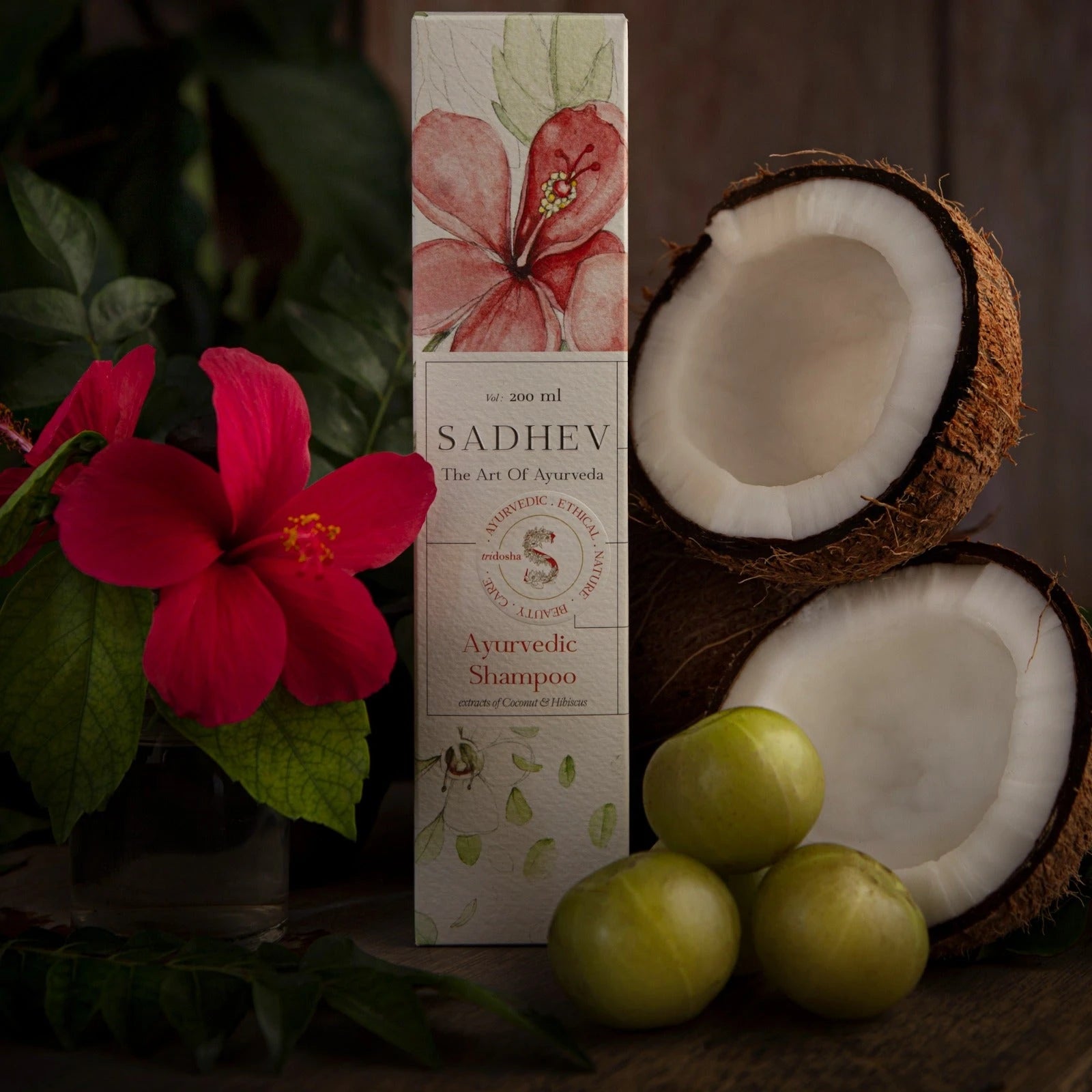
Sulphates are the most common reason hair care routines fail. They cleanse effectively but strip the scalp of its natural oils so completely that the sebaceous glands overcompensate by producing more oil — creating a cycle of greasiness, over-washing and progressive scalp imbalance. Classical Ayurveda never used sulphates. It used saponin-rich botanicals like reetha, shikakai and soap nut that cleanse gently without stripping. SADHEV’s Ayurvedic Shampoo uses this same principle — bhringraj, amla, hibiscus, curry leaves and reetha in a sulphate-free formula that cleanses the scalp without disrupting its natural balance. Wet hair thoroughly before applying. Work into a light lather from scalp to ends. Rinse well and repeat once if needed. Use daily if your scalp requires it — the formula is gentle enough. |
|
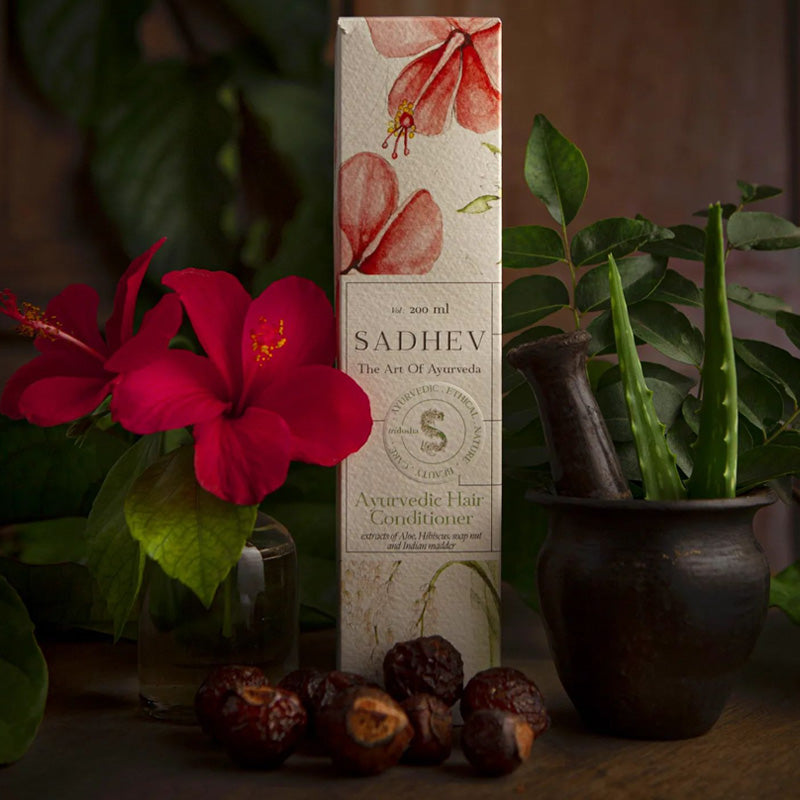
Even the gentlest shampoo opens the hair cuticle during cleansing. The conditioner closes it again — locking in moisture, smoothing the cuticle surface, reducing frizz and making the hair more resistant to mechanical damage during drying and styling. Apply SADHEV’s Ayurvedic Hair Conditioner to clean, wet hair from mid-lengths to ends. Avoid the scalp — the scalp does not need conditioning and applying conditioner there can weigh the roots down. Leave for two to three minutes to allow the hibiscus, aloe vera and reetha to penetrate the hair shaft. Rinse thoroughly. The difference in texture is immediate and cumulative with consistent use. For very dry or damaged hair, leave the conditioner on for five minutes before rinsing. For fine hair, use sparingly to avoid weight at the roots. |
|
After washing and conditioning, hair is clean and the cuticle is sealed — but it is also at its most vulnerable to heat, humidity and mechanical stress. A leave-in treatment applied before drying creates a protective layer that shields the hair shaft through everything that follows. SADHEV’s Anti-Frizz Leave-In Hair Serum is applied to damp hair after towel drying. Take a few drops on the palm, distribute through mid-lengths and ends, and style as usual without rinsing. The rice extract strengthens the hair fibre from within. Amla and holy basil nourish the scalp. The result is hair that is smooth, manageable and protected from humidity without heaviness or residue. This step is especially important for curly, wavy or chemically treated hair, which is more porous and more susceptible to frizz and breakage. |
The Complete Routine at a Glance
Oil the scalp 30 minutes to overnight before washing. Massage for five to ten minutes. Cleanse with a sulphate-free Ayurvedic shampoo, working from scalp to ends. Condition from mid-lengths to ends, leave for two to three minutes, rinse thoroughly. Apply leave-in serum to damp hair before styling. Repeat the oiling and washing cycle once or twice a week depending on your hair type and concern.
That is the complete routine. Four products. Four steps. A sequence that Ayurveda has understood for thousands of years and that a 200-year vaidyar lineage has refined into formulations that work with the biology of your hair rather than against it.
|
“Healthy hair is not the result of the right product. It is the result of the right practice — followed consistently.” |
Adapting the Routine to Your Concern
For hair fall: prioritise the oiling step. Twice-weekly scalp massage with Ayurvedic oil is the single most effective intervention for hair fall that does not have an underlying medical cause. Give it eight weeks of consistency before assessing results.
For dandruff: focus on scalp cleansing. Use the shampoo regularly and ensure the scalp is fully rinsed after conditioning. Avoid leaving conditioner on the scalp. The bhringraj and amla in the shampoo have natural scalp-balancing properties that address the conditions that cause dandruff.
For dryness and frizz: the leave-in serum is your most important step. Apply generously to mid-lengths and ends immediately after towel drying, before any heat styling. Consistent use of the conditioner will progressively improve the hair’s ability to retain moisture.
For all concerns: consistency is the most important variable. A four-step routine followed twice a week will produce better results than a twelve-step routine followed occasionally. Ayurvedic hair care is cumulative. The results build over time and they last.
SADHEV. Luxury Ayurvedic Care. Ayurveda in our bloodline.
Shop the complete SADHEV Ayurvedic hair care range.
— Written by SADHEV Ayurvedic Experts, rooted in a 200-year vaidyar lineage.


