




Every skincare tradition eventually arrives at the same starting point: not all skin behaves the same way, and the products that work beautifully for one person can do very little — or actively worsen things — for another. Modern dermatology answers this with categories like dry, oily, combination and sensitive. Ayurveda answers it with a more comprehensive framework that predates modern dermatology by thousands of years: the three doshas — Vata, Pitta and Kapha.
Understanding your dosha skin type is not an alternative to understanding whether your skin is dry or oily. It is a more complete diagnostic lens that explains not just what your skin currently looks like, but why it behaves the way it does, what makes it worse, and which category of Ayurvedic ingredients is specifically suited to bringing it back into balance. Every SADHEV formulation is built with a specific dosha action in mind — this guide explains exactly what that means and how to use it to choose the right products for your skin.
|
“Dosha is not an alternative diagnosis to dry, oily or sensitive skin. It is a more complete lens that explains why your skin behaves that way — and which ingredients actually correct it.” |
What Doshas Actually Are
In classical Ayurveda, the three doshas — Vata, Pitta and Kapha — are the fundamental physiological patterns that govern every process in the body, including the skin. Each dosha is associated with specific qualities: Vata with air and space, characterised by dryness, lightness, mobility and cold; Pitta with fire and water, characterised by heat, sharpness, intensity and oiliness at the surface with inflammation beneath; Kapha with earth and water, characterised by heaviness, stability, moisture retention and density.
Every person has all three doshas present, typically with one or two dominant. Your skin's dosha pattern is not necessarily identical to your overall constitutional dosha — it is possible to have a Pitta-dominant constitution but Vata-pattern skin, particularly as skin ages or responds to specific environmental and lifestyle stressors. This is why the dosha skin assessment below focuses specifically on how your skin behaves, not on a general personality or constitution quiz.
The practical value of this framework is diagnostic and prescriptive at the same time. Once you identify which dosha pattern is dominant in your skin, you know both what is driving your specific skin behaviour and which category of Ayurvedic ingredients is documented to address exactly that imbalance.
Vata Skin — Dry, Light, Prone to Fine Lines
Vata governs qualities of dryness, lightness, coldness and mobility. Vata-dominant skin is characteristically dry — it produces less natural sebum than other skin types, feels tight after cleansing, and shows fine lines and roughness more readily, particularly in cold or dry weather. Vata skin is also the most prone to premature fine lines because the reduced natural oil production means the skin barrier is thinner and less resilient to moisture loss.
Vata skin often appears thin, with visible texture and a tendency toward flakiness, particularly around the cheeks, forehead and hands. It reacts to environmental dryness — air conditioning, wind, low humidity — more visibly and more quickly than other skin types. Vata imbalance in the skin tends to worsen with age, stress, irregular routines and cold, dry seasons.
The Ayurvedic treatment principle for Vata skin is Snehana — consistent application of nourishing lipids and oils to counteract Vata's inherent dryness and restore suppleness. Rich, oil-based formulations, warming ingredients and consistency of routine matter more for Vata skin than for any other type, because irregular care allows Vata's depleting qualities to compound quickly.
Pitta Skin — Sensitive, Reactive, Prone to Redness and Inflammation
Pitta governs qualities of heat, sharpness and intensity. Pitta-dominant skin tends toward sensitivity and reactivity — it flushes and reddens easily, is prone to inflammatory conditions including acne and rosacea-type reactivity, and often shows heat-triggered flare-ups from sun exposure, spicy food, alcohol or emotional stress. Pitta skin can have a combination oily-sensitive quality — producing sebum readily while also being easily inflamed and irritated.
Pitta skin is also the pattern most associated with pigmentation concerns — post-inflammatory hyperpigmentation, sun-triggered dark spots and uneven tone — because Pitta's inherent heat quality drives the inflammatory cascade that triggers excess melanin production. This is particularly relevant for Indian skin tones, which tend toward higher Pitta reactivity in the Indian climate's heat and UV intensity.
The Ayurvedic treatment principle for Pitta skin is cooling and anti-inflammatory action — ingredients classified as anti-Pitta calm the heat and inflammation at the source rather than simply treating the visible redness or breakout. Sandalwood, vetiver, rose and saffron are among the primary cooling, anti-Pitta herbs in classical formulation.
Kapha Skin — Oily, Congested, Prone to Enlarged Pores
Kapha governs qualities of heaviness, moisture and stability. Kapha-dominant skin tends toward excess oil production, thicker skin texture, enlarged pores and a tendency toward congestion, blackheads and comedonal breakouts. Kapha skin is typically the most resilient to ageing — it retains moisture well and develops fine lines later than Vata or Pitta skin — but struggles with the opposite problem of excess sebum, dullness from congestion and a tendency toward puffiness, particularly around the eyes.
Kapha skin often appears thick and slightly pale or dull rather than radiant, with a tendency toward sluggish circulation and slower cell turnover that contributes to the congested, dull appearance despite the skin's inherent moisture retention. Kapha imbalance worsens with humidity, heavy or rich food, and inactivity.
The Ayurvedic treatment principle for Kapha skin is stimulation and gentle detoxification — ingredients that regulate excess sebum, support circulation and provide mild exfoliation to counter Kapha's tendency toward stagnation and congestion. Neem, reetha, orange peel and cinnamon are among the primary Kapha-balancing herbs.
The Quick Self-Assessment
|
|
Vata |
Pitta |
Kapha |
|
Texture |
Thin, dry, rough |
Warm, sensitive, thin-moderate |
Thick, oily, smooth |
|
Sebum |
Low, tight after cleansing |
Moderate-high, oily T-zone |
High, overall oily |
|
Common concern |
Fine lines, flaking |
Redness, breakouts, pigmentation |
Congestion, enlarged pores |
|
Reacts most to |
Cold, dry air, wind |
Heat, sun, spicy food, stress |
Humidity, heavy food |
|
Ageing pattern |
Earliest fine lines |
Uneven tone, inflammation-driven ageing |
Slowest visible ageing |
Most people are not purely one dosha — a combination pattern such as Vata-Pitta (dry and reactive) or Pitta-Kapha (oily with inflammatory breakouts) is common. Identify the row where most of your answers cluster, and treat that as your primary skin dosha for the purpose of ingredient selection.
Which SADHEV Ingredients Address Which Dosha
For Vata Skin — Nourishing and Warming
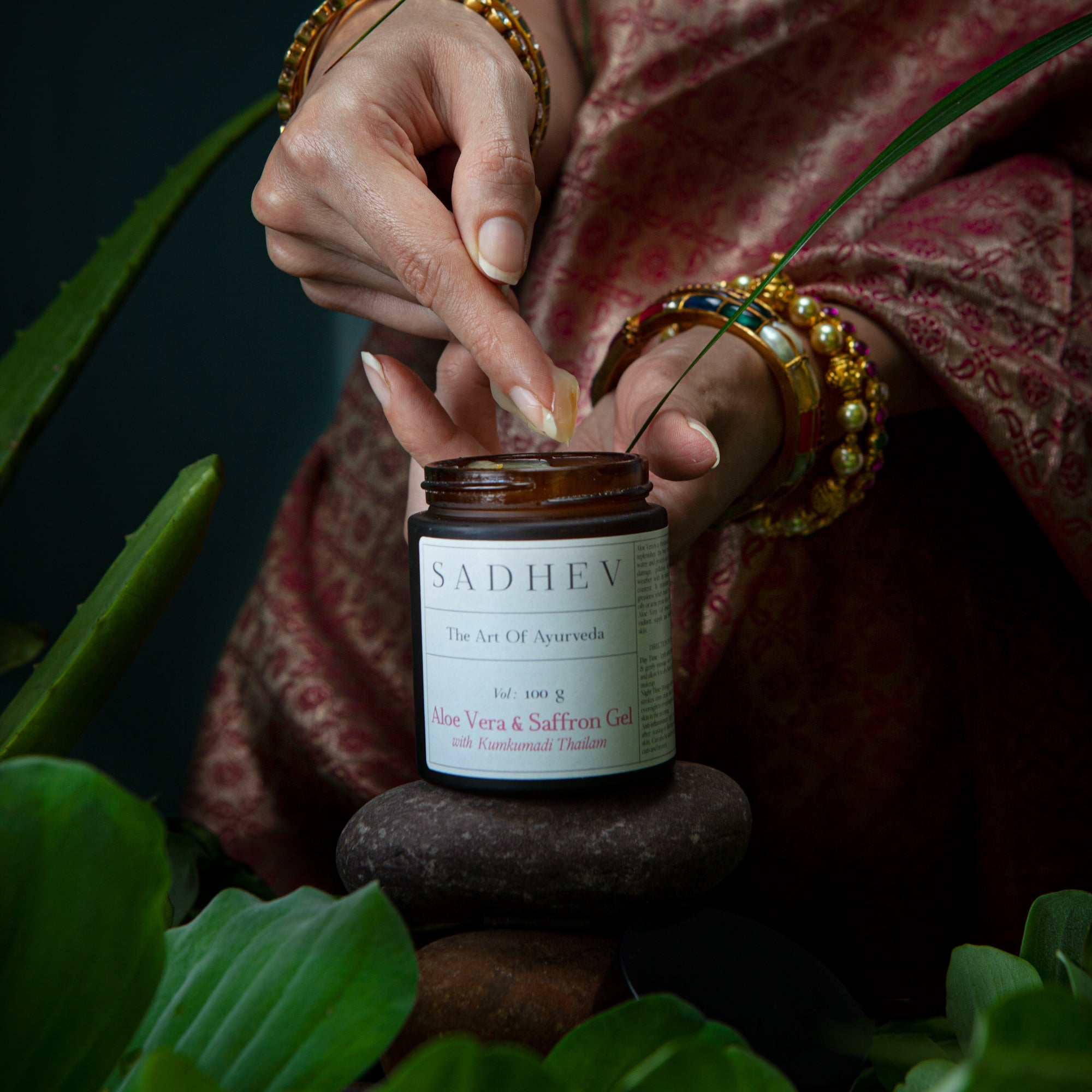
Kumkumadi Tailam applied nightly provides the rich, oil-based Snehana nourishment that Vata skin specifically needs — saffron, sandalwood and vetiver in a sesame oil base that penetrates the skin's lipid layer and restores the suppleness that Vata's dryness depletes. Ashwagandha — in the Ayurvedic Body Wash — provides the grounding, stress-reducing action that addresses Vata's mobility and instability, since Vata skin is particularly reactive to stress and irregular routines. Amla's deep nourishment through the Vitamin C Serum and hair care range supports Vata's need for consistent, sustained tissue nourishment.
For Pitta Skin — Cooling and Anti-Inflammatory
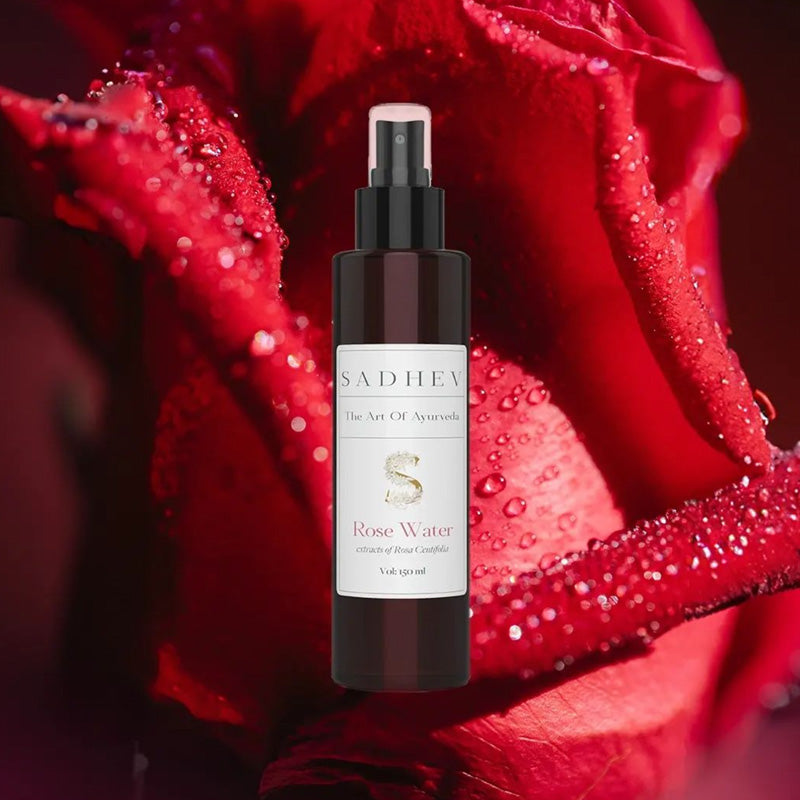
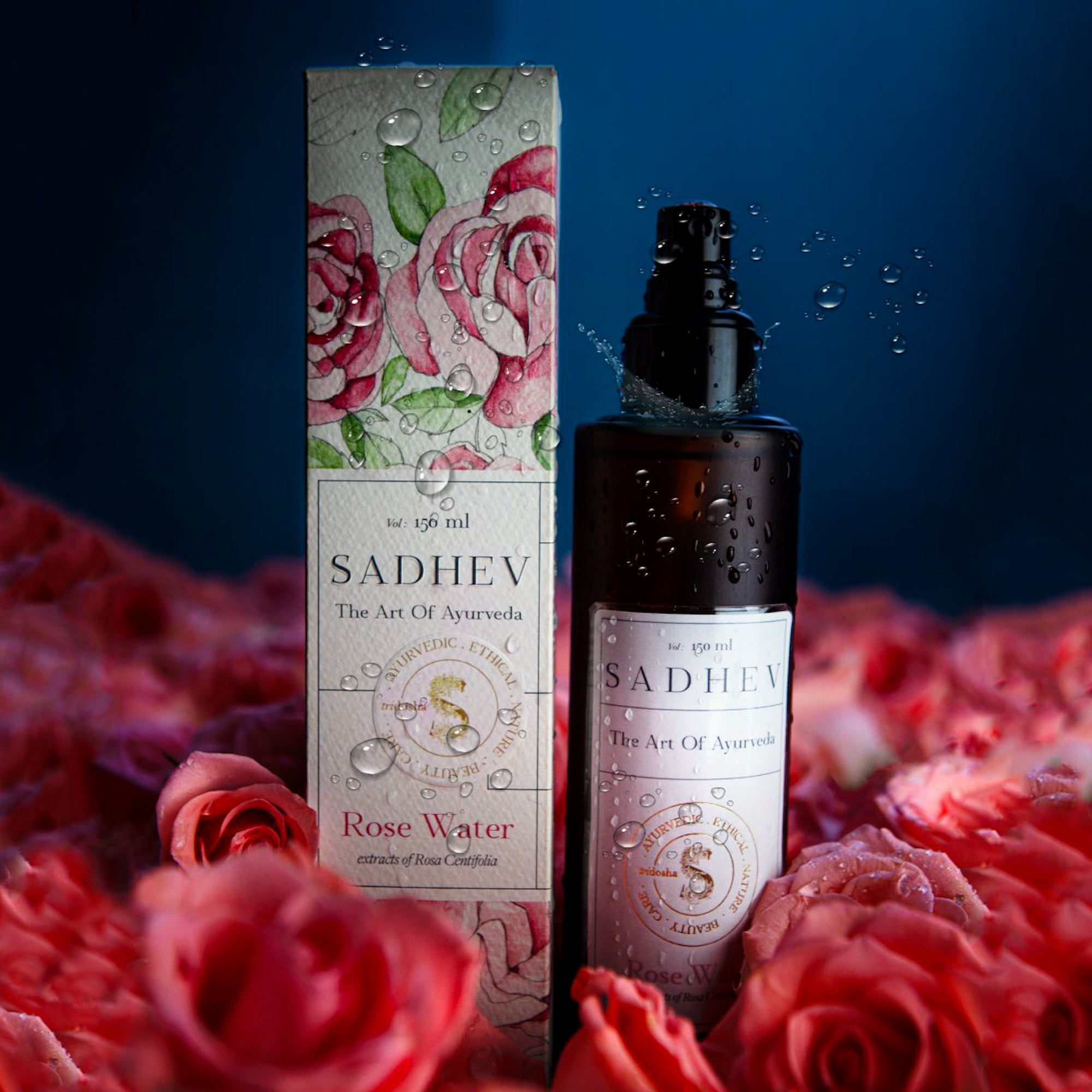
Rose Water is the single most important Pitta-pacifying product in the SADHEV range — its cooling, anti-inflammatory flavonoids directly counter Pitta's heat, and the chilled application ritual amplifies this cooling action specifically. Sandalwood and vetiver, both concentrated in Kumkumadi Tailam, are classical Ayurveda's primary cooling herbs for Pitta-driven redness and reactivity. Liquorice, in the Under Eye Gel and Sunscreen Gel, addresses the pigmentation that Pitta's inflammatory heat commonly triggers.
For Kapha Skin — Stimulating and Clarifying
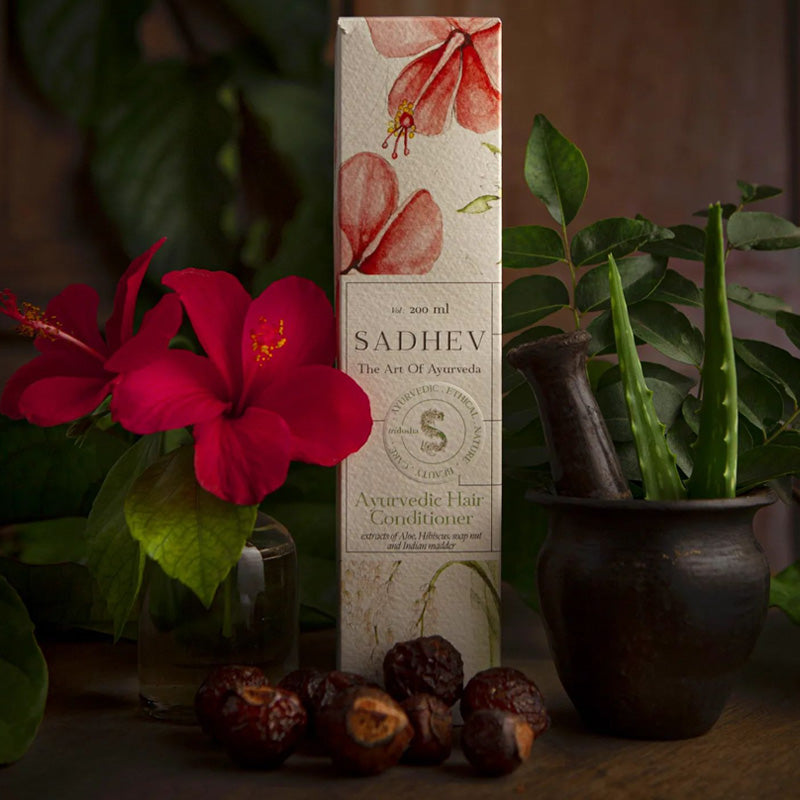
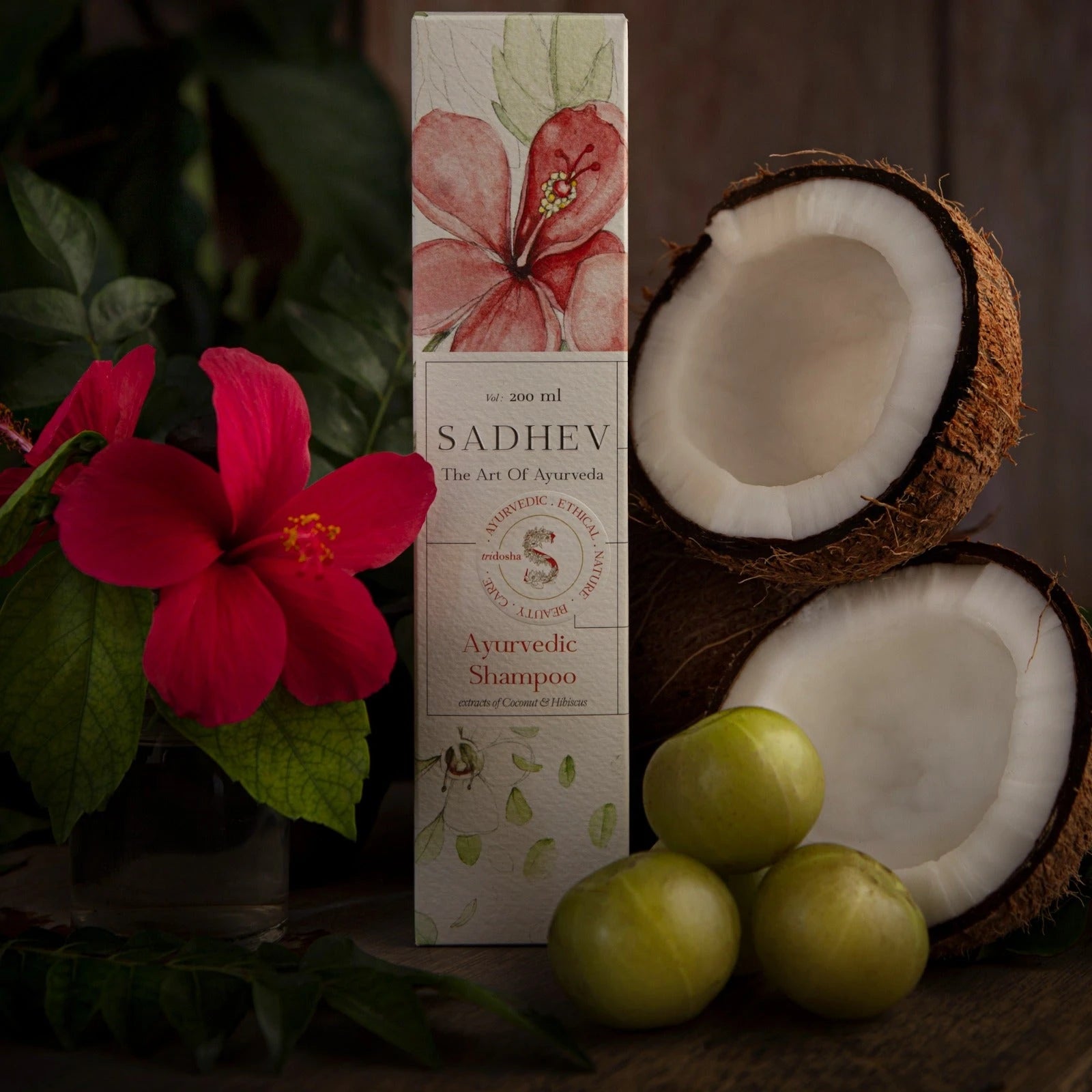
Orange and Cinnamon Bathing Bar is formulated specifically for Kapha's tendency toward oiliness and congestion — orange peel's astringent Vitamin C and cinnamon's circulation-stimulating warmth directly counter Kapha's heavy, stagnant qualities. Reetha, the sulphate-free cleansing base across the entire SADHEV hair range, provides the gentle clarifying action that Kapha scalp and skin benefit from without the over-stripping that worsens compensatory oil production. Hibiscus's alpha hydroxy acid content provides the mild exfoliation that Kapha's congestion-prone skin needs.
Building a Routine Around Your Dosha
Once you have identified your dominant skin dosha, the practical application is straightforward: prioritise the ingredients documented for that dosha across every category — cleanser, treatment, moisturiser and body care — rather than choosing products individually based on marketing or fragrance preference.
▸ Vata skin: prioritise oil-based, rich formulations. Never skip moisturiser. Consistency of routine matters more than intensity of any single product.
▸ Pitta skin: prioritise cooling, anti-inflammatory formulations. Keep rose water refrigerated. Avoid harsh actives that trigger further inflammation.
▸ Kapha skin: prioritise lightweight, clarifying formulations. Do not skip moisturiser even though the skin feels oily — dehydration worsens Kapha congestion through compensatory oil production.
Most people also experience seasonal dosha shifts — Vata dryness peaks in winter, Pitta reactivity peaks in summer, and Kapha congestion peaks in monsoon's humidity. Adjusting the dosha emphasis of your routine seasonally, rather than using identical products year-round, is a core Ayurvedic principle worth incorporating regardless of your dominant baseline dosha.
|
“Your dosha skin type is not fixed forever. It shifts with season, age and lifestyle — which is why the Ayurvedic approach to skincare is a practice, not a one-time diagnosis.” |
For the complete seasonal Ayurvedic skincare guides that address how Vata, Pitta and Kapha shift across the year: see our monsoon skincare guide and summer skincare guide.
For the complete guide to which SADHEV product fits your skin type and concern, cross-referenced with the dosha principles above: see our skin type guide.
SADHEV. Luxury Ayurvedic Care. Ayurveda in our bloodline.
Explore SADHEV formulations built on documented dosha-balancing principles.
— Written by SADHEV Ayurvedic Experts, rooted in a 200-year vaidyar lineage.


