



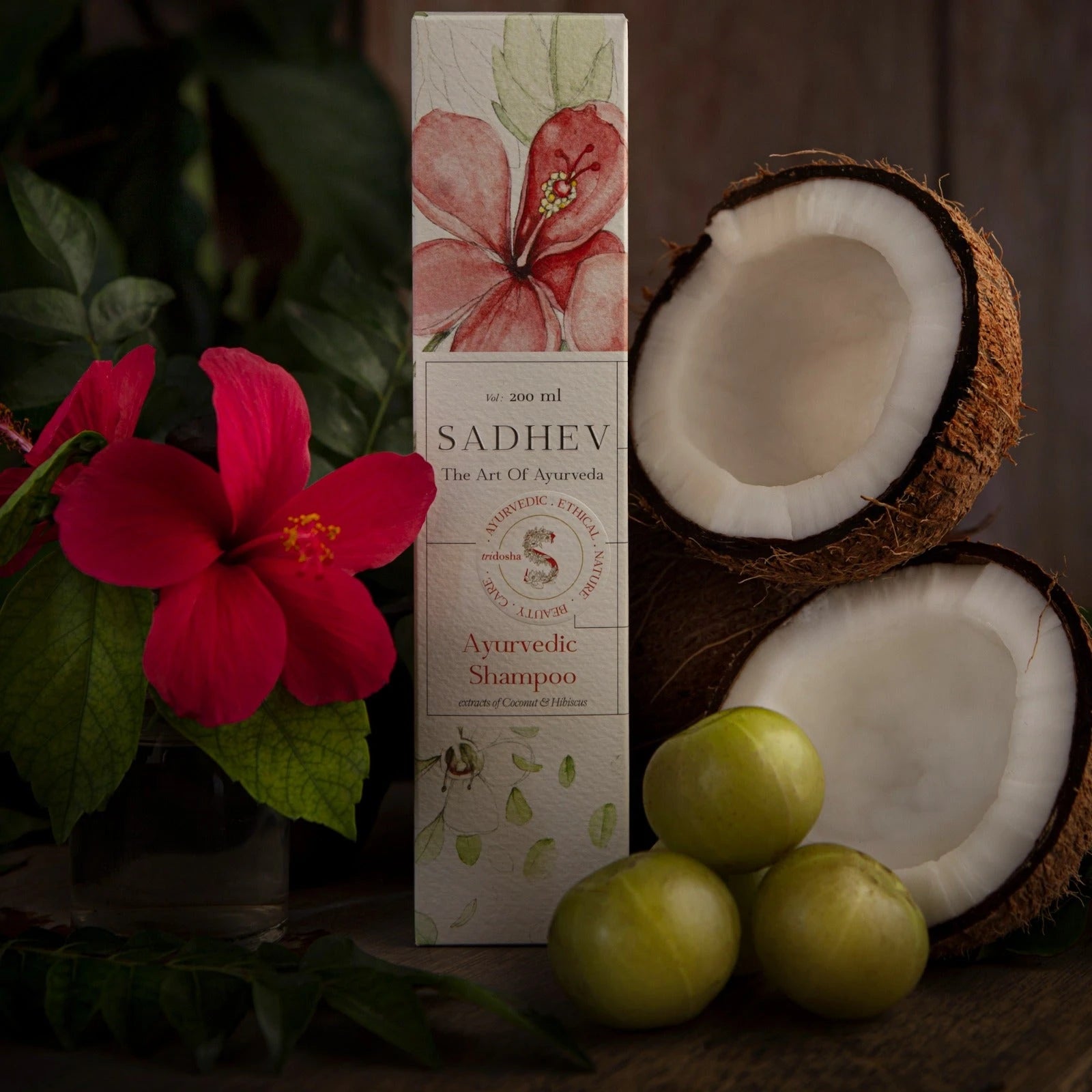

Hibiscus is the most visually recognisable ingredient in Ayurvedic hair care. The deep red flower — called Gurhal in Hindi and Japapuspa in Sanskrit — appears in classical formulations for hair health across thousands of years of documented Ayurvedic practice. It is used in pre-wash hair masks, incorporated into shampoo formulations and applied as a rinse for everything from hair fall to premature greying.
The breadth of its documented applications is not coincidence. Hibiscus contains an unusually comprehensive set of active compounds — amino acids that directly nourish the hair shaft, polyphenolic antioxidants that protect melanocytes, mucilaginous polysaccharides that condition and detangle, and alpha hydroxy acids that gently exfoliate the scalp surface. Few single ingredients address the hair growth cycle, the colour preservation mechanism and the scalp health environment simultaneously.
Understanding how each compound works tells you exactly why hibiscus produces the range of results it is documented for — and why it remains the foundational hair herb in classical Ayurvedic formulations despite the thousands of years of additional botanical discovery that have occurred since.
|
“Hibiscus addresses hair growth, colour preservation and scalp health through different compounds acting simultaneously. This is why no single synthetic ingredient replicates what it does.” |
What Hibiscus Is
Hibiscus rosa-sinensis — the Chinese hibiscus or tropical hibiscus — is a flowering shrub in the Malvaceae family, native to tropical and subtropical Asia and cultivated widely across India. The flowers range from deep red to pink, orange and white, with the deep red variety being the most therapeutically potent for hair care applications — containing the highest concentration of anthocyanins, the flavonoid pigments responsible for the colour and a significant portion of the antioxidant activity.
Both the flowers and the leaves are used in classical Ayurvedic hair formulations, each contributing different active compounds. The flower provides anthocyanins, flavonoids and alpha hydroxy acids. The leaf provides mucilaginous polysaccharides — the conditioning and detangling compounds — and additional amino acids. Classical formulations that use both flower and leaf together produce a more comprehensive therapeutic profile than either part alone.
|
Botanical name |
Hibiscus rosa-sinensis |
|
Ayurvedic name |
Japapuspa — also called Gurhal (Hindi), Chembaruthi (Tamil) |
|
Primary active compounds |
Anthocyanins, quercetin, kaempferol, mucilaginous polysaccharides, amino acids, AHAs |
|
Dosha action |
Cooling, anti-Pitta — reduces scalp heat and inflammation |
|
Traditional use |
Hair growth, premature greying, hair fall, dandruff, scalp conditioning |
|
Part used |
Flower (primary) and leaf (both used in classical formulations) |
|
Most potent variety |
Deep red — highest anthocyanin concentration |
How Hibiscus Promotes Hair Growth
1. Stimulating the Hair Follicle
Hibiscus extracts have been shown in studies to stimulate follicular proliferation — increasing the rate at which hair follicle cells divide and promoting the transition of follicles from the resting telogen phase into the active anagen growth phase. The mechanism involves the stimulation of dermal papilla cells — the cells at the base of the follicle that control the hair growth cycle — through the flavonoid compounds in hibiscus.
Practically, this means that consistent hibiscus application through shampoo and oil creates a follicular environment that is more actively in the growth phase and less in the resting phase at any given time. The result is measurably denser hair over twelve to twenty weeks of consistent use — not from creating new follicles but from activating the growth potential of existing ones that are either resting or underperforming.
2. Nourishing the Hair Shaft with Amino Acids
Hair is made of keratin — a fibrous protein built from amino acids. When the hair shaft is deficient in the amino acids it needs to maintain its structural integrity, it becomes brittle, porous and prone to breakage. Hibiscus contains naturally occurring amino acids that penetrate the hair shaft and replenish the protein structure that mechanical damage, chemical treatments and nutritional gaps deplete.
This direct shaft nourishment is distinct from the follicle stimulation mechanism — it addresses the health of existing hair rather than the growth of new hair. Together, the two mechanisms produce hair that is both growing more actively from the root and structurally stronger along the length. The combination reduces both root-level hair fall and mid-shaft breakage simultaneously.
3. Scalp Exfoliation Through Natural AHAs
The alpha hydroxy acids naturally present in hibiscus flowers gently exfoliate the scalp surface, removing the dead cell accumulation and excess sebum that clog follicular openings and impede healthy hair growth. A follicular opening that is clear of accumulated debris allows the hair shaft to emerge without obstruction and allows the therapeutic compounds in oil and shampoo formulations to reach the follicle more effectively.
This gentle chemical exfoliation is fundamentally different from physical scalp scrubbing — it dissolves the bonds between old surface cells and allows them to shed naturally without the micro-abrasion that harsh physical exfoliation causes. For scalps prone to dandruff, hibiscus's AHA action removes the surface buildup that feeds the microbiome imbalance driving the condition.
Hibiscus for Premature Greying
The relationship between hibiscus and premature greying is one of the most consistently documented in classical Ayurvedic literature and one of the most mechanistically interesting from a modern biochemical perspective.
Hair gets its colour from melanin produced by melanocytes — pigment-producing cells located at the base of each hair follicle. When melanocyte function declines through oxidative damage, the hair shaft emerges with progressively less pigment and eventually emerges white. The primary driver of melanocyte decline is oxidative stress — free radical damage to the melanocytes at the follicular level.
Hibiscus's anthocyanins — the flavonoid pigments that give the deep red flower its colour — are among the most potent natural antioxidants identified in plant sources. Applied consistently through shampoo and oil, they deliver concentrated antioxidant protection directly to the follicular melanocytes, slowing the oxidative depletion that causes their decline. The deep red hibiscus variety contains the highest anthocyanin concentration — which is why classical Ayurvedic formulations specify the red flower for hair colour preservation rather than other varieties.
As with all melanocyte protection, these interventions slow the progression of greying in follicles that are still producing pigment. They do not restore colour to hair shafts that have already greyed. The observable result — fewer new grey hairs appearing each month — develops over six to twelve months of consistent use and is most pronounced in people who begin the protocol before greying has become extensive.
|
“The anthocyanins in deep red hibiscus are among the most potent natural antioxidants in any plant. They protect the melanocytes that give hair its colour from the oxidative damage that causes premature greying.” |
Hibiscus for Dandruff and Scalp Health
Dandruff is driven by Malassezia overgrowth in an unbalanced scalp environment. Hibiscus addresses this through three simultaneous mechanisms that make it one of the most comprehensive natural dandruff-addressing ingredients available.
Anti-inflammatory action — hibiscus's quercetin and kaempferol reduce the scalp inflammation that accompanies Malassezia overgrowth and that drives the flaking and itching associated with dandruff. Reducing this inflammation creates a calmer scalp environment while the antimicrobial action addresses the overgrowth itself.
Antimicrobial action — hibiscus compounds have documented activity against Malassezia and other scalp-disrupting microorganisms. Applied consistently through a sulphate-free shampoo formulation, they contribute to restoring the microbiome balance that dandruff disrupts.
Scalp exfoliation — the natural AHA content removes the flake buildup on the scalp surface, providing immediate symptomatic relief while the anti-inflammatory and antimicrobial mechanisms address the underlying cause. This combination of symptomatic and causal action makes hibiscus more effective for dandruff management than ingredients that address only one dimension of the problem.
Hibiscus for Hair Conditioning
The mucilaginous polysaccharides in hibiscus leaves — the slippery, gel-like compounds that make hibiscus leaf feel conditioning between the fingers — coat the hair shaft and temporarily fill the gaps in the cuticle structure that cause hair to feel rough, look dull and tangle during detangling.
This conditioning action is particularly effective for curly, coily and wavy hair textures that are prone to tangling and moisture loss because of the more complex cuticle geometry of non-straight hair. The polysaccharide coating provides slip during detangling, reduces the mechanical force required to separate tangled hair and thereby reduces the breakage that rough detangling causes.
For all hair types, the conditioning action of hibiscus improves manageability and surface shine — making hair that has been consistently treated with hibiscus-formulated products feel noticeably softer, more cooperative and more resilient than untreated hair.
Hibiscus in the SADHEV Formulations
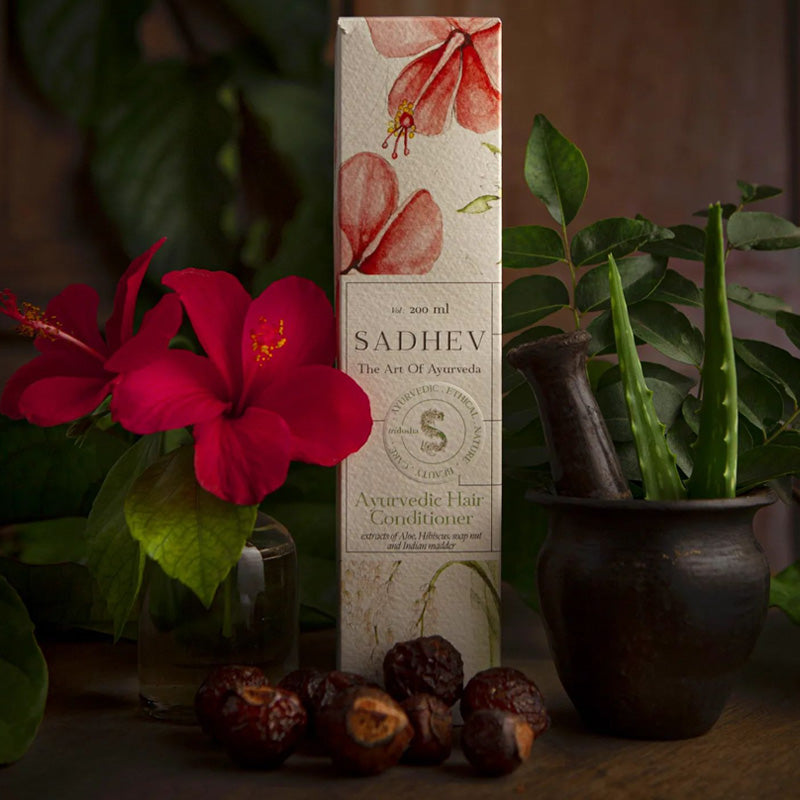
Hibiscus is one of the three primary herbs — alongside bhringraj and amla — in SADHEV's complete hair care system. Each herb contributes a specific and complementary mechanism: bhringraj stimulates scalp circulation and extends the anagen phase, amla provides antioxidant protection and enhances iron absorption, and hibiscus stimulates follicular proliferation, protects melanocytes and conditions the shaft. Together they address every dimension of hair health through a single consistent routine.
Ayurvedic Shampoo — For Normal Hair
SADHEV Ayurvedic Shampoo with bhringraj, amla and hibiscus in a sulphate-free base delivers the complete herb trio to the scalp with every wash. For normal hair that is not experiencing elevated fall or dandruff, this shampoo maintains the scalp health and hair shaft strength that prevents the conditions leading to more serious hair concerns from developing.
Anti-Hair Fall Shampoo — For Elevated Hair Fall
SADHEV Anti-Hair Fall Shampoo with concentrated hibiscus alongside bhringraj and amla delivers targeted follicular stimulation and shaft nourishment for scalps experiencing elevated hair fall. The hibiscus promotes the follicular transition from telogen to anagen while bhringraj extends the anagen phase once entered — the two mechanisms working together to reduce shedding and increase growth phase activity simultaneously.
Anti-Dandruff Shampoo — For Scalp Imbalance
SADHEV Anti-Dandruff Shampoo with hibiscus alongside anti-inflammatory and antimicrobial Ayurvedic herbs addresses the scalp microbiome imbalance that drives dandruff through the complete mechanism — anti-inflammatory, antimicrobial and exfoliating action delivered with every wash.
How to Use Hibiscus for Maximum Benefit
Hibiscus delivers its full therapeutic profile most effectively through the pre-wash oil treatment and sulphate-free shampoo combination — the same protocol that bhringraj and amla benefit from most.
▸ Pre-wash oil treatment: Apply the appropriate SADHEV hair oil before every wash. Massage into the scalp for five minutes using circular motions. Leave for twenty minutes minimum. The hibiscus compounds penetrate the follicular openings during this contact period, delivering their stimulating and protective action before the wash removes the oil.
▸ Sulphate-free shampoo: Wash with the appropriate SADHEV shampoo containing hibiscus. Apply to wet scalp and massage for thirty to sixty seconds before rinsing — this contact time allows hibiscus compounds to reach the scalp between wash sessions. Follow with conditioner after every wash.
▸ Frequency: Two to three times per week. The scalp benefits from hibiscus accumulate with consistent, frequent application rather than occasional intensive treatment.
The Realistic Timeline
▸ Weeks two to four: Reduced scalp inflammation and itching. The anti-inflammatory compounds provide early symptomatic relief for scalp sensitivity and mild dandruff.
▸ Weeks four to eight: Reduced hair fall as follicular stimulation and improved scalp health reduce the telogen push that causes elevated shedding.
▸ Weeks eight to sixteen: New growth visible at the hairline and parting as hibiscus-stimulated follicles enter and sustain the anagen phase.
▸ Months four to six: Measurably improved hair density as the combined effects of follicular stimulation, shaft nourishment and scalp health produce hair that is both growing more actively and breaking less.
▸ Months six to twelve: Slowing of premature greying as anthocyanin protection of follicular melanocytes produces fewer new grey hairs appearing per month.
The consistent requirement is exactly that — consistency. Hibiscus applied twice a week through a sulphate-free shampoo, combined with pre-wash oiling before every wash, produces results that irregular use cannot replicate. The biology of hair growth operates on monthly cycles. Consistent intervention over months is what produces durable change.
|
“Hibiscus applied consistently twice a week for six months produces results that cannot be replicated by any intensive short-term treatment. Hair biology works on monthly cycles.” |
For the complete guide to how hibiscus works alongside bhringraj and amla in the full Ayurvedic hair care system: see our bhringraj guide and amla guide.
For the complete Ayurvedic hair care routine including the pre-wash oiling technique, the correct shampooing method and the full weekly protocol: see our Ayurvedic hair care routine guide.
SADHEV. Luxury Ayurvedic Care. Ayurveda in our bloodline.
Explore SADHEV's hibiscus-formulated hair care range.
— Written by SADHEV Ayurvedic Experts, rooted in a 200-year vaidyar lineage.


