




The modern conversation about sulphate-free shampoo treats it as a recent innovation — a response to growing awareness about the damage that sodium lauryl sulphate causes to hair and scalp. It is not a recent innovation. Reetha has been cleaning hair without sulphates for thousands of years. The innovation is the synthetic alternative, not the natural one.
Reetha — called Soapnut in English and Aritha or Phenila in Sanskrit — is the dried fruit of Sapindus mukorossi, a tree native to the Himalayan foothills and subtropical Asia. Its fruit shells contain saponins — naturally occurring surfactants that produce a mild, stable lather in water and cleanse hair and scalp effectively without the barrier-stripping action of synthetic surfactants. This is the original sulphate-free cleanser. It predates synthetic chemistry by millennia.
Understanding what reetha does at the level of the hair shaft and scalp — and why its saponin chemistry produces different outcomes than synthetic surfactant systems — tells you exactly why Ayurvedic hair care formulations that include reetha produce results that conventional shampoos cannot replicate despite containing more aggressive cleansing agents.
|
“Reetha does not strip the scalp barrier on the way to cleaning hair. This single difference is what produces the improved hair health that switches from conventional shampoo to reetha-based formulations consistently deliver.” |
What Reetha Is
Sapindus mukorossi — the soapnut or washnut tree — grows across the Himalayan foothills from Nepal through northern India, at altitudes between 200 and 1,500 metres. The tree produces round fruits that dry to a brownish translucent shell containing a single hard seed. The shell is the therapeutic part — it contains between 7 and 15 percent saponins by dry weight, depending on the growing conditions and harvesting season.
Saponins are a class of naturally occurring glycosides that behave as surfactants — they have both hydrophilic and lipophilic properties, allowing them to interact with both water and oils and to remove the oil-bound impurities on the hair and scalp surface while rinsing cleanly with water. The saponin molecule, however, is significantly larger than synthetic surfactant molecules like sodium lauryl sulphate and does not penetrate the hair shaft or the scalp's lipid barrier in the way that synthetic surfactants do.
This size difference is the key to understanding why reetha cleans hair without damaging it. It removes surface impurities. It does not enter the structure it is cleaning.
|
Botanical name |
Sapindus mukorossi |
|
Common names |
Reetha, Aritha, Soapnut, Washnut |
|
Ayurvedic name |
Phenila — also Aristaka |
|
Primary active compounds |
Saponins (7–15% by dry weight) — primarily hederagenin glycosides |
|
Ayurvedic classification |
Keshya (hair-promoting), Kandughna (anti-itch), Krimighna (antimicrobial) |
|
Traditional use |
Hair cleansing, scalp health, dandruff, hair fall, lice treatment |
|
Part used |
Dried fruit shell (pericarp) — seed is discarded |
Why Reetha Cleans Better Than Sulphate Shampoos for Hair Health
1. Cleans Without Stripping the Barrier
Sodium lauryl sulphate — the primary surfactant in conventional shampoos — has a Zein value above 500, classifying it as a strong irritant. Its small molecular size allows it to penetrate the hair shaft and the scalp's lipid barrier, removing not just the surface impurities but the structural lipids and proteins that keep the hair shaft intact and the scalp healthy. Every wash with a sulphate shampoo leaves the hair marginally more porous and the scalp marginally more compromised than before.
Reetha's saponins do not penetrate the hair shaft or scalp barrier. They interact with the surface impurities — excess sebum, environmental particles, product residue — and carry them away in the rinse water. The hair's structural proteins and the scalp's lipid barrier are left intact. Hair washed consistently with a reetha-based sulphate-free shampoo becomes progressively stronger and less porous over weeks, rather than progressively weaker and more damaged as sulphate-washed hair does.
2. Normalises Sebum Production
The scalp responds to barrier disruption by increasing sebum production as compensation. This is why hair washed with a sulphate shampoo feels oily again quickly — the stripping triggers overproduction. The cycle of washing aggressively and producing sebum aggressively is self-perpetuating.
Reetha breaks this cycle. When the scalp barrier is not stripped, the compensatory sebum overproduction does not occur. Sebum production normalises to the scalp's actual need rather than to the requirement to compensate for repeated barrier disruption. Hair washed with reetha-based formulations becomes progressively less oily between washes over three to four weeks as the scalp adjusts to a non-depleting cleanser.
3. Anti-Dandruff Action
Reetha's saponins have documented antimicrobial activity against Malassezia — the fungus responsible for dandruff. The mild antifungal action delivered with every wash progressively reduces the Malassezia overgrowth that causes flaking and scalp itching. Combined with the barrier-preserving cleansing that prevents the scalp disruption that allows Malassezia to overgrow in the first place, reetha addresses dandruff through both preventive and corrective mechanisms.
Crucially, the antimicrobial action of reetha saponins does not disrupt the beneficial scalp microbiome in the way that antifungal shampoos containing ketoconazole or selenium sulphide do. These pharmaceutical antifungal agents suppress Malassezia effectively but also disrupt the broader scalp microbiome, which is why they are recommended for intermittent rather than regular use. Reetha's broader and gentler antimicrobial action is appropriate for daily or regular use without microbiome disruption concerns.
4. Hair Fall Reduction
A significant proportion of what is diagnosed as hair fall is actually breakage from the scalp and shaft damage that sulphate cleansing causes cumulatively. Hair that is structurally weaker from repeated sulphate exposure breaks more easily during washing, detangling and styling — producing the appearance of elevated hair fall when the underlying issue is structural damage rather than follicular dysfunction.
Switching to a reetha-based sulphate-free shampoo progressively reverses this structural damage as the scalp barrier rebuilds and the hair shaft retains more of its protein content between washes. The apparent reduction in hair fall that most people experience within two to four weeks of switching is partly this reversal of breakage-related apparent fall, and partly the improvement in scalp health that reetha's barrier-preserving and antimicrobial action produces.
5. Natural Conditioning Action
Reetha saponins have mild conditioning properties that smooth the hair cuticle during the wash process. Hair washed with reetha-based formulations feels softer after washing than hair washed with sulphate shampoos even before conditioner is applied. This mild conditioning action is amplified by the retention of the hair shaft's own lipids that the gentler cleansing preserves.
For curly and coily hair textures that are particularly prone to moisture loss and frizz from sulphate washing, the combination of gentler cleansing and mild conditioning from reetha produces noticeably better post-wash moisture retention and reduced frizz compared to sulphate alternatives.
|
“Reetha's saponins do not enter the hair shaft they are cleaning. This is the chemistry that produces hair that gets progressively healthier with every wash rather than progressively more damaged.” |
Reetha in the SADHEV Hair Care Range
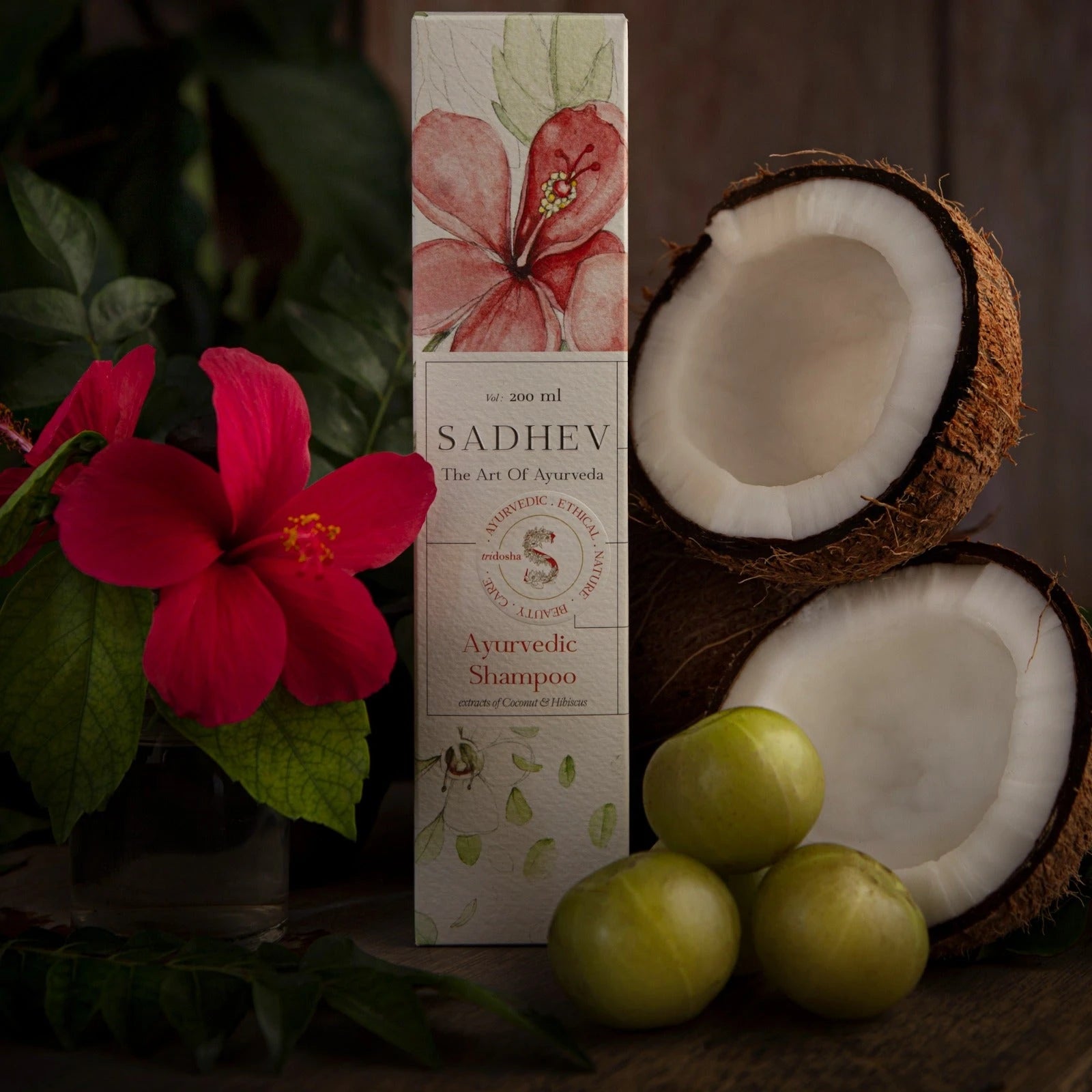
Reetha is the primary cleansing ingredient in all four of SADHEV's sulphate-free shampoo formulations — Ayurvedic Shampoo, Anti-Hair Fall Shampoo, Anti-Dandruff Shampoo and the specialised variants. In each formulation, reetha provides the sulphate-free cleansing base into which the specific therapeutic herbs — bhringraj, amla, hibiscus, neem — are incorporated to address the specific hair concern beyond cleansing.
This formulation philosophy is classical Ayurvedic — reetha as the Keshya cleansing base that is gentle enough to deliver other therapeutic herbs to the scalp without the barrier disruption that would compromise their action. A bhringraj formulation in a sulphate base simultaneously undermines and supports hair health. A bhringraj formulation in a reetha-based sulphate-free base works without contradiction.
Ayurvedic Shampoo — For Normal and Healthy Hair
SADHEV Ayurvedic Shampoo uses reetha as the cleansing base alongside bhringraj, amla and hibiscus — the complete classical hair herb trio. For normal hair that is not experiencing elevated fall or dandruff, this formulation maintains the scalp health and shaft strength that prevents more serious hair concerns from developing. The reetha cleansing leaves the scalp barrier intact so the bhringraj, amla and hibiscus compounds reach their follicular targets with every wash.
Anti-Hair Fall Shampoo — For Elevated Hair Fall
SADHEV Anti-Hair Fall Shampoo uses reetha as the cleansing base alongside concentrated bhringraj and amla for targeted follicular stimulation and shaft nourishment. The reetha's barrier-preserving cleansing stops the structural damage cycle that worsens hair fall. The bhringraj extends the anagen phase and improves scalp circulation. The amla protects melanocytes and supports iron absorption. The three mechanisms work together in a single wash.
Anti-Dandruff Shampoo — For Scalp Imbalance
SADHEV Anti-Dandruff Shampoo uses reetha's antimicrobial saponins as the cleansing base alongside additional anti-inflammatory and microbiome-balancing Ayurvedic herbs. The reetha provides consistent Malassezia-suppressing action with every wash while its barrier-preserving cleansing stops the scalp disruption that allows Malassezia to overpopulate between washes.
How to Use Reetha-Based Shampoo Correctly
The transition period from sulphate to reetha-based sulphate-free shampoo requires two to three weeks of patience. During this period the scalp is adjusting from chronic overproduction — the compensatory sebum response to sulphate stripping — to a balanced state. Hair may feel different during this transition than it does after the adjustment is complete.
▸ Week one to two: Hair may feel heavier or less squeaky-clean than with sulphate shampoo. This is the scalp adjusting. The clean is real — it simply feels different because the barrier disruption that produced the familiar squeaky sensation is absent.
▸ Week two to three: Sebum production begins to normalise. Hair feels progressively lighter between washes and requires less frequent washing than before.
▸ Week four onward: The adjusted state. Hair is cleaner between washes, scalp is less reactive and the hair shaft is progressively strengthening as the protein and lipid retention improves with each barrier-preserving wash.
Pre-wash oiling before every wash amplifies the benefits significantly. Apply Virgin Coconut Oil or the appropriate SADHEV hair oil before every shampoo session. Massage into the scalp for five minutes and leave for twenty minutes. Shampoo with the reetha-based formula. The oil provides an additional lipid layer that the reetha saponins dissolve along with the surface impurities — removing the oil and impurities together while the scalp barrier beneath remains intact.
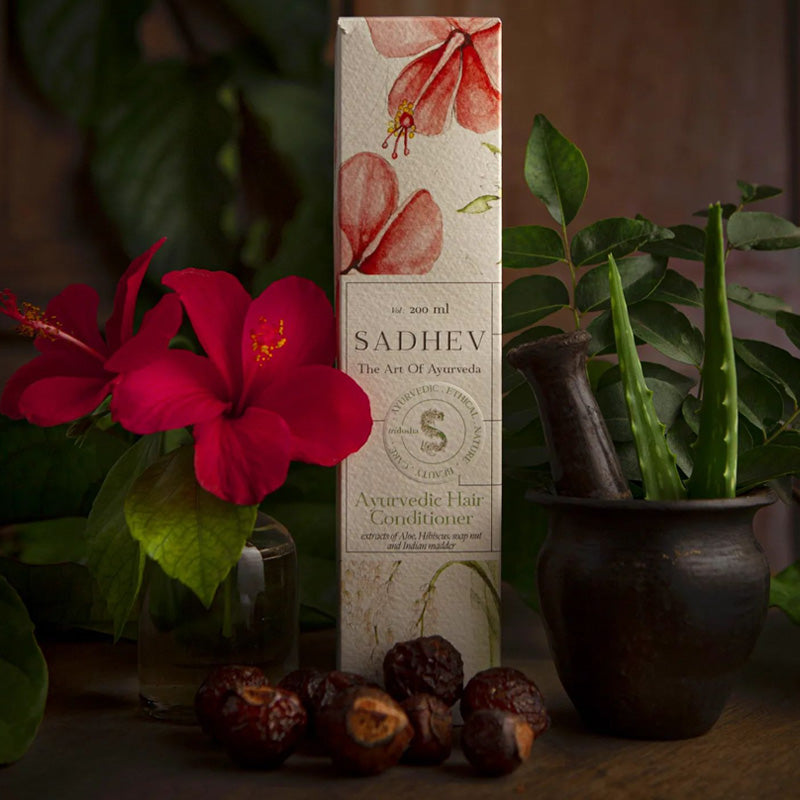
Conditioner after every wash. The mild conditioning action of reetha is not a substitute for conditioner. Apply SADHEV Ayurvedic Conditioner after every wash, leave for two minutes and rinse. The combination of reetha cleansing and conditioner sealing produces the smoothest, most manageable post-wash result.
The Realistic Timeline
▸ Weeks one to three: Transition period. Hair feels different, not worse. Scalp is adjusting.
▸ Weeks three to six: Sebum normalisation. Hair stays cleaner for longer between washes. Scalp reactivity reduces.
▸ Weeks six to twelve: Progressive shaft strengthening. Hair is measurably less prone to breakage. Apparent hair fall reduces as structural breakage decreases.
▸ Months three to six: The full benefit of consistent reetha-based cleansing is observable. Hair is fundamentally healthier — stronger, less reactive, less prone to dandruff and breakage — than hair managed on a sulphate shampoo for the same period.
For the complete guide to how reetha works alongside bhringraj, amla and hibiscus in the classical Ayurvedic hair care system: see our bhringraj guide.
For the complete Ayurvedic hair care routine including the pre-wash oiling technique, correct application and the full weekly protocol: see our Ayurvedic hair care routine guide.
For the complete guide to sulphate-free shampoo — what sulphates are, why they damage hair and what to look for in a sulphate-free formulation: see our sulphate-free shampoo guide.
SADHEV. Luxury Ayurvedic Care. Ayurveda in our bloodline.
Explore SADHEV's complete reetha-based sulphate-free hair care range.
— Written by SADHEV Ayurvedic Experts, rooted in a 200-year vaidyar lineage.


