




The term Ayurvedic shampoo is used loosely. A product with a Sanskrit ingredient name on the bottle and natural-sounding marketing qualifies as Ayurvedic in most of the Indian market. The result is a category where the name means very little and the actual formulation differences between products are significant and consequential for hair health.
A genuinely Ayurvedic shampoo is defined by two things. The surfactant system — the cleansing ingredient that actually washes the hair — must come from a plant source rather than a synthetic process. And the active herbs must be present in concentrations that produce therapeutic action, not simply featured on the label for marketing purposes. The first specification determines whether the shampoo damages the scalp barrier in the process of cleaning. The second determines whether it does anything beneficial beyond cleaning.
Most shampoos labelled Ayurvedic meet neither specification. They use synthetic sulphate surfactants and contain herbal extracts at concentrations too low to produce any documented effect on the scalp or hair shaft. Understanding these two criteria tells you exactly how to read a shampoo label and why the difference matters for your hair health over months and years of use.
|
“An Ayurvedic shampoo is defined by what cleans and what treats. The surfactant determines the damage. The herbs determine the benefit. Most products marketed as Ayurvedic get neither right.” |
What Makes a Shampoo Genuinely Ayurvedic
The Surfactant — The Most Important Ingredient Nobody Reads
The surfactant is the ingredient that produces the lather and does the actual cleansing. In conventional shampoos this is sodium lauryl sulphate or sodium laureth sulphate — synthetic surfactants that are aggressive, inexpensive and present in approximately 90 percent of mass-market shampoos regardless of how they are marketed.
Sulphate surfactants have a Zein irritancy value above 500 — classifying them as strong irritants. They strip the scalp's lipid barrier in the process of removing dirt and sebum. The scalp compensates with increased sebum production. The hair shaft loses protein with every wash. Over months and years of use, hair becomes progressively more porous, more brittle and more prone to breakage. The shampoo that is supposed to care for hair is actively damaging it with every application.
A genuine Ayurvedic shampoo uses a plant-derived surfactant system. Reetha — soapnut saponins — is the classical Ayurvedic cleansing agent, as documented in the reetha guide in this ingredient series. Reetha saponins clean effectively without penetrating the hair shaft or disrupting the scalp barrier. Hair washed consistently with a reetha-based sulphate-free shampoo becomes progressively stronger and less porous rather than progressively weaker and more porous. This is the fundamental difference and the starting point for any honest Ayurvedic shampoo evaluation.
The Active Herbs — What They Must Do and at What Concentration
The second defining characteristic of a genuinely Ayurvedic shampoo is the presence of active herbs at concentrations sufficient to produce their documented therapeutic effects. The classical Ayurvedic hair herb triad — bhringraj, amla and hibiscus — each contribute specific and complementary mechanisms documented across thousands of years of Ayurvedic observation and confirmed by modern research.
Bhringraj — Kesharaj, King of Hair — stimulates scalp circulation and extends the anagen growth phase. Its wedelolactone content provides anti-inflammatory action that reduces the follicular inflammation driving chronic hair fall. Applied consistently through shampoo, it creates the scalp environment in which hair grows more actively and sheds less.
Amla provides antioxidant protection for follicular melanocytes — the cells that produce hair colour — and supports the iron absorption that scalp circulation depends on. The Vitamin C content of amla enhances the bioavailability of bhringraj's naturally occurring iron, producing a synergistic effect that neither herb achieves alone.
Hibiscus stimulates follicular proliferation through its flavonoid compounds, provides antioxidant protection for melanocytes through its anthocyanins and conditions the hair shaft through its mucilaginous polysaccharides. The combination of growth stimulation, colour protection and conditioning makes hibiscus the comprehensive third ingredient of the classical triad.
These herbs must be present in the shampoo at concentrations where they contact the scalp for meaningful time during the wash process. A bhringraj extract at 0.01 percent in a rinse-off shampoo produces no documented therapeutic effect regardless of how prominently it is featured on the label.
How to Read an Ayurvedic Shampoo Label
Four questions to ask before buying any shampoo marketed as Ayurvedic.
▸ Is the first or second surfactant a sulphate? Look for sodium lauryl sulphate, sodium laureth sulphate, ammonium lauryl sulphate or ammonium laureth sulphate near the top of the ingredients list. If any of these appear in the first five ingredients, the shampoo uses sulphate surfactants regardless of its Ayurvedic marketing.
▸ Is reetha or a plant-based surfactant system specified? Soapnut extract, Sapindus mukorossi, decyl glucoside or coco glucoside indicate genuinely mild, plant-derived surfactant systems. These should appear before the herbal ingredients in a genuinely sulphate-free formulation.
▸ Are the key Ayurvedic herbs listed specifically? Eclipta alba (bhringraj), Phyllanthus emblica (amla) and Hibiscus rosa-sinensis should be present by name or botanical name. Generic "herbal extracts" or "natural ingredients" with no specific identification indicate a marketing claim rather than a formulation commitment.
▸ Is the pH appropriate? A genuine Ayurvedic shampoo should be pH-balanced to the scalp's slightly acidic natural pH of 4.5 to 5.5. Most sulphate shampoos are pH 6 to 7 — slightly alkaline, which disrupts the scalp microbiome with every wash.
Which Ayurvedic Shampoo for Which Concern
A genuine Ayurvedic shampoo is not one-size-fits-all. The surfactant base should be the same across all variants — sulphate-free, reetha-based. The active herb concentration and combination should change based on the specific hair concern being addressed.
|
Your Concern |
SADHEV Shampoo |
Key Herbs |
|
Normal hair — healthy, no specific concern |
Ayurvedic Shampoo |
Bhringraj, amla, hibiscus, reetha |
|
Elevated hair fall — shedding above normal |
Anti-Hair Fall Shampoo |
Concentrated bhringraj, amla, reetha — follicular stimulation |
|
Dandruff — flaking, scalp itch |
Anti-Dandruff Shampoo |
Bhringraj, amla, neem, reetha — antimicrobial and anti-inflammatory |
|
Natural colour treated hair |
Ayurvedic Shampoo |
Sulphate-free essential for colour longevity |
The shampoo variant addresses the specific scalp concern while the reetha-based sulphate-free surfactant system is consistent across all variants — protecting the scalp barrier while the targeted herbs address the specific concern.
SADHEV Ayurvedic Shampoo Range
All SADHEV shampoos share the same sulphate-free, reetha-based cleansing system. Each variant adds concentrated herb combinations specifically chosen for the concern being addressed.
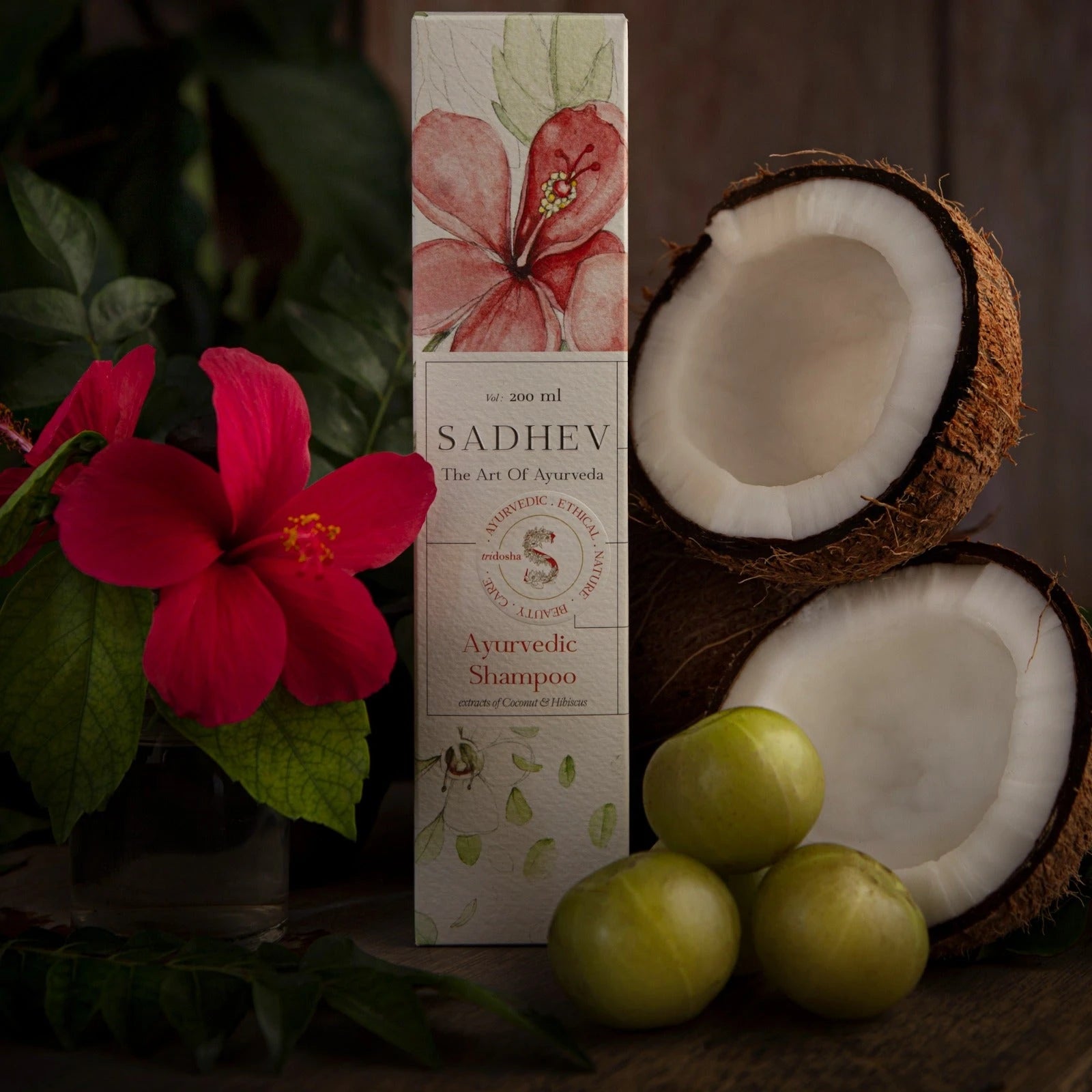
Ayurvedic Shampoo — For Normal Hair
The foundational formula. Bhringraj, amla and hibiscus in the classical triad concentrations alongside reetha as the cleansing base. For hair that is healthy and wants to stay that way. The sulphate-free base prevents the cumulative damage that conventional shampoos cause. The classical triad maintains the scalp environment in which healthy hair growth is sustained. Used twice weekly with pre-wash oiling, this is the complete maintenance routine for normal hair.
Anti-Hair Fall Shampoo — For Elevated Hair Fall
Concentrated bhringraj and amla with targeted follicular stimulation compounds alongside reetha. Where the Ayurvedic Shampoo maintains scalp health, the Anti-Hair Fall Shampoo actively addresses the follicular dysfunction driving elevated shedding. Bhringraj at higher concentration extends the anagen phase and improves scalp circulation. Amla's iron and antioxidant support strengthens the follicle. The reetha base stops the barrier disruption that worsens hair fall simultaneously. Used alongside the Anti-Hair Fall Oil pre-wash treatment, it forms the complete anti-hair fall system.
Anti-Dandruff Shampoo — For Scalp Imbalance
The classical herb triad plus neem — Ayurveda's most comprehensively documented antimicrobial herb — in a reetha base. Neem's azadirachtin and nimbin compounds provide targeted antimicrobial action against Malassezia, the fungus driving dandruff. The bhringraj and amla maintain scalp health as the antimicrobial action restores microbiome balance. The reetha base prevents the barrier disruption that creates the conditions allowing Malassezia to overpopulate. This is a complete dandruff management system rather than a symptom-suppressing product.
How to Get the Most from an Ayurvedic Shampoo
Pre-Wash Oiling — The Non-Negotiable First Step
Apply the appropriate hair oil before every wash. Massage into the scalp for five minutes using circular motions with the fingertips. Leave for twenty minutes. Then shampoo. The pre-wash oil provides a lipid layer that the reetha saponins emulsify and remove along with the surface impurities, leaving the scalp barrier intact beneath. Hair washed after pre-oiling is measurably stronger and better conditioned than hair washed without the oil step, regardless of which shampoo is used.
The combination of pre-wash oiling and sulphate-free shampooing is more effective than either practice alone. The oil nourishes the follicle and protects the shaft before washing. The sulphate-free shampoo cleans without disrupting what the oil has nourished. The conditioner after the shampoo seals in the combined benefit.
The Transition Period
Switching to a sulphate-free shampoo from a sulphate formula requires a two to three week adjustment period. During this time the scalp is recalibrating from chronic compensatory sebum overproduction — the cycle that sulphate stripping maintains — to the balanced state that an intact barrier produces. Hair may feel different during this period.
This is normal and resolves. By week three to four, sebum production normalises. Hair stays clean for longer between washes. The scalp feels calmer and less reactive. These are signs that the barrier has begun to rebuild and the cycle of damage and compensation has been broken.
Conditioner After Every Wash
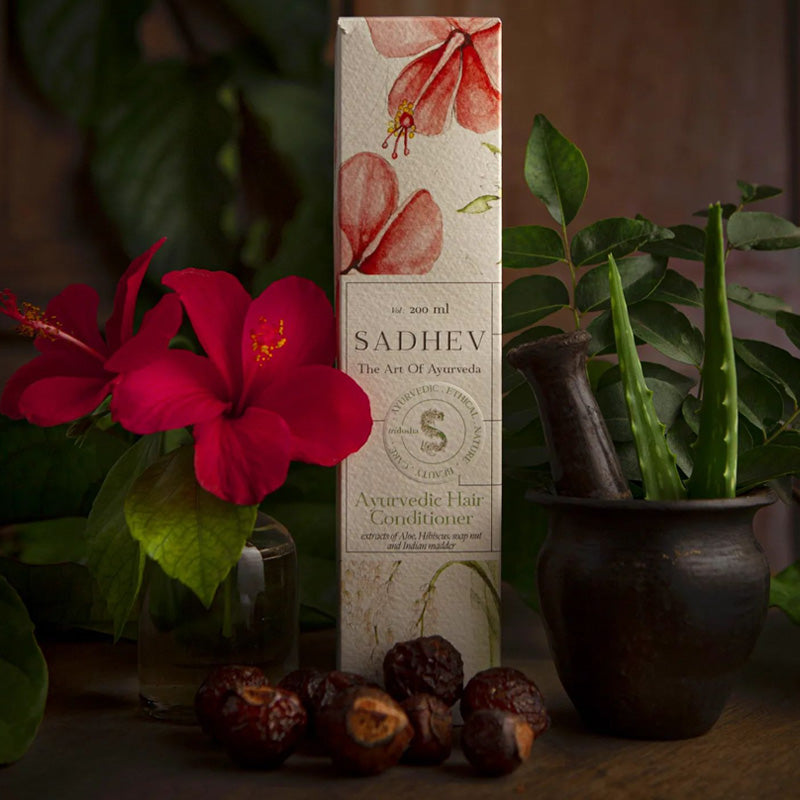
A conditioner after every wash is not optional with an Ayurvedic shampoo. The sulphate-free cleansing preserves the hair's own lipids but the physical and chemical process of washing still requires conditioner to restore the cuticle surface and provide the slip that prevents mechanical damage during detangling. SADHEV Ayurvedic Conditioner applied after every wash for two minutes before rinsing completes the wash routine.
The Realistic Timeline
▸ Weeks one to three: Transition period. Scalp adjusting. Hair may feel different but is not damaged.
▸ Weeks three to six: Sebum normalisation. Hair stays cleaner longer. Scalp reactivity reduces. For the Anti-Hair Fall variant, shedding begins to reduce as follicular inflammation lowers.
▸ Weeks six to twelve: Progressive shaft strengthening. Hair is measurably less prone to breakage. For dandruff variant, flaking reduces significantly as microbiome balance is restored.
▸ Months three to six: The full benefit of consistent Ayurvedic shampooing is observable. Hair is stronger, scalp is healthier and the chronic damage cycle of conventional shampooing has been completely reversed.
For the complete guide to reetha — the plant-based sulphate-free cleansing system in every SADHEV shampoo — and why its saponin chemistry produces better hair health than synthetic surfactants: see our reetha guide.
For the complete guide to bhringraj — the primary hair growth herb in SADHEV's Anti-Hair Fall Shampoo and why it is called Kesharaj in classical Ayurveda: see our bhringraj guide.
For the complete Ayurvedic hair care routine including the pre-wash oiling technique, correct shampooing method and the weekly protocol: see our Ayurvedic hair care routine guide.
SADHEV. Luxury Ayurvedic Care. Ayurveda in our bloodline.
Explore the complete SADHEV Ayurvedic shampoo range.
— Written by SADHEV Ayurvedic Experts, rooted in a 200-year vaidyar lineage.


