




Sulphate-free is one of the most common claims on hair care packaging. It is also one of the least understood. Most people who choose a sulphate-free shampoo do so because they have heard it is better, without knowing precisely what sulphates are, what they do or why removing them from a shampoo formulation produces a meaningfully different result for the scalp and hair.
Understanding the difference is worth the five minutes it takes. Because if you are dealing with hair fall, dry scalp, colour-treated hair that fades quickly, chemically treated hair that feels brittle, or a scalp that feels tight and stripped after every wash — the shampoo is almost certainly a significant part of the cause.
|
“Sulphates are highly effective cleansers. They are also indiscriminate ones — removing the oils you want gone and the oils you need to keep, with equal efficiency.” |
What Sulphates Are
Sulphates are a class of synthetic surfactants — surface-active agents that create the lathering, cleansing action in most conventional shampoos. The most common are sodium lauryl sulphate (SLS) and sodium laureth sulphate (SLES). They work by attaching to both oil and water molecules simultaneously, allowing oil-based impurities to be washed away with water.
They are extremely effective at this function. They are also extremely aggressive. Sulphates have a strongly negative charge that interacts with the skin's surface proteins and disrupts the lipid layer of the scalp. They dissolve not just the excess sebum, dirt and product buildup that genuinely needs to be removed, but also the skin's own natural protective oils that form the moisture barrier and support the scalp microbiome.
What Sulphates Do to Your Scalp
After washing with a sulphate shampoo, the scalp's moisture barrier is temporarily compromised. The sebaceous glands respond by producing more sebum to compensate for what was removed. This produces the cycle that most people with frequent washing habits will recognise: hair feels greasy faster after every wash, requiring more frequent washing, which strips more oil, which triggers more sebum production. The scalp never reaches equilibrium.
The consequences accumulate over time. Chronic sulphate exposure weakens the scalp skin barrier, disrupts the microbiome, creates low-grade inflammation and degrades the hair shaft's protein structure with repeated exposure. Hair that is washed frequently with sulphate shampoos becomes progressively drier, more brittle and more prone to breakage. The scalp becomes progressively more sensitive, reactive and prone to dandruff.
For people with colour-treated or chemically processed hair, sulphates cause additional specific damage: they penetrate the hair shaft and leach the colour molecules out, accelerating fade and requiring more frequent colour treatments.
What Sulphate-Free Means in Practice
A sulphate-free shampoo replaces synthetic sulphate surfactants with milder cleansing agents — typically derived from plant sources — that cleanse effectively without the aggressive disruption of the scalp barrier. The lather is less dense than a sulphate shampoo. This is not a sign of inferior cleansing — it is simply a different mechanism. Cleansing efficacy and lather volume are unrelated.
The scalp after a sulphate-free wash feels clean but not stripped. There is no tightness, no over-dryness. The sebaceous glands do not receive the signal to overproduce sebum because the natural oil balance has not been dramatically disrupted. Over time, scalp sebum production normalises. Hair needs to be washed less frequently. The cycle of over-washing that sulphates create is broken.
Why Ayurveda Never Used Sulphates
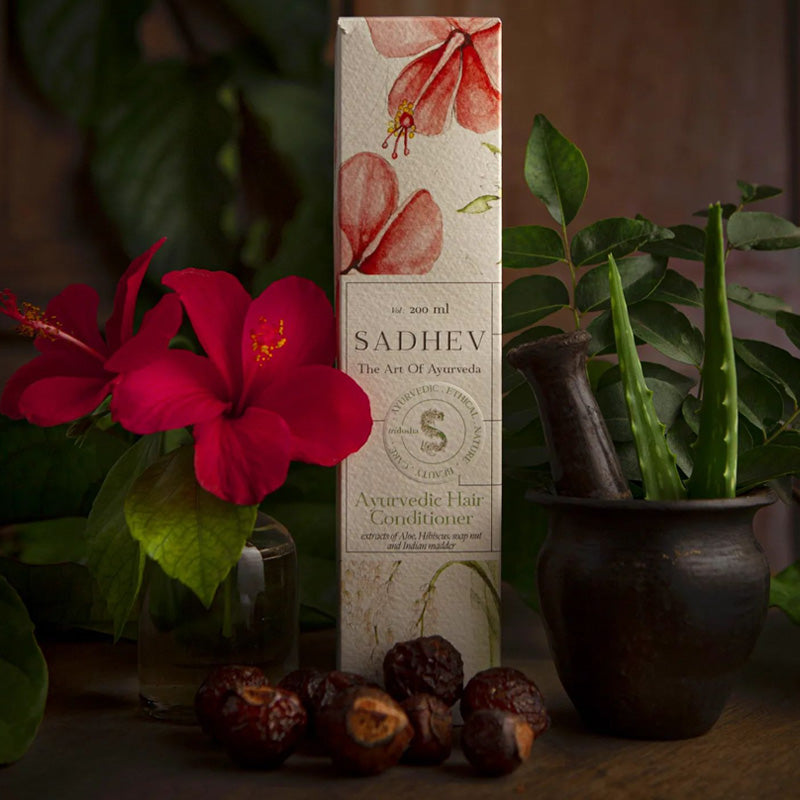
Classical Ayurveda used reetha — the soap nut, Sapindus mukorossi — as its primary hair cleansing agent for thousands of years. Reetha contains natural saponins that produce a mild, effective lather and cleanse the scalp and hair without disrupting the lipid barrier. This is the original sulphate-free shampoo, used across generations of vaidyar practice before synthetic surfactants existed.
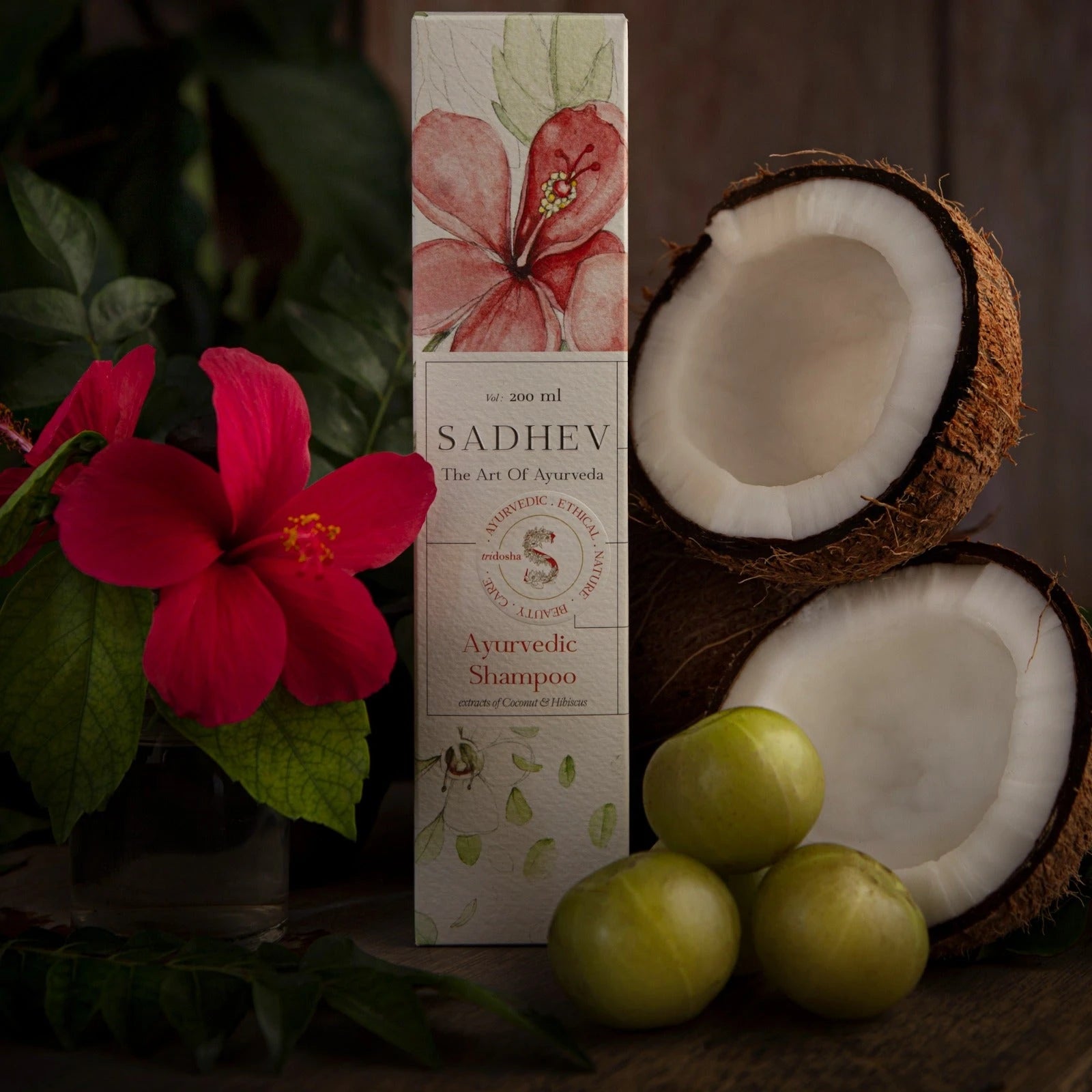
SADHEV Ayurvedic Shampoo uses reetha as its cleansing base alongside bhringraj, amla, hibiscus and curry leaves — a classical Ayurvedic formulation that cleanses gently and simultaneously delivers the therapeutic herbs that support scalp health, hair growth and natural colour preservation. No sulphates, no parabens, no synthetic fragrances. Gentle enough for daily use, therapeutic enough to address hair fall, dandruff and scalp imbalance with consistent application.
What to Expect When You Switch
The first two weeks after switching from a sulphate shampoo to a sulphate-free formula can feel like an adjustment. The scalp, accustomed to the stimulation of sulphate stripping, may produce slightly more sebum initially as it recalibrates. Hair may feel different — not necessarily better in the first week. This is the scalp finding its natural equilibrium after a long period of disruption.
By weeks three to four, the adjustment is complete. Scalp sebum production normalises. Hair needs to be washed less frequently. The tightness and sensitivity that follow conventional shampoo washes disappear. Hair feels progressively softer, more manageable and stronger as the shaft is no longer being repeatedly exposed to aggressive surfactants.
For the complete Ayurvedic hair care routine that shows how sulphate-free shampooing fits into a full weekly protocol including oiling, conditioning and leave-in treatment, see our Ayurvedic hair care routine guide.
For the full case for why bhringraj and amla in a sulphate-free base produce measurably better results for hair fall than a conventional anti-hair fall shampoo, read our guide on how to reduce hair fall with Ayurveda.
SADHEV. Luxury Ayurvedic Care. Ayurveda in our bloodline.
Make the switch to SADHEV Ayurvedic Shampoo. Explore the full SADHEV hair care range.
— Written by SADHEV Ayurvedic Experts, rooted in a 200-year vaidyar lineage.


