




Monsoon is the season that most clearly reveals whether a skincare routine is actually calibrated to your skin or simply applied to it. Routines that work well through summer — lightweight gels, oil-control formulations, minimal moisture — often fail in monsoon because the problem changes completely. The enemy stops being heat and UV and becomes humidity and the specific skin disruptions that sustained ambient moisture creates.
In Ayurvedic terms, monsoon is the season of Vata aggravation with simultaneous Pitta carryover from summer. The summer's heat has taxed the skin. The monsoon's humidity creates a new challenge — the skin's moisture regulation is disrupted not by dryness but by the body's inability to manage hydration correctly when ambient humidity is consistently high. The result is skin that looks dehydrated and oily simultaneously — the paradox that confuses most people about monsoon skin.
The Ayurvedic approach to monsoon skincare is not a dramatic overhaul of the routine. It is specific, targeted adjustments to the existing routine that recalibrate each step for what monsoon's specific conditions demand.
|
“Monsoon skin is not oily skin or dry skin. It is skin whose moisture regulation has been disrupted by sustained ambient humidity. The routine must address the disruption — not the surface appearance.” |
What Monsoon Does to Skin
Three specific things happen to skin when ambient humidity rises and stays elevated for weeks.
The skin's transepidermal water loss mechanism — the process by which moisture evaporates from the skin surface into the environment — is disrupted. In low-humidity conditions, this process draws moisture from inside the skin outward, which the routine compensates for with moisturiser. In high humidity, the gradient reverses. Moisture from the environment enters the skin surface, swelling the outer skin layers and producing the paradoxically dehydrated-looking oily skin that is characteristic of monsoon.
Sebum production — which the body uses partly as a barrier against environmental moisture disruption — increases in response to the altered humidity gradient. The skin produces more oil to maintain its barrier integrity, which is why oiliness and breakouts increase in monsoon even for people who do not typically experience oily skin.
The scalp and body skin — which are exposed to sustained moisture from rain, humidity and sweat simultaneously — become vulnerable to the microbiome imbalances that sustained wetness creates. Dandruff worsens. Body skin develops the inflammation and pore congestion that heat rash and fungal conditions produce.
Understanding these three mechanisms tells you exactly what the monsoon routine needs to do differently from the summer routine.
The Monsoon Face Routine
The adjustments to the face routine in monsoon are primarily about texture and frequency — not about changing the fundamental steps.
MORNING ROUTINE
|
Step |
SADHEV Product |
Why |
|
Cleanse |
Removes overnight sebum and surface accumulation |
|
|
Tone |
pH restoration, anti-inflammatory, pore-tightening |
|
|
Treat |
Antioxidant protection, pigmentation prevention |
|
|
Moisturise |
Lightweight gel texture — hydrates without adding heaviness in humidity |
|
|
Protect |
UV still penetrates cloud cover — non-negotiable |
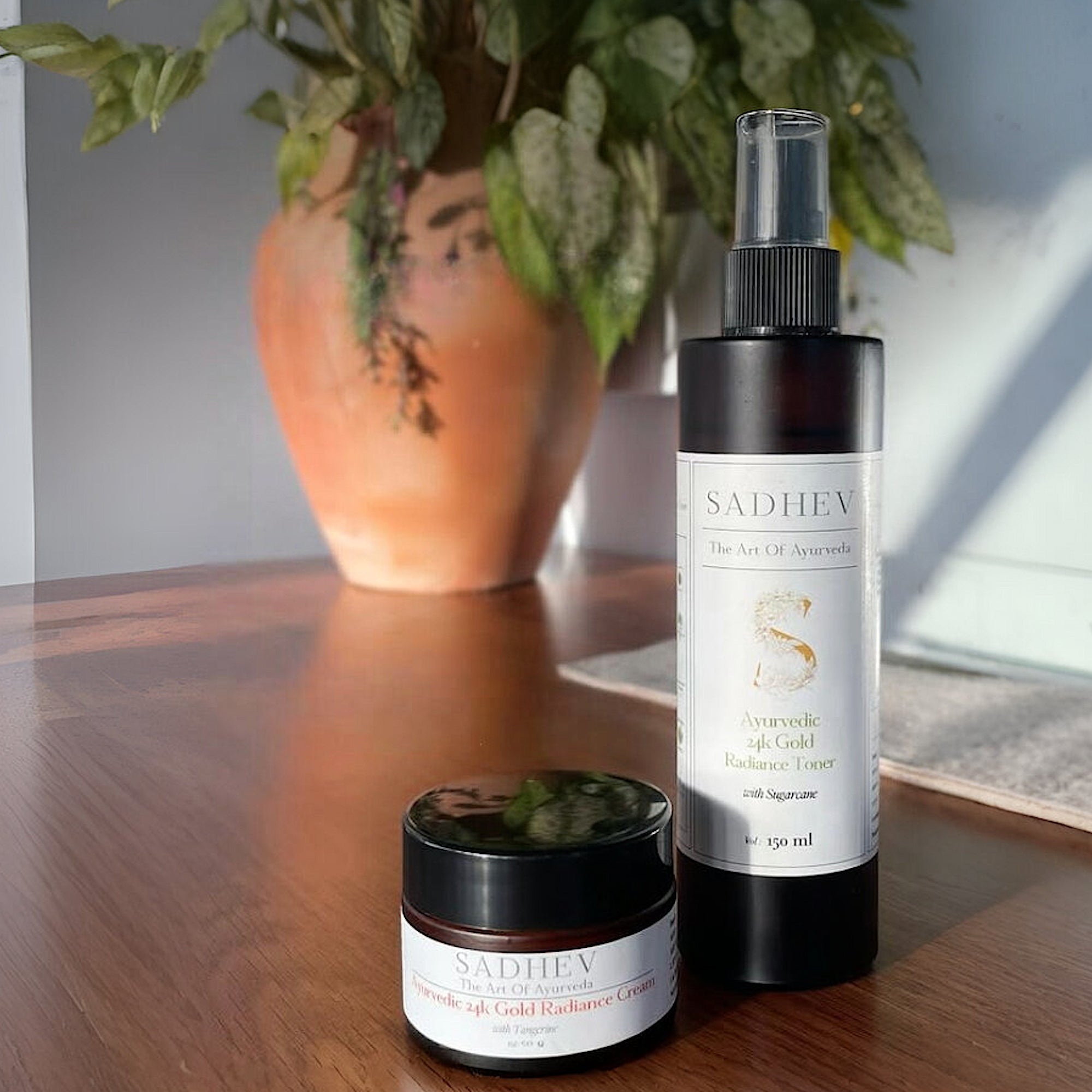
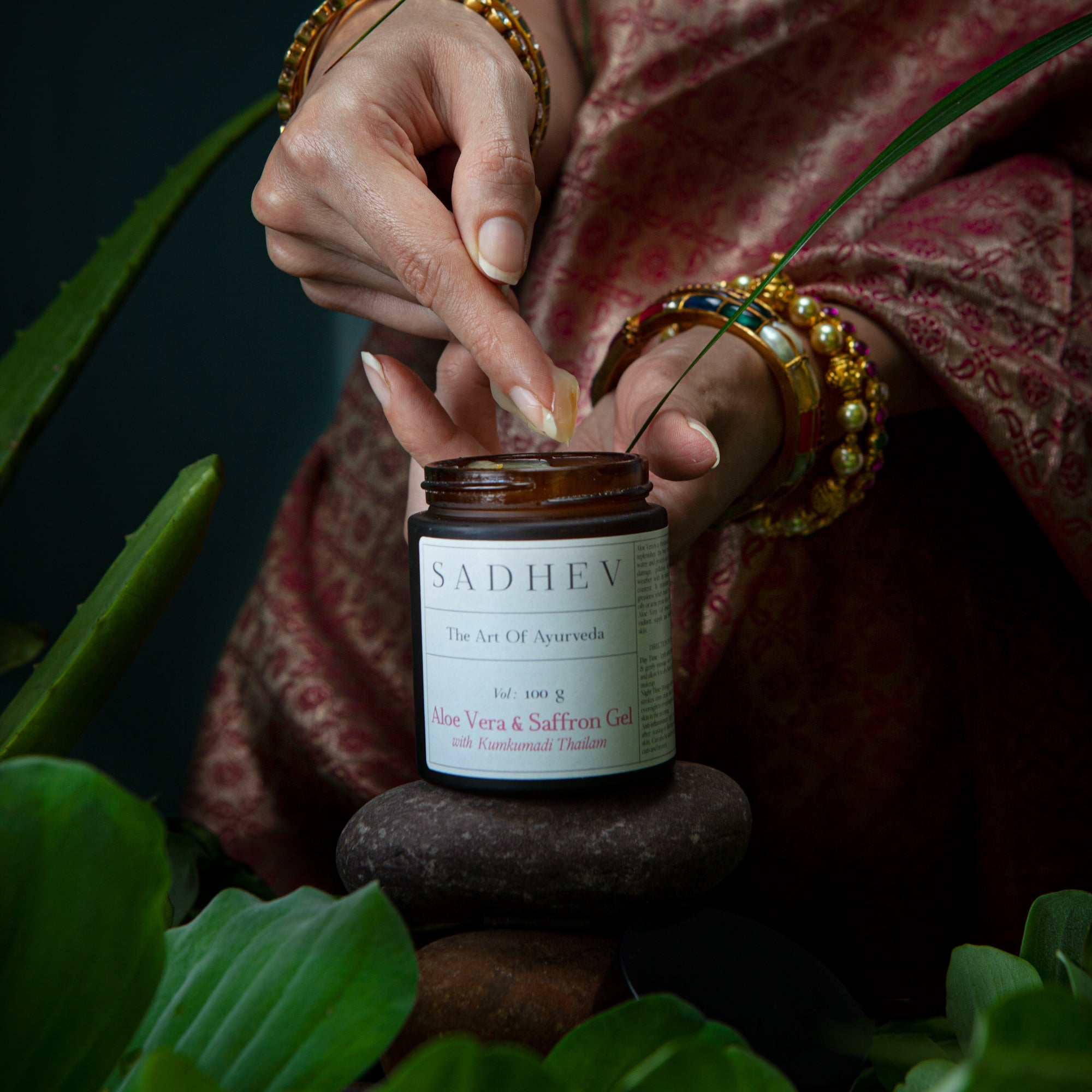
The most important monsoon face adjustment is the moisturiser texture. The heavy day creams that work well in winter and early spring are too rich for monsoon humidity in most Indian climates. Aloe Vera and Saffron Gel with Kumkumadi Tailam provides the hydration the skin needs in a lightweight gel texture that does not add to the surface heaviness that humidity already creates. The Kumkumadi Tailam micro-doses in the gel provide saffron's brightening and anti-inflammatory action without the full oil weight of the night-step Tailam.
Sunscreen in monsoon is the most consistently skipped step of the season. UV radiation penetrates cloud cover — up to 80 percent of UV reaches the skin on an overcast day. Skipping sunscreen in monsoon is not a reasonable adaptation to the season. It is four months of unprotected UV exposure producing the pigmentation and collagen damage that takes years to address.
EVENING ROUTINE
|
Step |
SADHEV Product |
Why |
|
Double cleanse if needed |
Facial Cleanser — twice if heavy pollution or sunscreen buildup |
Monsoon pollution is higher — remove completely |
|
Tone |
Rose Water — chilled, on slightly damp skin |
Restores pH disrupted by humidity and cleansing |
|
Treat |
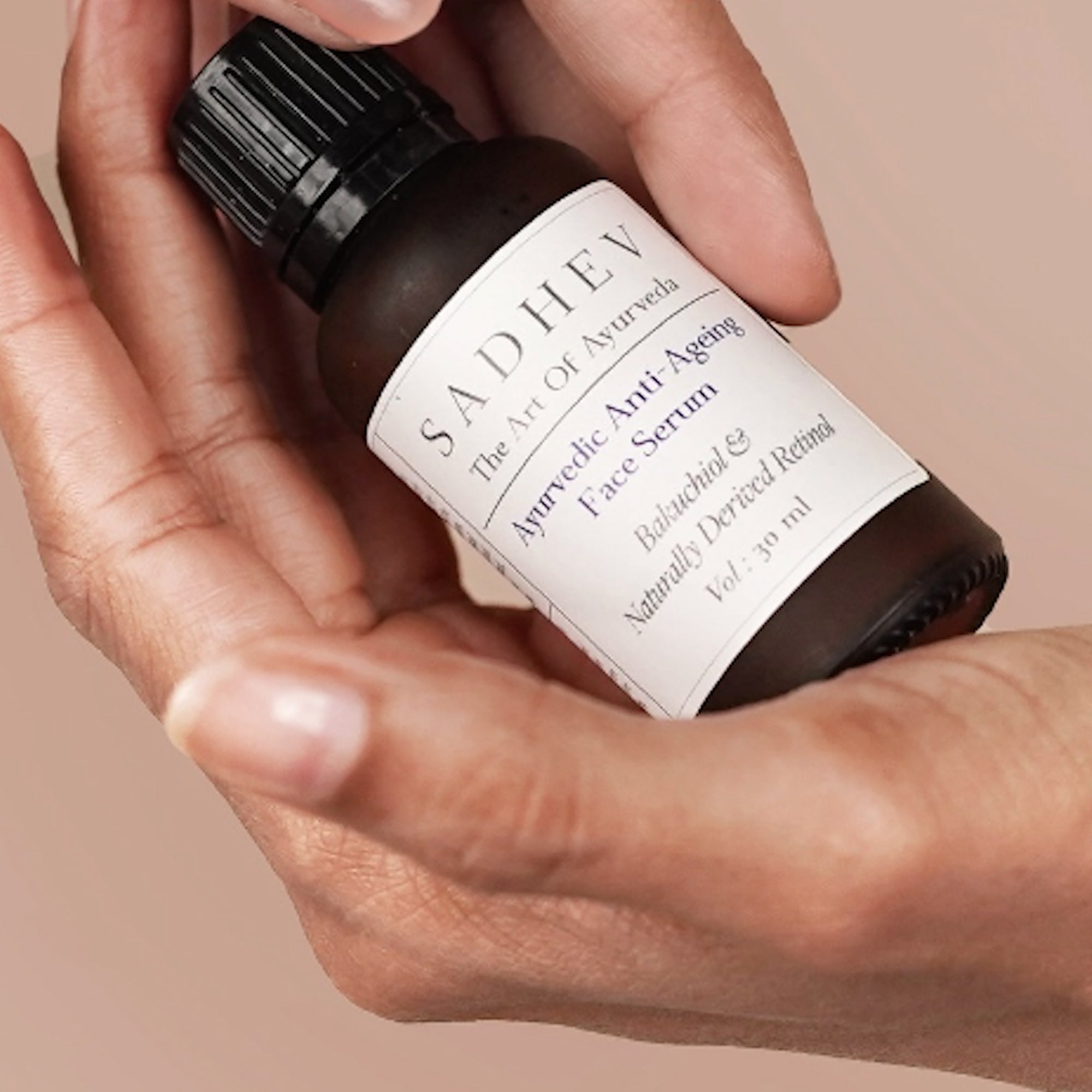
Anti-Ageing Face Serum or Vitamin C Serum |
Repairs daytime UV and pollution damage |
|
Moisturise |
Rejuvenating Night Cream — lighter application than winter |
Seals in the treatment without heaviness |
|
Night oil |
Kumkumadi Tailam — 3 to 5 drops, final step |
Saffron brightening during nocturnal repair cycle |
The evening double cleanse is particularly important in monsoon. Pollution levels increase significantly during the rainy season as rain brings particulate matter down from the atmosphere and deposits it on the skin surface. A single cleanse does not always remove sunscreen plus pollution accumulation completely. On days with significant outdoor exposure, two cleansing passes — the second on clean water — ensures the skin is genuinely clean before treatment products are applied.
The Chilled Rose Water Mid-Day Reset
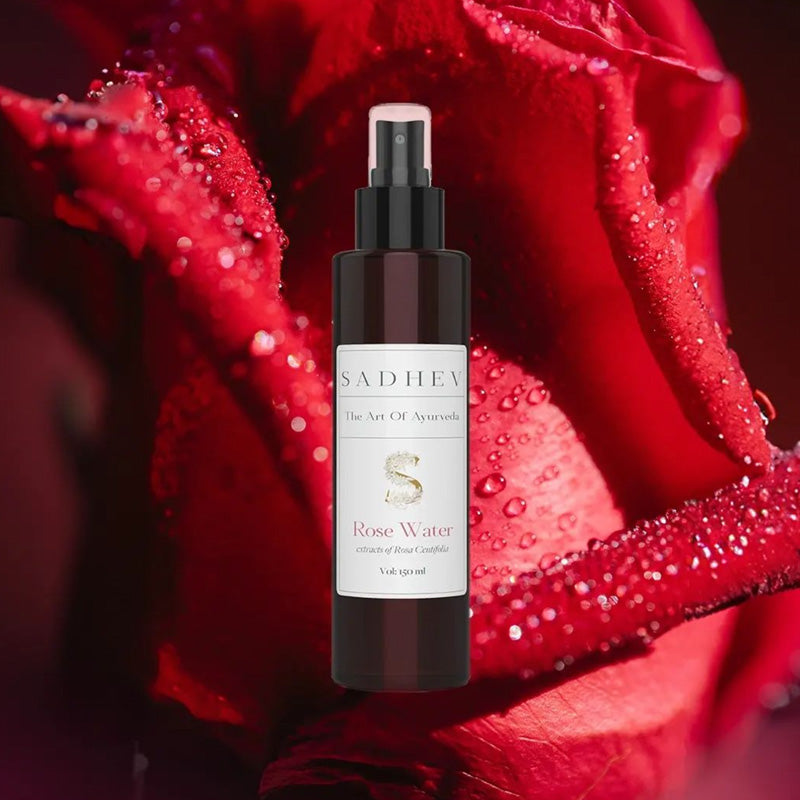
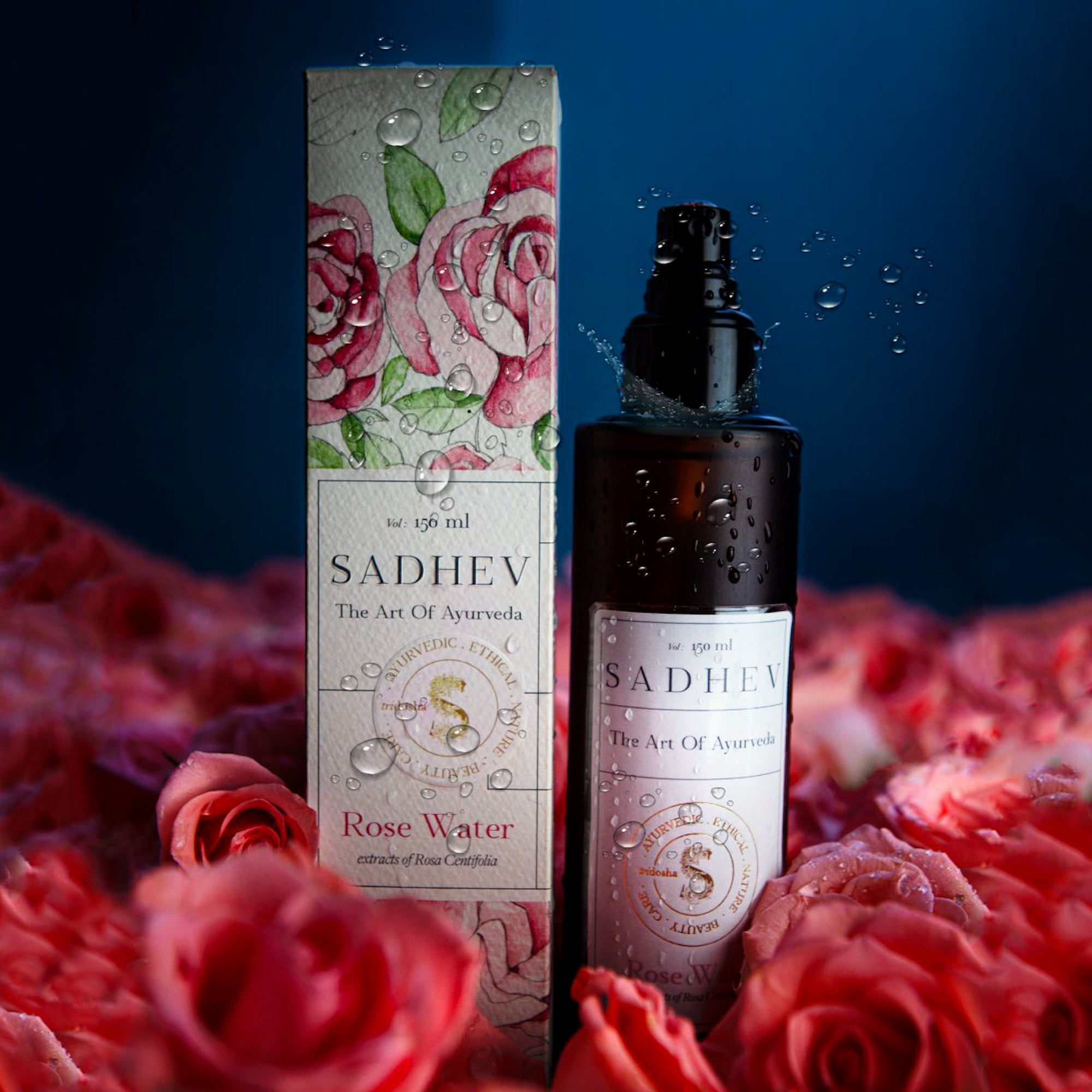
This is the single most useful monsoon skincare addition and the one most people do not know about. Carry SADHEV Rose Water in a small spray bottle in your bag during monsoon. Keep the main bottle in the refrigerator at home.
At midday — or whenever heat, humidity and sweat accumulate on the skin — spritz chilled rose water directly onto the face. It cools the skin, reduces the Pitta heat flushing that humidity drives, provides anti-inflammatory action on heat-stressed skin and removes the surface sebum accumulation without disrupting sunscreen to a significant degree.
This mid-day spritz does what no other skincare step can do — it resets the skin environment between morning and evening when sweat, humidity and pollution are actively working against the morning routine. Applied once at midday, it significantly improves how the skin looks and feels through the afternoon without requiring a full routine reset.
Monsoon-Specific Skin Concerns
Breakouts and Oiliness
The increase in oiliness and breakouts during monsoon is driven by the sebum overproduction that the humidity-disrupted moisture gradient triggers — not by diet or stress alone. The correct response is not a harsher cleanser. It is the consistent twice-daily cleansing with a sulphate-free face wash matched to your skin type, consistent toning with rose water to restore the pH environment that acne-causing bacteria dislike, and consistent lightweight moisturisation that prevents the dehydration that worsens compensatory sebum production.
For oily and combination skin prone to monsoon breakouts, the pore tightening toner used after rose water provides an additional layer of mild astringent and antimicrobial action that reduces the follicular congestion that causes monsoon breakouts. Applied consistently morning and evening it keeps the follicular environment cleaner through the season.
Post-Monsoon Pigmentation
The combination of monsoon UV exposure — consistently underestimated because of cloud cover — and the skin inflammation that humidity drives produces significant pigmentation accumulation through the season. This manifests as the uneven, patchy skin tone that most people notice at the end of monsoon and associate with the end of summer.
Daily Vitamin C Serum in the morning and daily sunscreen throughout monsoon are the two interventions that prevent this accumulation. Vitamin C inhibits the UV-triggered melanin overproduction in real time. Sunscreen reduces the UV load that triggers it. The combination applied consistently through monsoon produces skin at the end of the season that is measurably more even-toned than skin managed without these two steps.
Sensitivity and Redness
Monsoon's sustained Pitta aggravation produces more reactive, sensitive skin than at any other time of year for many people. The chilled rose water mid-day spritz, the consistent evening Kumkumadi Tailam with its vetiver and sandalwood anti-Pitta compounds, and the avoidance of harsh stripping cleansers through the season are the three interventions most likely to prevent the chronic redness and sensitivity that monsoon drives in Pitta skin types.
The Monsoon Body Routine
Body skin during monsoon faces a specific challenge that face skin does not — sustained contact with wet clothing, humidity and sweat that creates the warm, damp conditions in which microbiome disruption and fungal skin conditions develop.
|
Step |
SADHEV Product |
Why |
|
Body cleanse |
Cleanses thoroughly without stripping in humidity |
|
|
Body moisturise |
Herbal Body Lotion — on slightly damp skin |
Lightweight formula suited to monsoon humidity |
|
Body exfoliation |
Sea Salt Body Scrub — twice a week |
Prevents microbiome imbalance from humidity accumulation |
The body wash choice in monsoon matters more than in other seasons. The Ayurvedic Body Wash with Ashwagandha, Oudh and Pomegranate provides thorough cleansing alongside the adaptogenic and anti-inflammatory action that counters the stress and Pitta elevation of monsoon. The pomegranate's ellagic acid provides antioxidant protection on the body skin surface that the season's UV-through-cloud exposure continues to require.
Dry the body thoroughly after showering. This is the most important monsoon body care step and the most consistently skipped. Sustained skin dampness in the skin folds and body creases — underarms, under the breast, between the toes — creates the warm, moist conditions in which fungal and bacterial overgrowth occurs. Pat dry thoroughly, pay specific attention to the areas where skin contacts skin and allow the body to air before dressing.
What Changes in Monsoon and What Does Not
The framework for what the monsoon routine adjusts is simple. Textures become lighter. Frequency of cleansing stays the same or increases. Sunscreen is non-negotiable. The mid-day reset with chilled rose water is added. Heavy night creams are replaced with lighter alternatives. The fundamental steps — cleanse, tone, treat, moisturise, protect — remain exactly the same.
What does not change is the evening Kumkumadi Tailam step. The nightly application of saffron, sandalwood and vetiver through the oil penetration mechanism is if anything more valuable in monsoon than in other seasons — the Pitta aggravation of heat and humidity makes the anti-inflammatory action of vetiver and sandalwood and the brightening action of saffron more relevant, not less. Do not reduce this step in monsoon.
The temptation in monsoon is to simplify the routine because the skin feels different and reactions feel less predictable. The correct response is the opposite — maintain the complete routine, adjust the textures where needed and add the mid-day reset. Consistent routine management through monsoon produces skin at the end of the season that is measurably better than skin managed inconsistently.
|
“The monsoon routine is the summer routine with adjusted textures and one addition. The steps are the same. The consistency is what carries the skin through the season.” |
For the complete Ayurvedic monsoon hair care protocol — covering frizz, dandruff and hair fall during the rainy season: see our monsoon hair care guide.
For the complete year-round Ayurvedic skincare ritual including the full morning and evening sequence for all seasons: see our complete SADHEV ritual guide.
For the complete Ayurvedic summer skincare guide covering what changes between summer and monsoon and why: see our summer skincare guide.
SADHEV. Luxury Ayurvedic Care. Ayurveda in our bloodline.
Explore the complete SADHEV monsoon skincare range.
— Written by SADHEV Ayurvedic Experts, rooted in a 200-year vaidyar lineage.


