




Monsoon is the season most people dread for their hair. The moment humidity rises, hair that behaved perfectly through summer becomes unruly, frizzy and difficult to manage. Dandruff that was under control suddenly returns. Hair fall that seemed to have reduced begins to worsen again. Three problems, arriving together, with a single underlying cause.
The cause is humidity — and its specific effects on the hair shaft, the scalp microbiome and the mechanical integrity of the hair. Understanding what humidity actually does at the structural level tells you exactly why the right monsoon hair care routine produces dramatically better results than a routine built for any other season.
|
“Monsoon does not create new hair problems. It amplifies existing vulnerabilities — in the hair shaft, the scalp and the follicle. Address those vulnerabilities correctly and monsoon becomes manageable.” |
Why Monsoon Causes Frizz — The Science
Hair is made of keratin — a protein structure arranged in overlapping scales called the cuticle that lie flat when the hair is healthy and well-conditioned. When the cuticle lies flat, hair looks smooth, reflects light evenly and feels manageable. When the cuticle lifts, hair looks frizzy, feels rough and becomes difficult to control.
In high humidity, water molecules from the air penetrate the hair shaft and are absorbed by the keratin proteins in the cortex. This absorption causes the hair shaft to swell unevenly. As the cortex swells, it pushes the cuticle scales outward and upward — producing the lifted, rough cuticle that causes frizz. This is not a superficial problem. It is structural. The hydrogen bonds within the hair that normally hold the shaft's shape are disrupted by the water absorption, causing the hair to lose its smoothness from within.
This is why frizz in monsoon cannot be managed by surface styling products alone. A hairspray or serum applied on top of an already-swollen shaft provides temporary hold but does not address the underlying structural disruption. The correct intervention is a product that penetrates the cuticle and creates a barrier that slows the rate at which humidity enters the shaft in the first place — protecting the structural integrity before it is disrupted rather than managing the disruption after it has occurred.
|
“Frizz in monsoon begins inside the hair shaft, not on its surface. Products that work on the surface slow it down. Products that protect the shaft from within prevent it.” |
Why Dandruff Worsens in Monsoon
Dandruff is a scalp health problem driven by an imbalance in the scalp microbiome — specifically, the overgrowth of Malassezia, a fungus naturally present on all scalps. Malassezia overgrows when the scalp environment becomes unbalanced, typically when excess sebum and persistent moisture create conditions in which it can proliferate unchecked.
Monsoon provides both conditions simultaneously. The combination of outdoor humidity and indoor sweating keeps the scalp persistently damp for months. This sustained wetness, combined with the natural sebum production that continues regardless of season, creates the ideal environment for scalp microbiome disruption. The scalp's natural pH balance is compromised. Malassezia overgrows. Flaking, itching and sensitivity increase.
In Ayurvedic terms, monsoon dandruff is primarily a Kapha and Pitta imbalance — the dampness and heaviness of Kapha creating the stagnant scalp environment, and Pitta driving the inflammation and sensitivity that accompanies the overgrowth. The response requires clarifying and balancing herbs that restore the scalp environment rather than simply suppressing the symptoms.
Why Hair Fall Increases in Monsoon
The connection between monsoon frizz and hair fall is direct and often missed. Frizzy hair has a lifted, uneven cuticle. A disrupted cuticle makes the hair shaft mechanically weaker — more prone to snapping under the tension of detangling, combing and styling. The increased mechanical breakage during monsoon looks identical to root-level hair fall but has a completely different cause. It is the frizz-weakened shaft breaking mid-length rather than the follicle releasing the hair at the root.
For people with normal levels of hair fall, controlling the frizz through the correct conditioner and leave-in serum significantly reduces the apparent hair fall within two to three weeks. The shaft becomes stronger and less prone to breakage as the cuticle is protected and maintained.
For people with genuinely elevated hair fall — where shedding from the root is the primary concern rather than shaft breakage — the monsoon environment additionally disrupts the scalp conditions that support healthy follicular function. Persistent scalp dampness and the inflammation that accompanies microbiome disruption create conditions that are not ideal for follicle health. A targeted anti-hair fall regimen addresses this at the follicular level.
The SADHEV Monsoon Hair Care Regimen
The correct monsoon regimen depends on which of the three concerns — frizz, dandruff or hair fall — is the primary challenge. Here is the specific protocol for each.
REGIMEN 1 — For Frizz, Mild Scalp Imbalance and Normal Hair Fall
This is the recommended regimen for most people during monsoon. If frizz is the dominant concern, scalp itching or flaking is mild and hair fall is within normal range — this complete protocol addresses all three simultaneously.
|
Step |
SADHEV Product |
Frequency |
|
Pre-wash oil |
Virgin Coconut Oil — apply to scalp and hair, leave 20 minutes |
Once a week minimum |
|
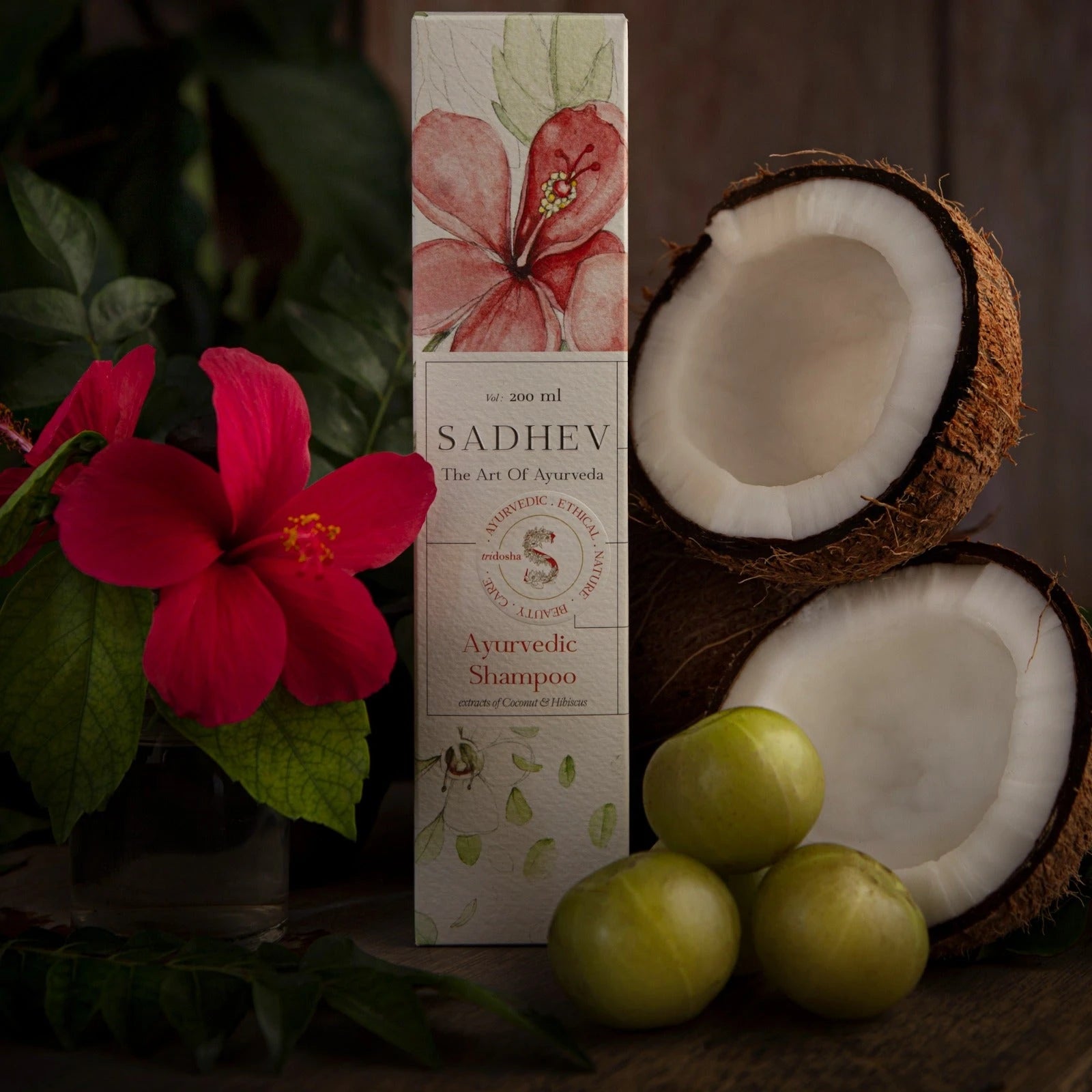
Shampoo |
2 to 3 times a week |
|
|
Conditioner |
After every wash |
|
|
Leave-in serum |
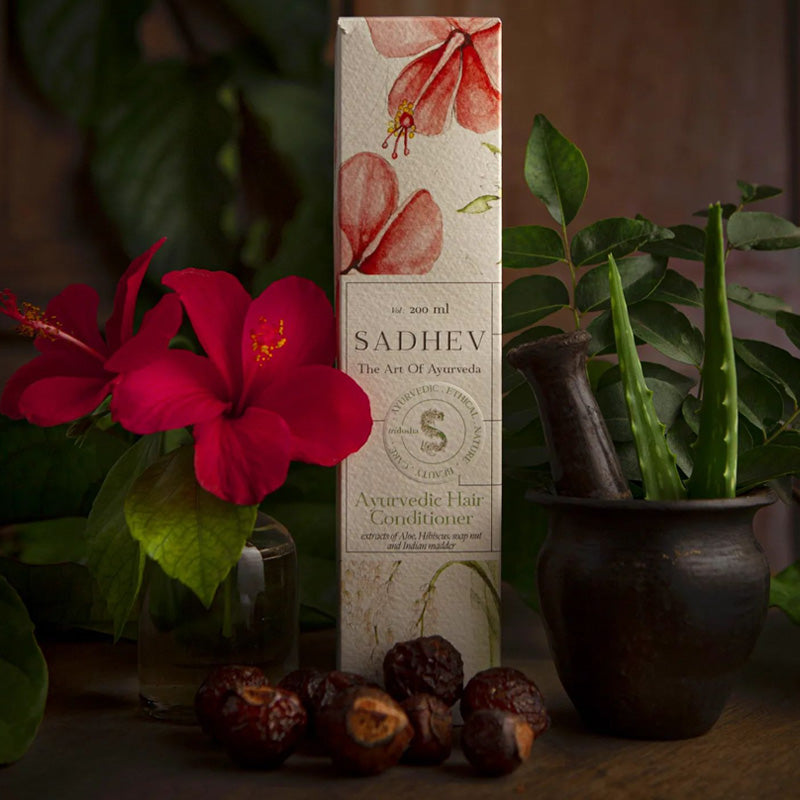
Anti-Frizz Leave-In Hair Serum — apply to damp hair |
After every wash |
The Anti-Frizz Leave-In Hair Serum is the most important monsoon addition to the routine. Applied to damp hair after washing and conditioning, it penetrates the cuticle and creates a protective layer that resists humidity before it can enter the shaft. Applied before stepping outside or before the humidity of the day builds, it dramatically reduces the amount of moisture the hair shaft absorbs. The result is hair that stays significantly smoother and more manageable through monsoon than hair that has been washed and conditioned without the serum.
Do not rinse the serum out. Apply a few drops to damp hair, work from mid-lengths to ends and style as usual. The serum absorbs without residue and provides all-day humidity resistance.
REGIMEN 2 — For Elevated Dandruff
For people who experience intense dandruff — significant persistent flaking, scalp itching and visible buildup — the dedicated Anti-Dandruff range addresses the scalp microbiome imbalance that the Ayurvedic Shampoo alone cannot fully correct during the sustained humidity of monsoon.
|
Step |
SADHEV Product |
Frequency |
|
Pre-wash oil |
Anti-Dandruff Oil — apply to scalp and hair, leave 20 minutes |
Once a week minimum |
|
Shampoo |
2 to 3 times a week |
|
|
Conditioner |
After every wash |
The Anti-Dandruff Oil, Shampoo and Conditioner are formulated as a complete system — each step delivers scalp-balancing and anti-inflammatory compounds that progressively restore the microbiome equilibrium that monsoon humidity disrupts. Use them as a complete system rather than substituting individual products. The oil nourishes the scalp and delivers the targeted herbs before cleansing. The shampoo cleanses while treating the scalp environment. The conditioner seals and restores.
REGIMEN 3 — For Elevated Hair Fall
For people experiencing severe, acute hair fall during monsoon — where root-level shedding is significantly elevated rather than just shaft breakage from frizz — the Anti-Hair Fall range delivers concentrated follicular support through the most challenging season for scalp health.
|
Step |
SADHEV Product |
Frequency |
|
Pre-wash oil |
Anti-Hair Fall Oil — apply to scalp and hair, leave 20 minutes |
Once a week minimum |
|
Shampoo |
2 to 3 times a week |
|
|
Conditioner |
After every wash |
The Anti-Hair Fall range works at the follicular level — stimulating scalp circulation, nourishing the follicle root and strengthening the hair shaft from within. During monsoon, when the scalp environment is under stress from persistent humidity and the follicle's grip on the shaft is mechanically challenged by frizz-related breakage, this targeted support makes a measurable difference over six to eight weeks of consistent use.
The Oiling Practice in Monsoon
Oil is not optional in monsoon. It is the nourishment that keeps the scalp healthy through the most challenging season for scalp balance. You do not need to oil before every wash — but going too long without oiling deprives the scalp of the deep nourishment that no shampoo or conditioner provides on its own.
Oil at least once a week, regardless of which regimen you follow. Apply to the scalp and hair, massage gently for five minutes and leave for 20 minutes before washing. This minimum oiling practice maintains the scalp nourishment that the humidity and increased washing frequency of monsoon would otherwise deplete.
Pre-wash oiling before every wash remains ideal. But if the humidity makes leaving oil on for extended periods uncomfortable, once a week with a full 20-minute application provides the nourishment the scalp needs without the discomfort of oiling in heavy monsoon conditions.
Washing Frequency in Monsoon
Increase washing frequency from twice a week to three times a week if the scalp feels sweaty, itchy or builds up quickly between washes. The sulphate-free formula in SADHEV's Ayurvedic Shampoo, Anti-Dandruff Shampoo and Anti-Hair Fall Shampoo is gentle enough for three-times-weekly use without the barrier disruption that sulphate shampoos cause when used more frequently.
Do not go more than three times a week regardless of how the scalp feels. Overwashing — even with a gentle formula — disrupts the natural sebum balance and creates the conditions that worsen both dandruff and hair fall rather than improving them.
The One Step Most People Skip in Monsoon
Applying the leave-in serum immediately after washing, before the hair dries at all. The window for leave-in serum application is damp hair — not wet, not dry, but the state the hair is in when you step out of the shower and have towel-dried gently. At this moment the cuticle is still slightly open from the warmth of the shower and the serum can penetrate most effectively. Once the hair has dried, the cuticle closes and the serum sits on the surface rather than being absorbed.
This timing detail is the difference between a leave-in serum that works through the day and one that feels like it makes no difference. Apply immediately after towel drying. Work from mid-lengths to ends. Style as usual.
For the complete Ayurvedic hair care routine that forms the foundation of the monsoon regimen — including the pre-wash oiling technique, the correct shampooing method and the year-round protocol for healthy hair — see our Ayurvedic hair care routine guide.
For the complete guide to bhringraj — the primary herb in SADHEV's hair fall formulations and the most comprehensively documented Ayurvedic herb for scalp health and hair growth — see our bhringraj for hair fall guide.
SADHEV. Luxury Ayurvedic Care. Ayurveda in our bloodline.
Shop the SADHEV monsoon hair care range. Every product in this guide is available at SADHEV.
— Written by SADHEV Ayurvedic Experts, rooted in a 200-year vaidyar lineage.


