




Dandruff is one of the most persistent and misunderstood scalp conditions. Most anti-dandruff shampoos treat the visible symptom — the flaking — with active ingredients that control fungal overgrowth temporarily. The shampoo works while it is being used. Stop using it and the dandruff returns, often worse than before.
This is because the antifungal approach addresses one factor in a more complex situation. Dandruff is not simply a fungal overgrowth problem. It is a scalp health problem — a disruption in the balance between the scalp's microbiome, its sebum production and its cell turnover rate. The fungus that drives dandruff (Malassezia) is present on all scalps. It overproliferates when the scalp environment becomes unbalanced — typically when sebum production increases or the skin barrier is compromised.
Ayurveda addresses dandruff by restoring scalp balance rather than targeting the fungus directly. This approach takes longer to produce results than an antifungal shampoo. It also does not create the rebound effect that makes prescription anti-dandruff treatments a permanent rather than a temporary requirement.
|
“Dandruff returns after treatment stops because the treatment addressed the fungus but not the scalp conditions that allowed it to overgrow. Ayurveda addresses the conditions.” |
The Ayurvedic Understanding of Dandruff
Classical Ayurveda classifies dandruff under Darunaka — a condition of dry, flaky, itchy scalp. The primary dosha involved is Vata (dryness, irregular cell shedding) with a secondary Pitta component (inflammation, sensitivity). Kapha-dominant dandruff presents as oily, thick flaking rather than dry, powdery flaking.
The Ayurvedic approach to each type differs. Dry, Vata-dominant dandruff responds to nourishing, oil-based treatments and gentle cleansing. Oily, Kapha-dominant dandruff responds to astringent, clarifying formulations that reduce excess sebum without stripping. Most people present a combination, which is why the Ayurvedic formulations most effective for dandruff use herbs that address both simultaneously.
The Herbs That Address Scalp Imbalance
Bhringraj — Scalp Circulation and Anti-inflammatory Action
Bhringraj improves scalp circulation, reducing the stagnation that contributes to sebum buildup and microbial overgrowth. Its anti-inflammatory action reduces the scalp irritation and redness that accompany and exacerbate dandruff. Consistent use progressively normalises the scalp environment, making it less hospitable to the overgrowth that causes flaking.
Amla — Sebum Balance and Antioxidant Protection
Amla's mild astringent action helps regulate sebum production, reducing the excess oiliness that creates the conditions for Kapha-dominant dandruff. Its antioxidant compounds protect the scalp skin barrier from the oxidative damage that compromises its integrity and allows the microbiome to become disrupted.
Reetha — Gentle Saponin Cleansing
Reetha — the soap nut — is the classical Ayurvedic cleansing agent. Its saponins cleanse the scalp effectively without the harsh stripping action of sulphates. This is critical for dandruff: sulphate shampoos disrupt the scalp barrier and strip natural oils so aggressively that the scalp overcompensates with increased sebum production, worsening the conditions that drive dandruff. A reetha-based cleanser provides effective cleansing without this cycle.
The Practical Protocol
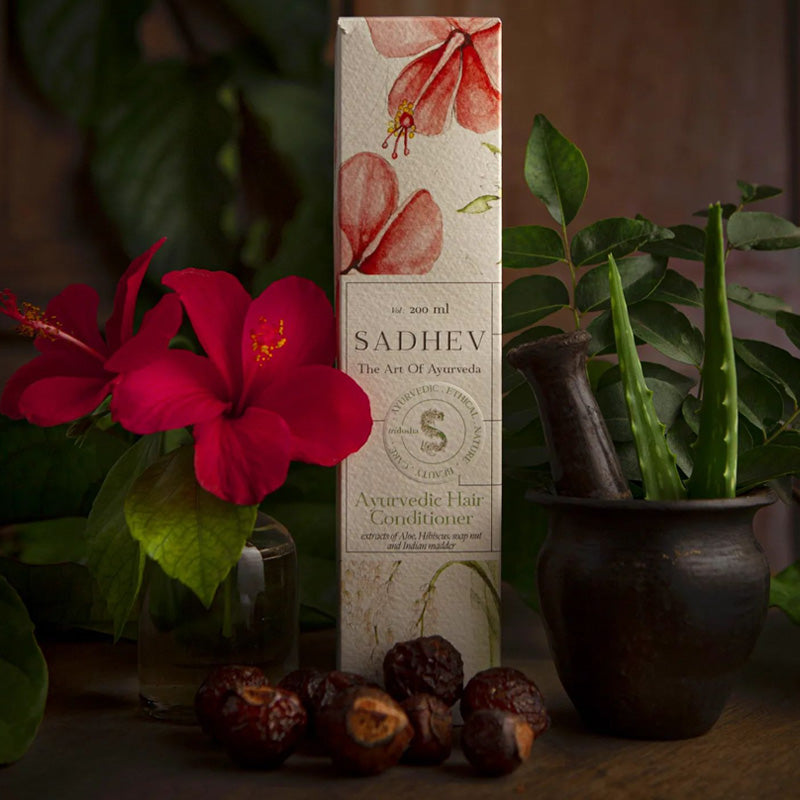
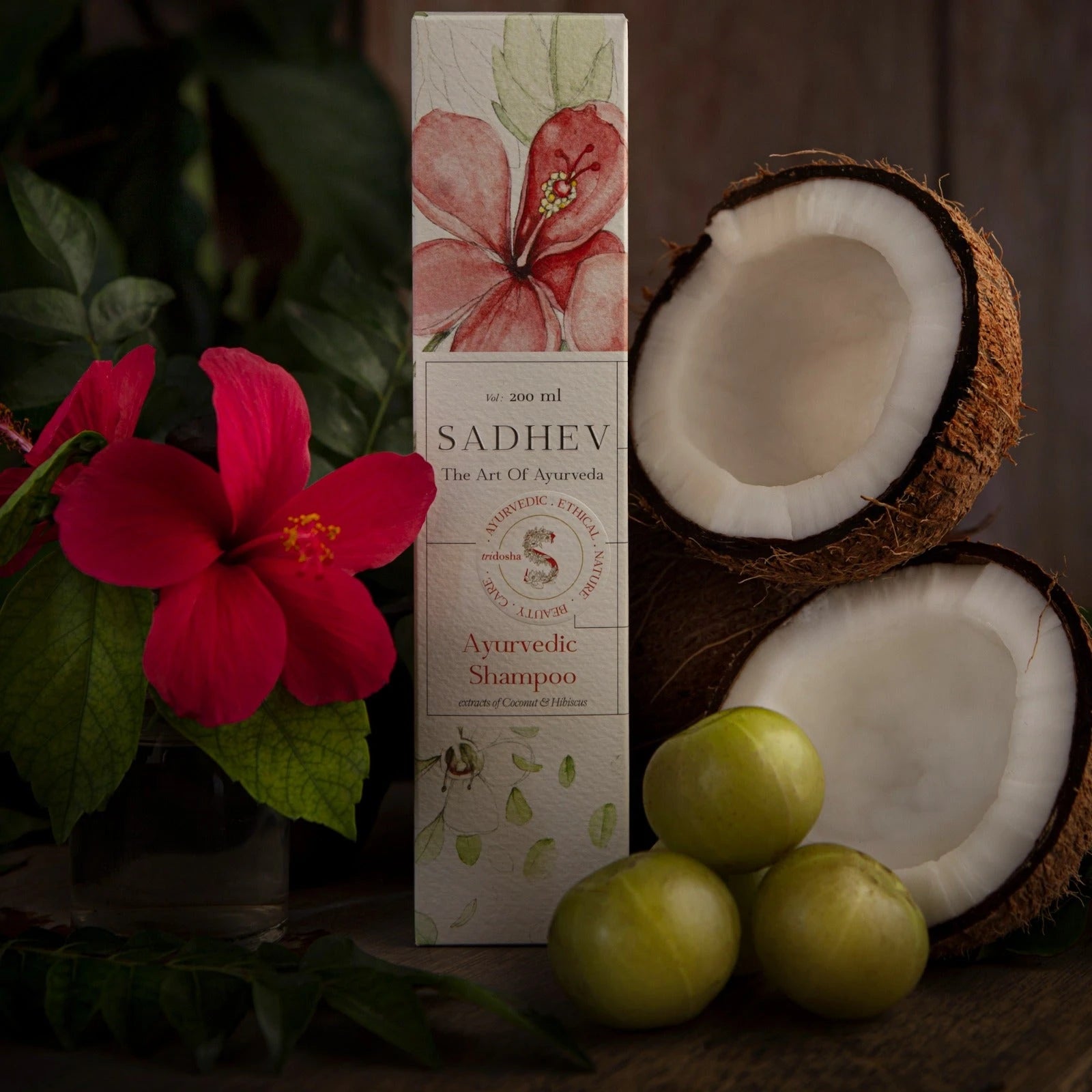
SADHEV Ayurvedic Shampoo uses bhringraj, amla, reetha and hibiscus in a sulphate-free formula that addresses dandruff through scalp balance restoration. Use it as the primary shampoo, washing the scalp thoroughly and ensuring complete rinse of all product from the scalp after each wash. Residue left on the scalp can contribute to the buildup that drives flaking.
Pre-wash oiling twice a week remains important even for oily dandruff. Counterintuitively, applying oil before washing and then shampooing it out provides nourishment to a depleted scalp barrier without leaving oil on the scalp surface. The oil protects during the wash and is removed by the shampoo, leaving a nourished but not oily scalp.
What to Expect
In the first two weeks, the scalp will feel calmer after washing. Less tightness, less irritation. The flaking may not reduce immediately — the scalp is adjusting from the stripping cycle of sulphate shampoos. By weeks three to four, flaking begins to reduce as the scalp microbiome stabilises. By weeks six to eight, the scalp environment is sufficiently balanced for the dandruff to be significantly improved.
This timeline assumes daily or regular washing. Washing frequency for dandruff should match the scalp's natural oiliness — oily scalps benefit from more frequent washing, dry scalps from less frequent. The sulphate-free formula is gentle enough for daily use.
For the complete Ayurvedic hair care routine that integrates the dandruff protocol into a full weekly practice including oiling, cleansing and conditioning, see our Ayurvedic hair care routine guide.
SADHEV. Luxury Ayurvedic Care. Ayurveda in our bloodline.
Restore scalp balance with SADHEV Ayurvedic Shampoo. Explore the full SADHEV hair care range.
— Written by SADHEV Ayurvedic Experts, rooted in a 200-year vaidyar lineage.


