




Most people own a hair oil and a conditioner and assume that covers everything hair needs between washes. It does not. Oil and conditioner both work primarily in the shower or before it — they nourish and condition the hair shaft, but neither is designed to protect hair through the hours after it dries, when humidity, friction from clothing and pillowcases, and simple air exposure are actively working to disrupt the hair cuticle and produce frizz.
A leave-in serum is the step that fills this specific gap. It is not a replacement for oil or conditioner — it is a different product doing a different job, applied at a different moment, addressing a problem that occurs after the shower ends rather than during it. Understanding this distinction is the entire reason a leave-in serum earns a place in the routine, and it is also why most people who own one still use it incorrectly.
|
“Oil nourishes before the wash. Conditioner smooths during the wash. Leave-in serum protects after the wash — through the hours your hair actually has to survive the day.” |
What Causes Frizz — The Mechanism
Frizz is a cuticle problem, not a hair-type problem. The hair cuticle is the outermost layer of the shaft — overlapping cells, like roof tiles, that lie flat when hair is healthy and hydrated. When the cuticle is raised or disrupted — from washing, heat, humidity or mechanical friction — individual strands catch moisture from the air unevenly, swell slightly, and separate from the smooth mass of the hair. That separation, multiplied across thousands of strands, is what appears as frizz.
Humidity is the most common trigger because hair is hygroscopic — it absorbs moisture from the surrounding air. In a humid environment, hair with a raised or porous cuticle absorbs ambient moisture unevenly and rapidly, causing the swelling and separation that produces frizz within minutes of stepping outside, regardless of how smooth the hair looked at home. This is why frizz is often worse in Indian coastal and monsoon climates than the styling itself would suggest — the environment is actively working against flat-lying cuticles all day.
The correct intervention is not simply adding more moisture — it is sealing the cuticle so it lies flat and stops absorbing ambient humidity unevenly in the first place. This sealing action is specifically what a leave-in serum is formulated to do, and it is different from what an oil or conditioner accomplishes.
Why Leave-In Serum Is Different From Oil and Conditioner
Hair Oil — Pre-Wash Nourishment
Applied before shampooing, oil penetrates the hair shaft during its contact time and delivers nutrients, antioxidants and lipid nourishment that strengthen the hair from within. It is washed out before styling and does not remain on the hair through the day. Its job is structural — building stronger, healthier hair over time — not surface protection for the hours ahead.
Conditioner — In-Shower Smoothing
Applied after shampooing and rinsed out, conditioner temporarily smooths the cuticle and restores some of the surface lipids that shampooing removes. Its effect is real but short-lived — it improves how hair feels and detangles immediately after the shower, but it is rinsed away and provides no ongoing protection once hair is out in the day’s actual environment.
Leave-In Serum — The Only Step That Stays
Applied to damp hair after washing and not rinsed out, a leave-in serum is the only product in a typical routine designed to remain on the hair through the entire day. Its lightweight, film-forming formulation coats the cuticle, sealing it flat and creating a barrier against the ambient humidity that would otherwise be absorbed unevenly. This is the mechanism that actually prevents frizz from forming in real time, as opposed to conditioner and oil, which improve the hair’s underlying condition but are gone before the humidity exposure of the day begins.
This is also why applying more oil or conditioner does not solve a frizz problem that is fundamentally about all-day humidity exposure — neither product is present on the hair during the hours frizz actually develops.
|
Format |
Lightweight, silicone-free leave-in serum |
|
When applied |
Immediately after washing, on damp hair — before any styling or heat |
|
What it does |
Seals the cuticle flat, blocks uneven humidity absorption, reduces static |
|
What it does not replace |
Pre-wash oiling or post-wash conditioning — works alongside both, not instead of |
|
Best for |
Frizz-prone, humidity-reactive, flyaway-prone or high-porosity hair |
|
Rinse required |
No — remains on hair through the day |
How to Use a Leave-In Serum Correctly
The technique determines whether a leave-in serum works as intended or simply sits on the hair surface without doing its job. Three details matter more than the product itself.
Apply to Damp Hair, Not Wet or Dry
Wet, dripping hair dilutes the serum and prevents it from forming the thin, even film the cuticle needs. Fully dry hair has already begun frizzing by the time the serum is applied, and the product cannot smooth a cuticle that has already lifted and set. The correct window is damp hair — towel-dried to the point of no longer dripping but still visibly moist. This is the state in which the serum distributes evenly and seals the cuticle before it has a chance to lift as the hair finishes drying.
Apply From Mid-Length to Ends — Never the Roots
The scalp and roots produce their own natural sebum and do not need additional product; applying serum at the roots makes hair look greasy and weighed down without providing any frizz benefit, since root frizz is rarely the concern. Concentrate application from the mid-lengths downward, where the hair is oldest, most porous and most prone to both dryness and frizz.
Use a Small Amount and Distribute Evenly
A leave-in serum works through a thin, even film — not through saturation. Two to three drops for shoulder-length hair, slightly more for longer or thicker hair, rubbed between the palms first and then smoothed through damp lengths and ends. Applying too much produces the opposite of the intended effect — hair that looks weighed down, oily or stringy rather than smooth.
Style or Air-Dry Afterward
The serum works whether hair is then air-dried or blow-dried and styled — it does not require heat to activate, and it provides a measure of protection against the friction and static that heat styling tools generate. Apply it as the final step before any other styling product or heat tool, since it needs to reach the hair shaft directly rather than sitting on top of another product layer.
Who Benefits Most From a Leave-In Serum
▸ Anyone in a humid climate — coastal cities, monsoon season anywhere in India — where ambient moisture is the primary daily frizz trigger.
▸ Curly, wavy or textured hair — which typically has a more open cuticle structure and higher porosity, absorbing ambient humidity more readily than straight hair.
▸ Colour-treated or chemically processed hair — including hair treated with SADHEV’s natural henna and indigo colour — where the cuticle has already been altered by the colouring process and benefits from the additional sealing and smoothing a leave-in provides.
▸ Anyone who blow-dries or heat-styles regularly — the light protective film reduces the friction and static that heat tools generate, alongside its humidity-blocking function.
▸ Fine or fragile hair prone to static and flyaways — particularly relevant in winter, when dry indoor heating generates static that a leave-in serum directly counters.
SADHEV Anti-Frizz Leave-In Hair Serum
SADHEV Anti-Frizz Leave-In Hair Serum is formulated as a lightweight, silicone-free leave-in that seals the cuticle and blocks uneven humidity absorption without the heaviness, build-up or dulling residue that silicone-heavy serums leave behind over repeated use. It is designed to be used every wash day as a standard final step — not an occasional treatment reserved for special occasions or particularly humid days.
Used consistently alongside SADHEV’s pre-wash oiling and sulphate-free conditioning steps, the leave-in serum completes the three-stage hair care system — nourish before the wash, smooth during the wash, protect after the wash — that produces meaningfully better all-day hair behaviour than any single step used in isolation.
The Complete Wash-Day Sequence
▸ Pre-wash: appropriate SADHEV hair oil, massaged into the scalp, left twenty minutes.
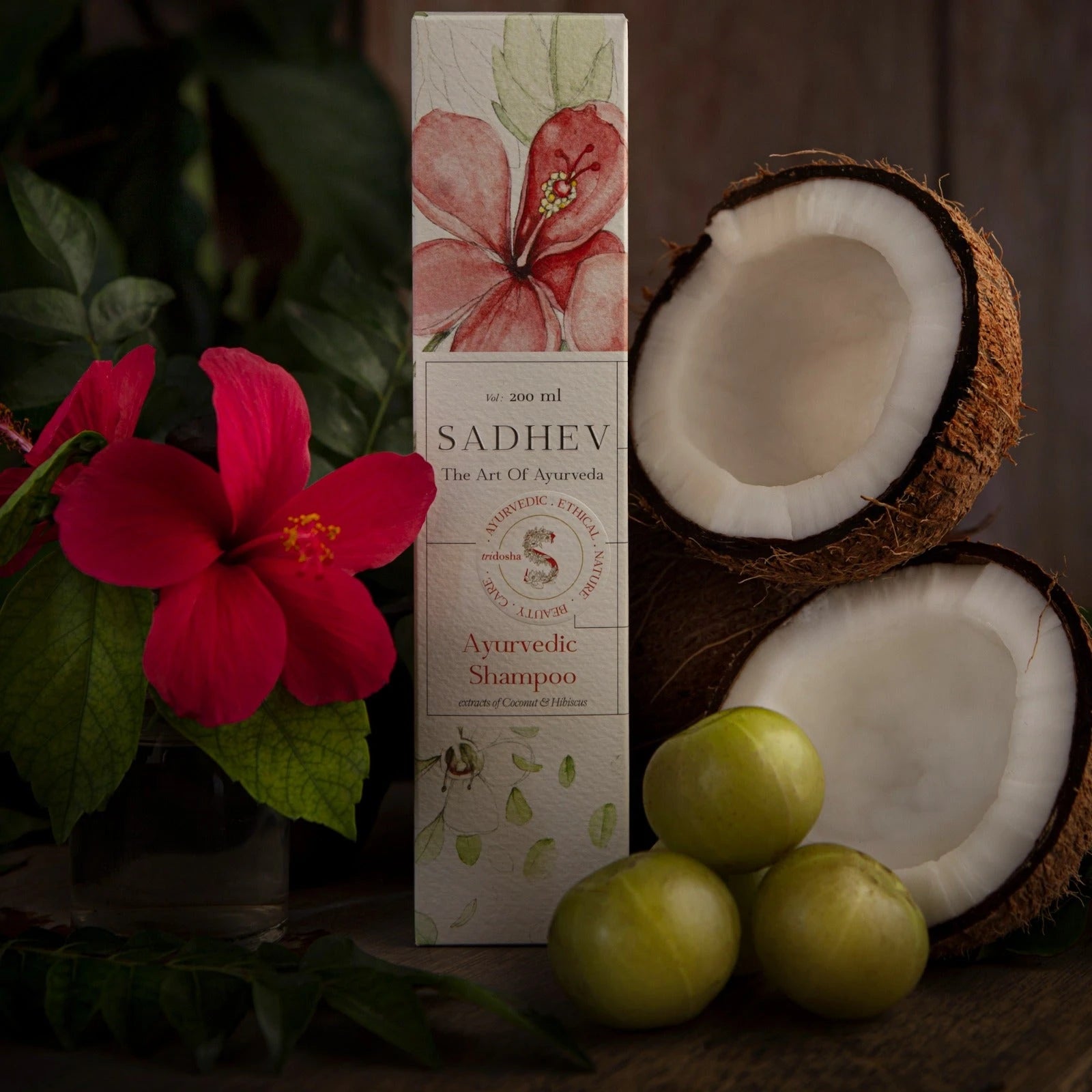
▸ Wash: sulphate-free SADHEV Ayurvedic Shampoo, cleansing without stripping the barrier.
▸ Condition: SADHEV Ayurvedic Conditioner, two minutes contact time, focused on mid-lengths and ends.
▸ Towel-dry to damp, then apply Anti-Frizz Leave-In Hair Serum from mid-length to ends.
▸ Air-dry or style as usual — the serum works either way.
The Realistic Timeline
▸ Immediate: Visibly smoother, less static-prone hair through the first day of use, particularly noticeable in humid or dry-heated environments.
▸ Weeks one to two: Reduced daily frizz as consistent cuticle-sealing use begins to compound — hair holds its smoothed state for longer between washes.
▸ Weeks three to six: Combined with consistent pre-wash oiling and sulphate-free washing, hair shows meaningfully reduced porosity-driven frizz and improved manageability even before any product is applied, as the underlying hair health improves alongside the daily protective habit.
For the complete Ayurvedic hair care routine including the correct pre-wash oiling technique and how every step in the wash-day sequence works together: see our Ayurvedic hair care routine guide.
For the complete guide to reetha — the sulphate-free cleansing base in every SADHEV shampoo — and why gentle washing matters as much as leave-in protection for reducing frizz: see our reetha guide.
For the complete guide to monsoon hair care, when humidity-driven frizz is at its most challenging: see our monsoon hair care guide.
SADHEV. Luxury Ayurvedic Care. Ayurveda in our bloodline.
Experience SADHEV Anti-Frizz Leave-In Hair Serum — lightweight, silicone-free frizz protection that lasts the whole day.
— Written by SADHEV Ayurvedic Experts, rooted in a 200-year vaidyar lineage.


