




Amla, reetha and shikakai boiled together into a strained liquid hair wash is one of the most widely trusted traditional preparations in Indian households — passed down specifically because it worked, long before anyone in the house owned a bottle of shampoo. Anyone who grew up with this ritual knows the process well: soak the dried fruits overnight, boil them down, strain the liquid, and use it in place of shampoo, usually with a story attached about whose grandmother swore by the exact ratio.
This is the pairing where SADHEV’s formulation philosophy is most literally visible, because the shared ingredient is not similar — it is identical. Reetha is the primary cleansing base in the homemade wash and the primary cleansing base in SADHEV Ayurvedic Shampoo. This post walks through exactly what the homemade version does well, why the boiling and straining process has real limitations, and how the shampoo was built to solve those limitations without replacing a single core ingredient.
|
“The herbs did not change. What changed is that you no longer have to boil, strain and hope the ratio was right this time.” |
What the Homemade Wash Gets Right
Reetha, the primary cleansing agent in the traditional wash, contains saponins — naturally occurring surfactants that clean hair effectively without the harsh, barrier-stripping action of synthetic sulphates. This is precisely why the homemade wash never produced the tight, stripped, artificially squeaky feeling that conventional shampoo causes, and why so many households who used it report noticeably stronger hair over years of consistent use. We have covered this saponin mechanism in detail elsewhere, since it is the same chemistry at work in every SADHEV shampoo formulation.
Amla contributes concentrated Vitamin C and antioxidant protection to the follicle, while shikakai — Acacia concinna — provides its own mild saponin content alongside documented conditioning properties that leave hair smoother after washing. Together, the three herbs address cleansing, antioxidant protection and conditioning in a single preparation, which is exactly the multi-functional logic behind why this specific combination became a household standard rather than any single herb alone.
Where the Boiling and Straining Process Falls Short
The process itself introduces the same limitations covered in our homemade beauty overview — concentration that varies with every batch, active compounds that begin degrading the moment the herbs are boiled and exposed to heat and air, and a strained liquid with no preservation system that must typically be used within a day or two before bacterial growth becomes a real concern in Indian heat and humidity.
There is also a practical reality that matters here just as much as the chemistry: the boiling, straining and preparation time genuinely adds up, and for many people, this is precisely why the ritual quietly stopped happening as often as it once did — not because it stopped working, but because the effort required to make it correctly, every single time, became difficult to sustain alongside everything else.
How SADHEV Ayurvedic Shampoo Was Built to Solve This
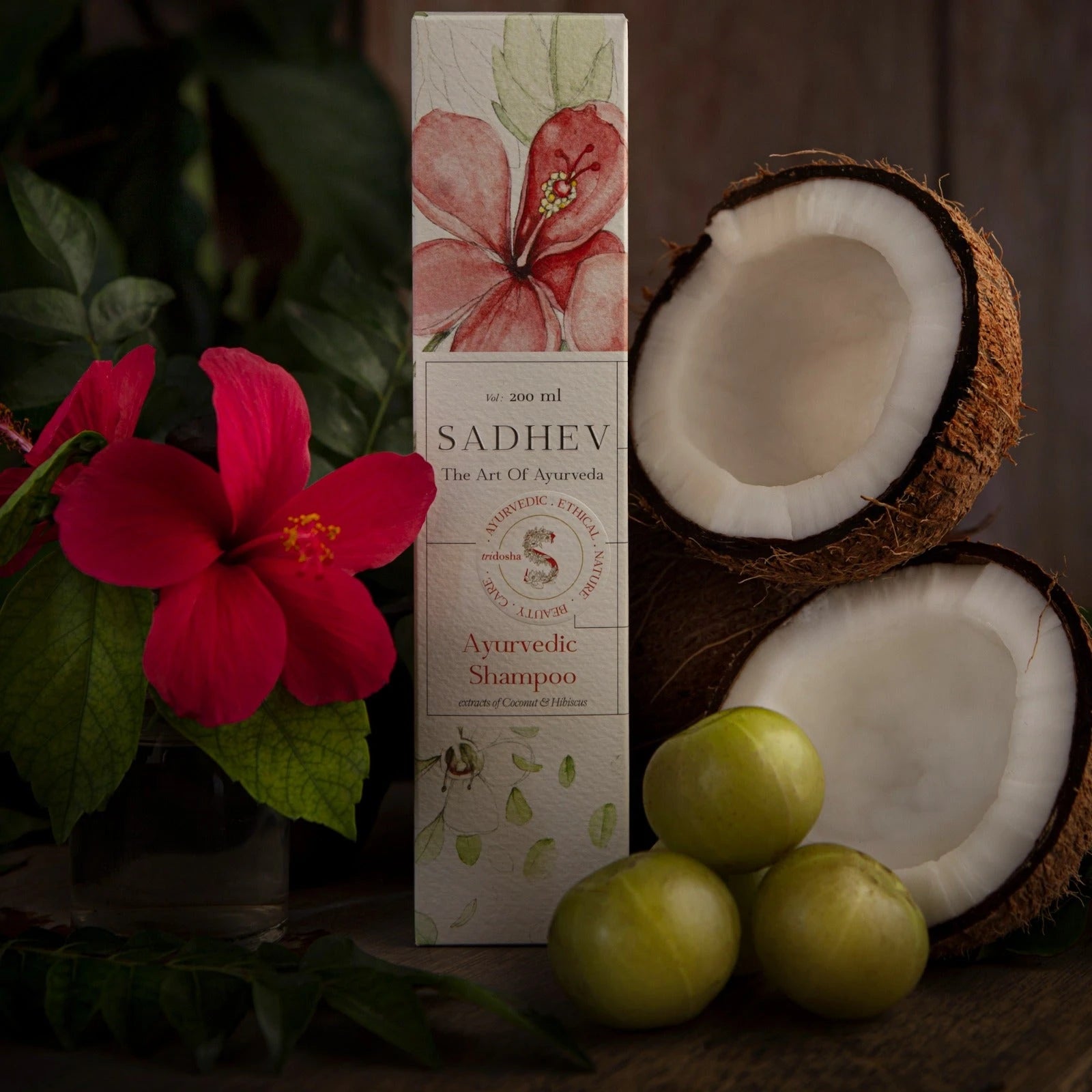
SADHEV Ayurvedic Shampoo uses reetha as its cleansing base — not as a synthetic substitute for reetha, but the same saponin-cleansing herb, formulated at a consistent, tested concentration in every single bottle rather than varying by how strong that week’s boil happened to be. Amla and hibiscus are incorporated alongside it, delivering the same antioxidant and conditioning benefit the traditional wash provided through amla and shikakai, in a stable formulation that does not require same-day use to avoid contamination.
This is the entire logic behind the formulation choice: rather than reaching for a different, unfamiliar synthetic surfactant system the way most commercial shampoos do, SADHEV built around the exact herb that already had generations of trust behind it, and solved the concentration, degradation and preservation problems that made the homemade version difficult to sustain. SADHEV Ayurvedic Shampoo is the direct result of that choice.
The Honest Comparison
|
|
Homemade Wash |
SADHEV Ayurvedic Shampoo |
|
Cleansing agent |
Reetha, boiled and strained fresh |
Reetha, formulated at a consistent tested concentration |
|
Antioxidant support |
Amla, boiled alongside reetha |
Amla, processed to preserve Vitamin C potency |
|
Conditioning |
Shikakai |
Hibiscus — comparable conditioning action, plus follicular support |
|
Preparation time |
Overnight soak, boiling, straining, every use or every few days |
None — ready to use directly from the bottle |
|
Consistency |
Varies with each batch and boiling time |
Identical formulation in every bottle |
|
Shelf stability |
1 to 2 days before contamination risk |
Formulated for extended, stable use |
If You Still Want to Make the Traditional Wash
For anyone who wants to continue the traditional preparation alongside or instead of the shampoo, the fundamentals matter more than most recipes mention. Use whole, unbroken dried reetha and amla rather than pre-powdered versions, since powdered forms oxidise and lose potency considerably faster once ground. Soak overnight in enough water to fully cover the herbs, then simmer gently rather than boiling vigorously, which can degrade some of the more heat-sensitive compounds. Strain thoroughly and use the liquid within 24 hours, refrigerating if it must be held any longer, and discard rather than reuse it beyond that window.
For the complete guide to bhringraj, the herb that completes the classical hair trio alongside amla and reetha in SADHEV’s formulation: see our bhringraj guide.
For the complete Ayurvedic hair care routine, including correct pre-wash oiling technique that pairs well with this shampoo: see our hair care techniques guide.
SADHEV. Luxury Ayurvedic Care. Ayurveda in our bloodline.
Experience SADHEV Ayurvedic Shampoo — the same trusted herbs, without the boiling and straining.
— Written by SADHEV Ayurvedic Experts, rooted in a 200-year vaidyar lineage.


