




Scalp serums have become a genuinely popular category in recent years — lightweight, leave-on formulas applied directly to the scalp without requiring a wash afterward, positioned as a more convenient alternative to traditional pre-wash hair oiling. The pitch is straightforward: apply daily, no mess, no wash-day dependency. Traditional hair oil, meanwhile, has centuries of Ayurvedic documentation behind it, but requires a wash step and a very different daily rhythm.
This is a genuinely useful comparison to make honestly, because the two formats are not simply different price points on the same idea — they work through different delivery mechanisms, and which one is right for a given goal depends specifically on what a scalp actually needs.
|
“The question is not which format is more convenient. It is which delivery mechanism actually gets the active compound to where it needs to go.” |
How Hair Oil Delivers Its Actives
Traditional pre-wash hair oil works through extended contact time and oil-based penetration. Herbs like bhringraj and amla contribute compounds that are largely lipophilic — meaning they dissolve into and travel through an oil base far more effectively than through water. Applied to the scalp and left for a minimum of twenty minutes, often overnight, the oil carries these compounds into contact with the follicle for a sustained period, then is washed out afterward.
This mechanism is documented in detail in our hair oil buyer’s guide — the entire logic of the pre-wash oiling ritual, from bhringraj’s anagen-extending action to amla’s antioxidant protection, depends on this oil-based, extended-contact delivery format specifically.
How a Scalp Serum Delivers Its Actives
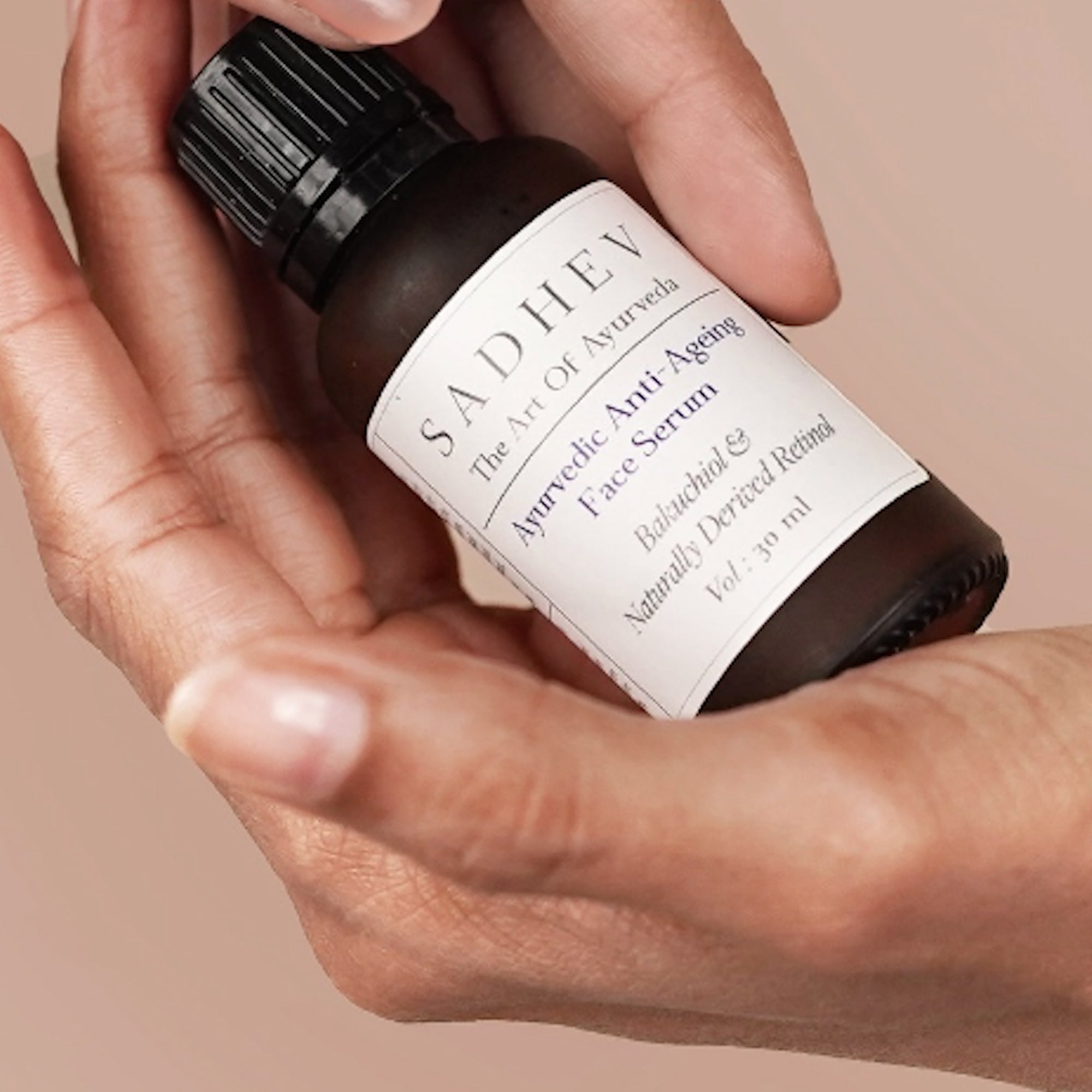
A scalp serum is typically formulated as a lightweight, often water- or silicone-based leave-on liquid, designed to be applied directly to the scalp without washing out. Its core advantage is genuine and worth stating plainly: it can be used daily, including on non-wash days, delivering a small, consistent dose of its active ingredients far more frequently than an oil that requires a full wash cycle every application.
The trade-off is equally real. A water-based leave-on formula cannot carry lipophilic compounds like bhringraj’s or amla’s active constituents nearly as effectively as an oil base does — the same chemistry that makes oil the correct delivery vehicle for these specific herbs makes a water-based serum a poor match for them. A scalp serum built around water-soluble actives works well for its own formulation, but it is not simply a lighter version of the same herbs in oil form.
The Honest Comparison
|
|
Hair Oil |
Scalp Serum |
|
Delivery mechanism |
Oil-based, lipophilic compounds, extended contact time |
Water or lightweight base, rapid absorption |
|
Frequency |
Pre-wash, typically 2 to 3 times weekly |
Can be used daily, including non-wash days |
|
Wash required |
Yes, always |
No |
|
Best suited actives |
Bhringraj, amla, lipophilic herbal compounds |
Water-soluble actives, lighter formulations |
|
Contact time |
20 minutes to overnight |
Ongoing, left on continuously |
|
Mess and routine impact |
Requires planning around wash day |
Fits into a daily routine with minimal disruption |
Why SADHEV Formulates Hair Treatment as Oil
SADHEV’s hair treatment range — Anti-Hair Fall Oil, Anti-Dandruff Oil and Virgin Coconut Oil — is built as oil specifically because bhringraj, amla and hibiscus are most effectively delivered through this format. Formulating these same herbs into a water-based leave-on serum would mean accepting significantly reduced delivery of the exact compounds responsible for their documented benefit, purely for the convenience of skipping the wash step.
This is not a rejection of convenience as a value — it is a formulation choice that prioritises actual delivery efficacy for these specific herbs over the daily-use convenience a lighter format would offer. For anyone who finds the pre-wash oil ritual genuinely difficult to sustain, SADHEV Anti-Frizz Leave-In Hair Serum fills a related but distinct role — applied to damp hair after washing rather than to the scalp before it, addressing frizz and cuticle protection through the day using a lightweight format suited to that specific job.
So Which Should You Actually Use
▸ If the goal is addressing hair fall, dandruff or follicular health specifically — pre-wash oiling with the correctly targeted SADHEV oil remains the more effective choice, because the lipophilic herbs doing that work need the oil-based delivery to reach the follicle properly.
▸ If the goal is all-day frizz control and cuticle protection on already-washed hair — a leave-in serum applied to damp hair after washing is the correct tool, and this is a genuinely different job from scalp treatment.
▸ If daily convenience matters more than maximising delivery of a specific herb — a water-based scalp serum has a real place, but should be understood as a different, lighter-touch category rather than a direct substitute for what pre-wash oiling accomplishes.
▸ Many routines benefit from both categories used for their distinct purposes rather than treating them as competing options for the same job.
For the complete guide to correct pre-wash oiling technique, including scalp massage method and how long to leave oil on before washing: see our hair care techniques guide.
For the complete guide to the SADHEV Anti-Frizz Leave-In Hair Serum and exactly when it fits into a routine alongside pre-wash oiling: see our leave-in serum guide.
SADHEV. Luxury Ayurvedic Care. Ayurveda in our bloodline.
Explore the complete SADHEV hair care range, formulated for how each active actually works.
— Written by SADHEV Ayurvedic Experts, rooted in a 200-year vaidyar lineage.


