




Multani mitti — fuller’s earth — mixed with rose water or plain water into a paste and applied until it dries hard on the skin is one of the most familiar rituals in Indian households, especially for oily skin. The tight, drying sensation as it sets, and the slightly rough, tugging feeling when it is washed or peeled off, has led generations to describe it as exfoliating. This is a reasonable assumption, and also, honestly, not quite accurate — and clearing up exactly what multani mitti does is the right entry point into properly explaining what exfoliation actually is, and the real difference between physical scrubs and chemical exfoliants like AHA and BHA.
|
“The tight, tugging feeling of a drying clay mask is not exfoliation. It is oil absorption and mild astringent tightening — a different mechanism with a similar sensation.” |
What Multani Mitti Actually Does
Fuller’s earth is an absorbent clay mineral — primarily hydrated aluminium silicate — and its defining property is drawing excess oil, impurities and surface moisture out of the skin as it dries, alongside a mild astringent tightening effect on the pores. This is genuinely useful for oily and congested skin, and it is a real, documented mechanism. What it is not doing, despite the sensation, is removing dead skin cells through the mechanical grit-based action that true physical exfoliation relies on. Multani mitti has no particulate texture of its own — the tugging feeling comes from the clay drying and adhering to fine surface hairs and skin, not from abrasive particles lifting away dead cells.
This distinction matters because someone using multani mitti specifically hoping to address dullness from dead cell buildup, the way our face scrub guide describes, is using the wrong tool for that specific job — even though the product is genuinely useful for its actual purpose of oil control.
What Exfoliation Actually Means
Genuine exfoliation is the acceleration of the skin’s natural shedding process — the removal of dead, flattened corneocytes sitting on the surface that would otherwise eventually shed on their own, but that build up faster than the natural cycle clears them in most adult skin. There are exactly two mechanisms that achieve this: physical exfoliation, which removes dead cells through mechanical friction, and chemical exfoliation, which dissolves the bonds holding those cells together so they release without any scrubbing at all.
Physical Exfoliation — Scrubs
Physical exfoliation uses fine particles suspended in a base, massaged gently across the skin to lift dead cells away through controlled friction. Done correctly — light pressure, fine and rounded rather than sharp particles, twice weekly rather than daily — this produces an immediately visible smoothing effect with minimal risk. Done incorrectly, with excessive pressure or particles that are too coarse or irregularly shaped, it causes the micro-tears and barrier disruption we cover in detail elsewhere.
Chemical Exfoliation — AHA and BHA
Chemical exfoliants work through a completely different mechanism — acids that dissolve the bonds between dead skin cells, allowing them to release without any physical friction at all. The two main categories differ in one critical property: solubility.
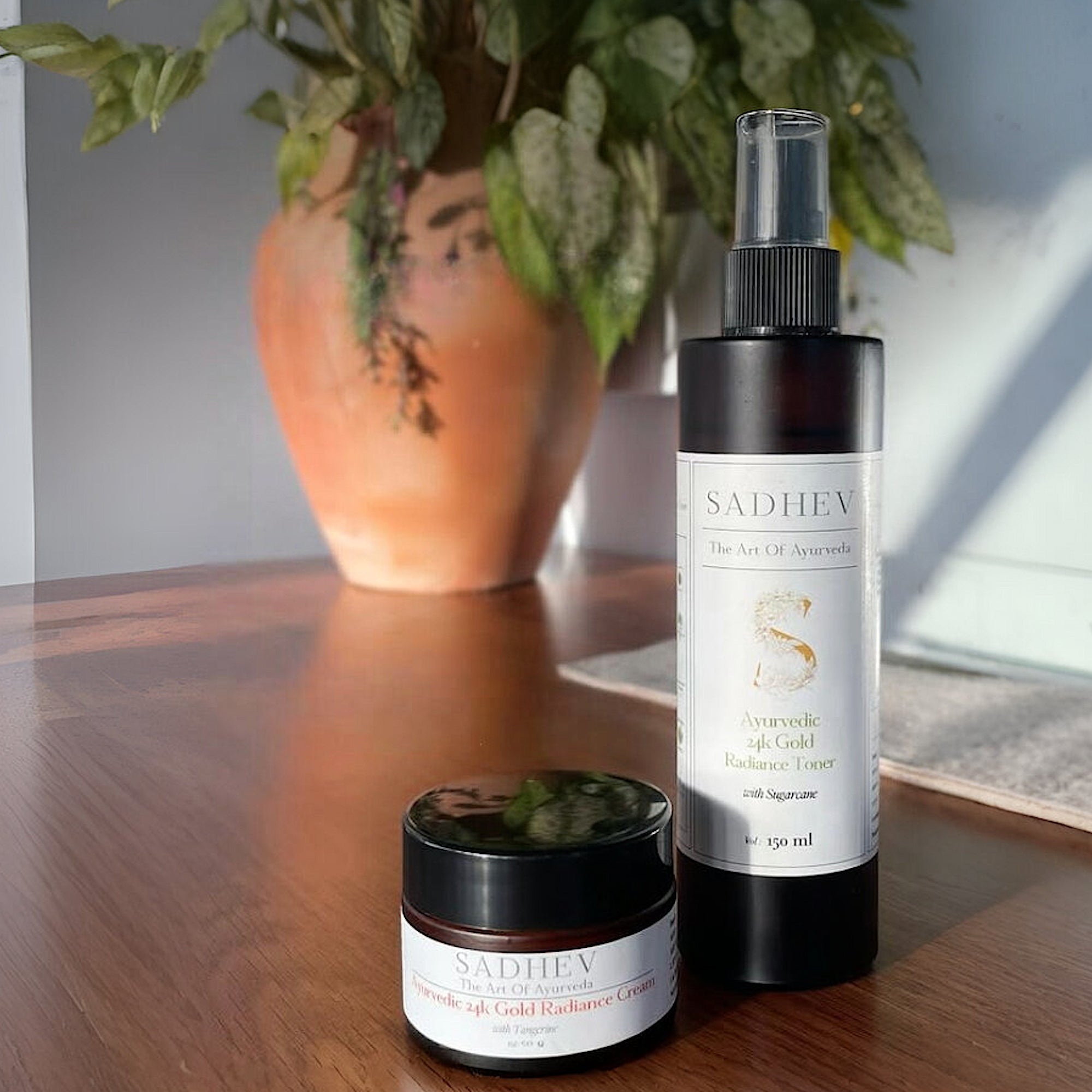
AHA, alpha hydroxy acid, is water-soluble and works primarily on the skin surface, making it well suited to general dullness, uneven texture and mild brightening. Glycolic acid and lactic acid are the most common examples, and sugarcane-derived glycolic acid is specifically what powers the gentle overnight exfoliation in our 24K Gold Radiance Mask.
BHA, beta hydroxy acid, is oil-soluble, which allows it to penetrate into the sebum-filled follicle itself rather than only acting on the surface — making it particularly effective for blackheads and congested pores. Salicylic acid is the most common BHA, and we have written in detail about how it works and the Ayurvedic ingredients that address similar concerns through different mechanisms.
The Three Approaches Side by Side
|
|
How It Works |
Best For |
|
Multani Mitti |
Oil absorption and astringent tightening — not true exfoliation |
Oily, congested skin needing sebum control |
|
Physical Scrub |
Mechanical friction removes dead cells directly |
General dullness, uneven texture, twice weekly |
|
AHA (e.g. Sugarcane) |
Water-soluble, dissolves surface cell bonds |
Overall brightness and smoothness, gentle enough for regular use |
|
BHA (e.g. Salicylic Acid) |
Oil-soluble, penetrates into the follicle itself |
Blackheads, congested pores, oily acne-prone skin |
Why Gentle Matters More Than Aggressive
Regardless of which method is used, more frequent or more intense exfoliation does not produce proportionally better results — it produces barrier damage. The signs of over-exfoliation we cover in our skin barrier guide apply identically whether the cause is a harsh scrub used daily, an AHA used too frequently, or a BHA layered on top of other actives without adjustment. Twice weekly for physical exfoliation, and starting any new chemical exfoliant gradually, are the consistent, evidence-based defaults regardless of which category is chosen.
Where Multani Mitti Still Fits
None of this means multani mitti has no place in a routine — it remains a genuinely useful, if differently-purposed, tool for oily and congested skin specifically for oil control rather than exfoliation. SADHEV Orange and Cinnamon Bathing Bar addresses this same oil-control need for body skin through a formulated, consistent alternative, using orange peel’s mild astringent action and Vitamin C alongside cinnamon’s circulation-stimulating warmth.
For genuine physical exfoliation on oily or any other skin type, SADHEV Ayurvedic Face Scrub remains the correct tool, used twice weekly alongside whichever oil-control or chemical exfoliation step suits the specific concern.
For the complete guide to identifying your dosha skin type, since Kapha-dominant congested skin is exactly the profile multani mitti was traditionally used for: see our dosha skin type guide.
This closes our Homemade Beauty series — for the complete overview of why traditional preparations genuinely work and where they fall short, the piece this entire series began with: see our homemade beauty guide.
SADHEV. Luxury Ayurvedic Care. Ayurveda in our bloodline.
Explore the complete SADHEV range — the right tool for oil control, physical exfoliation or chemical exfoliation, whichever your skin needs.
— Written by SADHEV Ayurvedic Experts, rooted in a 200-year vaidyar lineage.


