




New skincare terms show up faster than anyone can keep track of them, and half the time nobody explains what they actually mean — you just see the term everywhere, assume everyone else already knows, and quietly Google it later. We are not doing the neutral dictionary version of this. Every term below gets our actual opinion: worth doing, worth skipping, or worth doing the way Ayurveda has already been doing it for a very long time.
|
“Half of what is trending right now, Ayurveda has been doing for centuries under a completely different name. The other half is genuinely new. We will tell you which is which.” |
Slugging
|
Slugging Applying a thick, occlusive layer — usually petroleum jelly — as the very last step of your night routine, sealing everything underneath and preventing overnight moisture loss. |
|
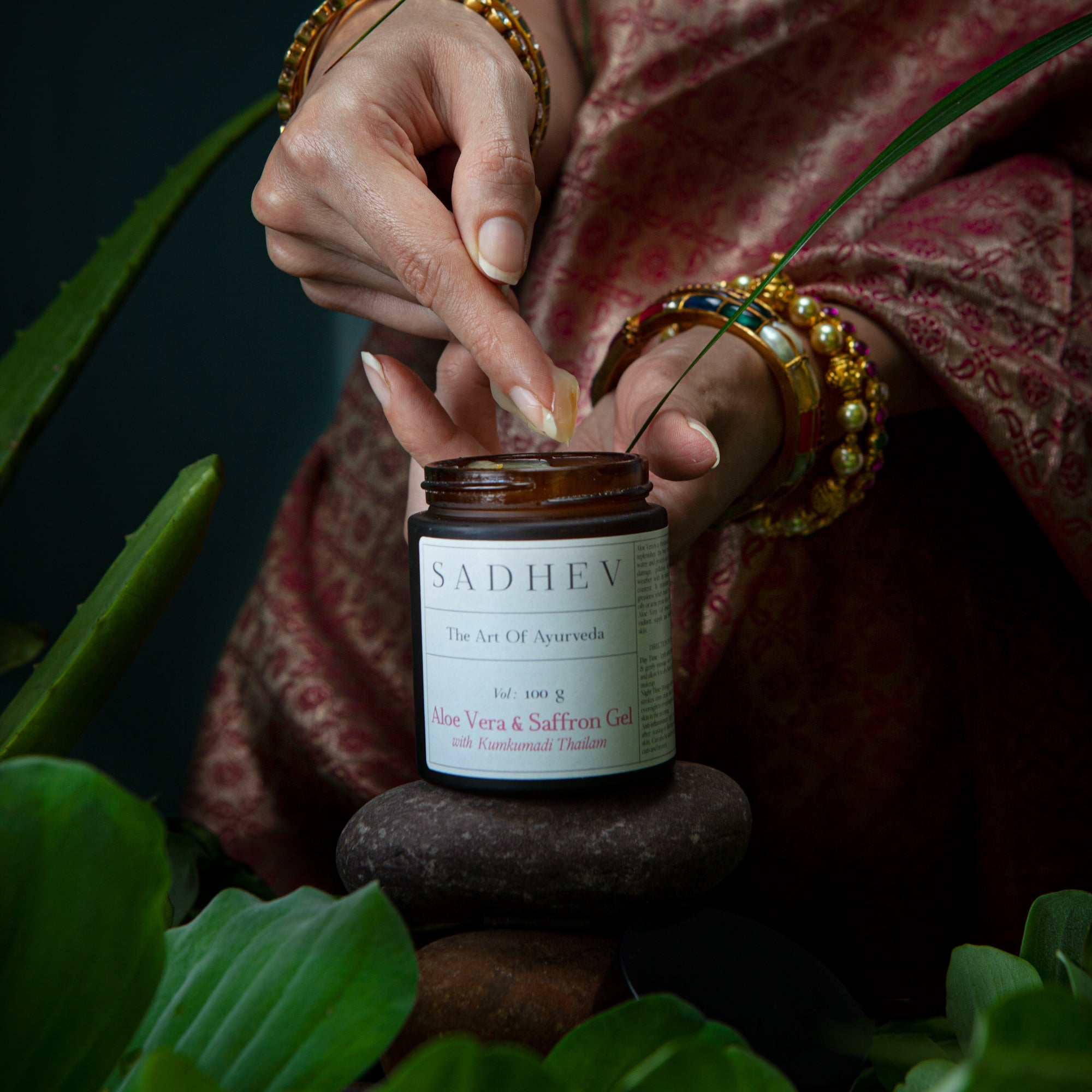
THE SADHEV VERDICT: This is not new. This is Snehana — the classical Ayurvedic principle of sealing the skin with oil overnight — rebranded with a viral name and a gross-sounding word. The mechanism is correct: an occlusive final layer genuinely reduces overnight water loss. Where we differ is the ingredient. Petroleum jelly seals but adds nothing. An oil-based final step like Kumkumadi Tailam seals the exact same way while actively delivering saffron, sandalwood and vetiver into the skin’s lipid layer while you sleep. Same principle, more work being done. If your skin is oily or acne-prone, skip slugging entirely — an airtight seal over active breakouts traps bacteria against the skin and can make things worse, not better. |
Skin Cycling
|
Skin Cycling A four-night rotation created by a board-certified dermatologist: exfoliate on night one, apply a retinoid on night two, then two recovery nights with just moisturiser before repeating the cycle. |
|
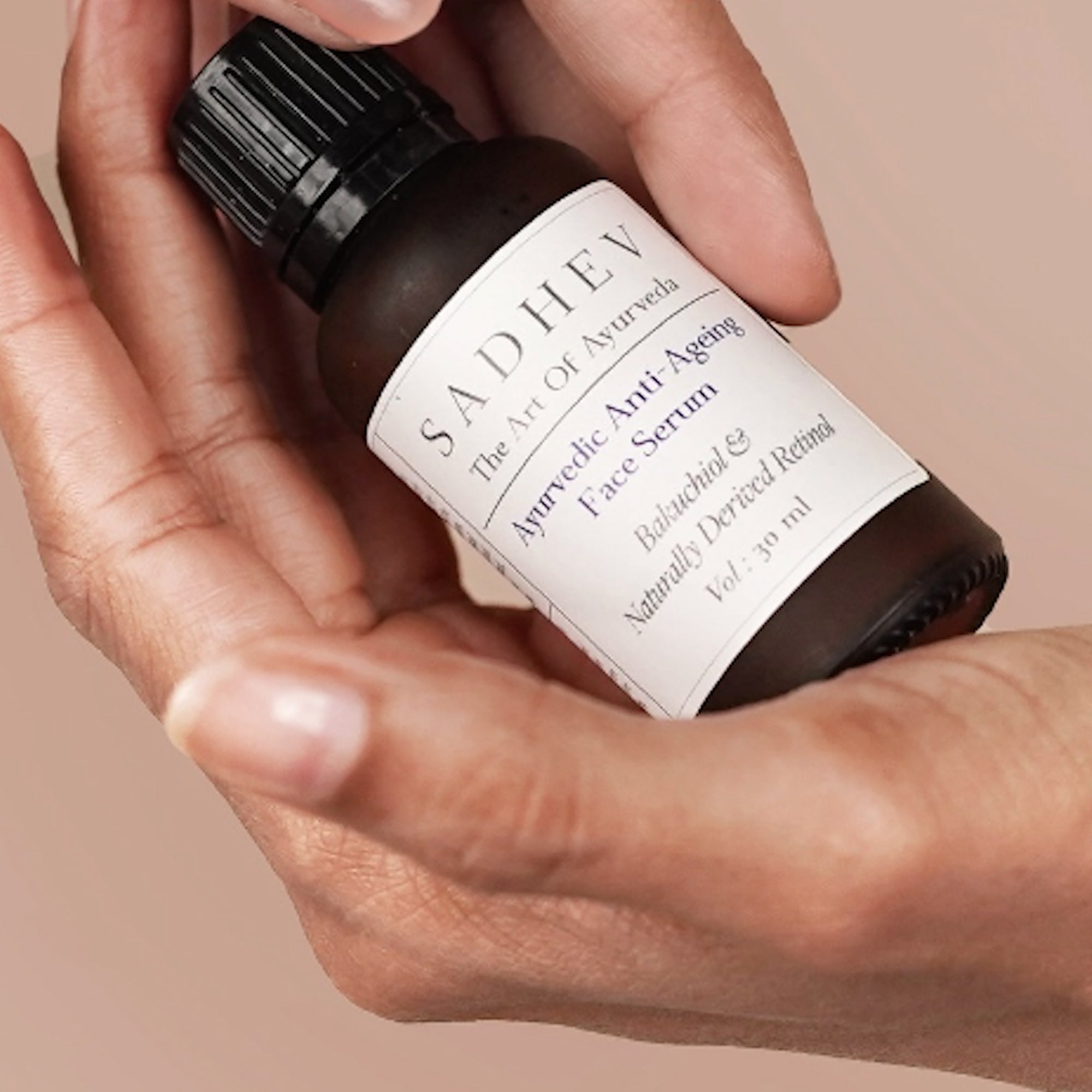
THE SADHEV VERDICT: Genuinely good, and one of the few viral trends actual dermatologists back without caveats. The core idea — that skin needs planned recovery nights between active treatments, not daily assault — is exactly the logic behind why we recommend exfoliating twice weekly rather than daily, and why bakuchiol works better as a consistent nightly habit than an aggressive every-other-night acid rotation for most Indian skin. The underlying wisdom of cycling actives and recovery is sound. We would just swap the retinoid night for bakuchiol if your skin reacts to synthetic retinol, since it delivers a comparable result without needing a recovery night built around irritation in the first place. |
Skinimalism
|
Skinimalism The move away from ten-step routines toward fewer, smarter, multi-functional products — also called "skip care" in Korean beauty. The defining trend of 2026, with most consumers now buying three or fewer skincare products. |
|
THE SADHEV VERDICT: We are fully on board with this one, and honestly always have been. Ayurvedic formulation was never built around a ten-step routine with a separate bottle for every micro-concern — it is built around fewer, purposeful ingredients doing multiple jobs at once. Kumkumadi Tailam alone delivers brightening, anti-inflammatory and antioxidant action in one product because saffron, sandalwood and vetiver were chosen specifically to work together. Skinimalism is not a new philosophy to us. It is just the rest of skincare catching up to what a genuinely well-formulated Ayurvedic product has always done. |
Skin Flooding
|
Skin Flooding Layering water-based humectants onto damp skin, then sealing with a moisturiser — a three-move technique that has since been merchandised by some brands into an unnecessary seven-step ritual. |
|
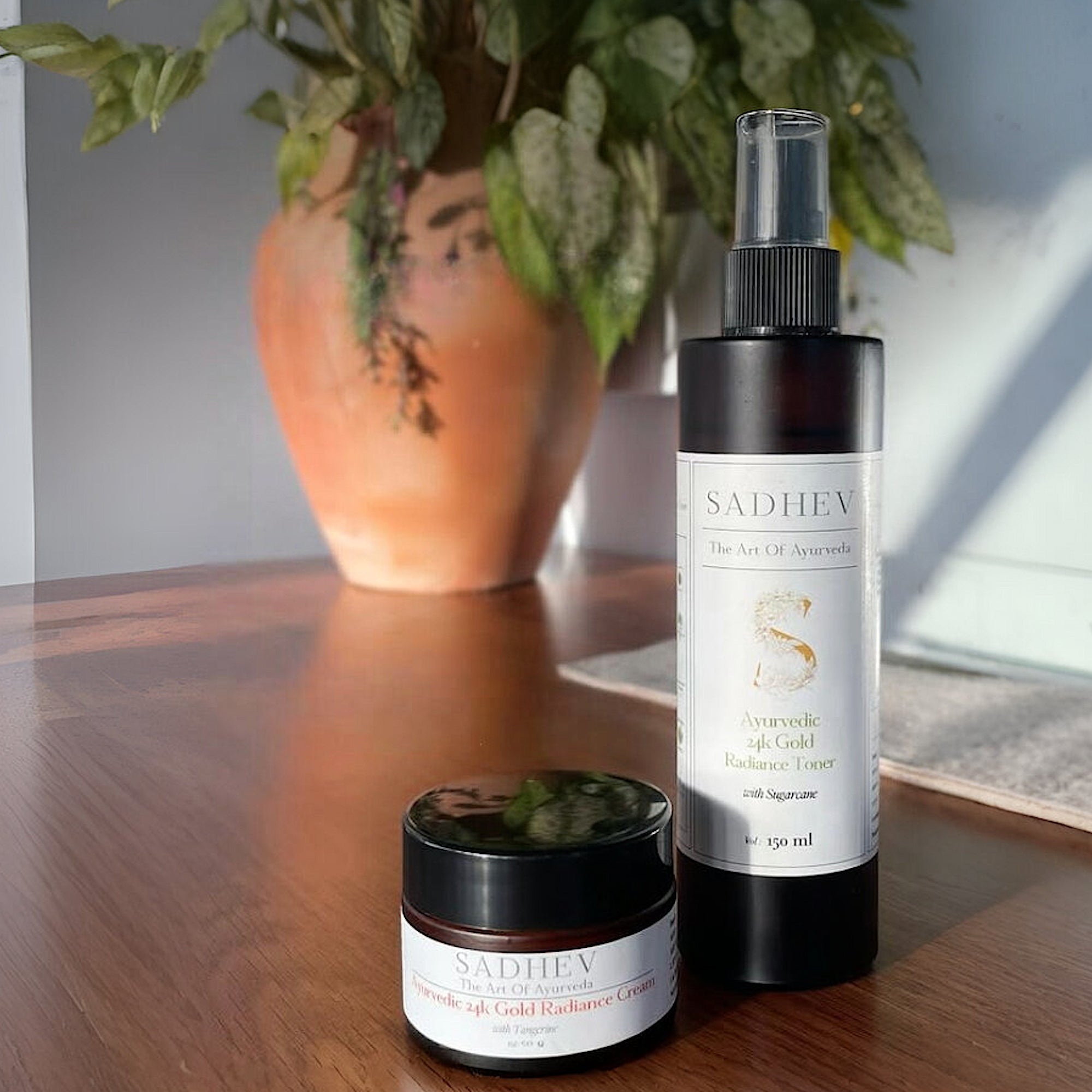
THE SADHEV VERDICT: The technique itself is legitimate and it is exactly what our own CTM guide already teaches: apply toner on damp skin, treatment serum next, moisturiser to seal. What we will not do is tell you that you need a dedicated flooding essence, a barrier ampoule and a lock-in balm to do this correctly. You need a toner, a treatment and a moisturiser applied on damp skin in the right order. That is the whole technique. Anyone selling you five products to execute a three-step idea is selling the marketing, not the method. |
Cortisol Face
|
Cortisol Face The idea that chronic stress and elevated cortisol show up visibly on the face — puffiness, dullness, breakouts — and that skincare should account for the brain-skin connection, a field increasingly called neurocosmetics. |
|
THE SADHEV VERDICT: The underlying science is real — cortisol genuinely breaks down collagen, increases sebum production and disrupts the skin barrier, and we have written about this mechanism in detail already. Where the trend goes wrong is treating this as a new discovery that needs a new category of expensive "neurocosmetic" products. Ashwagandha, one of Ayurveda’s most extensively documented adaptogens, has been addressing exactly this stress-cortisol-skin pathway for centuries, both taken internally and applied topically. The mechanism you are seeing described as neurocosmetics in 2026 is the Rasayana principle with a new vocabulary. |
Barrier (as a marketing word)
|
Barrier The single most overused word on skincare packaging in 2026 — every cleanser, toner, essence and mist now claims to "repair your barrier," regardless of whether the formulation or the format is even capable of doing so. |
|
THE SADHEV VERDICT: This one deserves genuine skepticism, and we will say it plainly: a cleanser that touches your face for forty seconds before being rinsed off cannot meaningfully repair anything. Barrier repair happens through what stays on the skin — an oil-based night treatment, a properly formulated moisturiser, consistent gentle cleansing over weeks. If a rinse-off product is marketed primarily on barrier repair, that claim is doing more work than the formulation actually can. We have written the complete, honest mechanism of what the barrier is and what genuinely repairs it, precisely because the word has been stretched past the point of meaning much on a label. |
Softmaxxing
|
Softmaxxing The healthy, low-risk branch of the broader "looksmaxxing" movement — built on consistent skincare, sleep, fitness and grooming rather than extreme hacks, and rapidly gaining traction with Gen Z men specifically. |
|
THE SADHEV VERDICT: Genuinely good news, and worth calling out directly: more men building a real, consistent routine instead of skipping skincare entirely is a positive shift, not a trend to be cynical about. The core of softmaxxing — sleep, consistency, a routine matched to your actual skin rather than borrowed from someone else’s — is exactly the logic behind identifying your dosha skin type before choosing products, rather than guessing. |
Maskne
|
Maskne A blend of "mask" and "acne" — breakouts and irritation caused by friction, heat and humidity trapped under a face mask. A pandemic-era term that has lingered because the underlying cause, occlusive heat and friction, still applies to anything covering the skin for extended periods. |
|
THE SADHEV VERDICT: Slightly dated as a term but the mechanism behind it is still directly relevant — the same friction-and-humidity logic explains breakouts along helmet straps, sports gear, and even the back and chest congestion many people get from tight clothing in humid weather. The fix has not changed regardless of what is causing the occlusion: a gentle, non-stripping cleanser and avoiding heavy, pore-clogging products in the affected area. |
The Honest Takeaway
Most viral skincare terminology is describing a real mechanism, just packaged for virality. The technique behind slugging, skin flooding and skin cycling is generally sound — the marketing built around each one is where the inflation happens. Skinimalism and softmaxxing represent a genuine, welcome shift back toward fewer products and more consistency. And cortisol face is simply confirming, with new vocabulary, what Ayurveda’s adaptogen tradition has already documented for centuries.
The pattern worth remembering is this: when a new term appears, ask what the actual mechanism is, not just what the name implies. That question is usually enough to tell you whether it is worth adopting.
|
“New name, old mechanism. That is the story behind most of what goes viral in skincare. Ask what is actually happening on your skin, not what the trend is called.” |
For the complete guide to the skin barrier and what genuinely repairs it, beyond what any single product label claims: see our skin barrier guide.
For the complete guide to the CTM sequence and the correct technique behind every step, the same logic that skin flooding is built on: see our CTM guide.
SADHEV. Luxury Ayurvedic Care. Ayurveda in our bloodline.
Explore the SADHEV range built on principles Ayurveda perfected long before they went viral.
— Written by SADHEV Ayurvedic Experts, rooted in a 200-year vaidyar lineage.


