




The term skin barrier appears constantly in skincare content — barrier-friendly, barrier repair, barrier stripping — without most of that content ever explaining what the barrier actually is. This gap matters because the skin barrier is, more than almost any other single concept, the thing that determines whether a skincare routine helps or quietly undermines itself. Most of the skin problems people spend the most money trying to fix — sensitivity, dullness, breakouts, premature ageing, persistent dryness — trace back at least partly to a compromised barrier, and understanding what that means changes how nearly every other decision in a routine should be made.
|
“The skin barrier is not one product’s job to fix. It is the underlying condition that determines whether every other product in your routine can actually do its job.” |
What the Skin Barrier Actually Is
The skin barrier, more precisely called the stratum corneum, is the outermost layer of the epidermis — a structure often described using the brick and mortar model. The corneocytes, flattened dead skin cells, act as the bricks. Between them sits the mortar: a lipid matrix made primarily of ceramides, cholesterol and fatty acids in a specific, tightly regulated ratio. This lipid mortar is what holds the structure together and, critically, what controls two things simultaneously — how much moisture the skin retains, and how effectively it keeps irritants, allergens and microbes out.
A healthy barrier is not simply thicker or tougher skin. It is a correctly proportioned lipid matrix doing its job efficiently — which is why barrier damage is not primarily about visible injury, but about a disruption to this internal ratio that often produces no obvious external sign until the cumulative effect becomes significant.
|
Structure |
Brick and mortar model — corneocytes (bricks) held together by a lipid matrix (mortar) |
|
Key lipids |
Ceramides, cholesterol, fatty acids — in a specific balanced ratio |
|
Primary functions |
Moisture retention (prevents water loss) and protection (blocks irritants, allergens, microbes) |
|
What damages it |
Sulphate surfactants, over-exfoliation, hot water, harsh actives introduced too quickly, UV exposure |
|
Repair timeline |
Typically 2 to 4 weeks of consistent gentle care for mild disruption; longer for chronic damage |
How the Barrier Gets Damaged
Barrier damage rarely happens through one dramatic event. It typically accumulates through small, repeated choices that each seem minor in isolation.
Sulphate-based cleansers are the most common and most underestimated cause. Sodium lauryl sulphate and similar aggressive surfactants do not distinguish between the dirt and sebum they are meant to remove and the ceramides that make up the barrier’s lipid matrix — they dissolve both, twice a day, every day. Over months, this steadily depletes the barrier’s lipid content faster than the skin can naturally replenish it.
Over-exfoliation compounds this by physically or chemically removing surface cells faster than the skin can produce replacements, leaving the barrier thinner and less capable of retaining moisture or excluding irritants. Hot water accelerates lipid loss independently of whatever cleanser is used. And introducing multiple new active ingredients simultaneously — a new acid, a new retinol-alternative and a new cleanser all at once — makes it impossible to identify which one triggered a reaction, while compounding the cumulative stress on a barrier that has not been given time to adjust to any single change.
The Signs Your Barrier Is Compromised
|
Sign |
What It Usually Means |
|
Increased sensitivity to previously tolerated products |
Products that never caused irritation before start stinging, burning or reddening |
|
Persistent tightness after cleansing |
Skin feels tight even shortly after applying moisturiser |
|
Visible flaking or rough texture |
Not the same as normal exfoliation — patchy, uneven roughness that persists |
|
Increased breakouts without a clear trigger |
A compromised barrier struggles to regulate the microbial environment, allowing overgrowth |
|
Redness or a persistently flushed appearance |
Ongoing low-grade inflammation as the barrier fails to keep irritants out |
Any one of these signs on its own could have other causes, but two or more appearing together — particularly following a period of aggressive cleansing, new active ingredients, or over-exfoliation — is a strong indication the barrier itself needs attention before any other skincare goal is pursued.
|
“A compromised barrier does not just cause its own symptoms. It undermines every other product in the routine, because none of them can work properly on skin that cannot hold onto moisture or keep out what should stay out.” |
How to Repair a Damaged Barrier
Barrier repair follows a consistent, predictable logic regardless of what caused the damage: remove the ongoing source of stress, then support the skin’s own lipid replenishment process, then wait. There is no shortcut that bypasses the skin’s natural timeline for rebuilding its own lipid matrix.
Step One — Simplify Immediately
Remove every non-essential active from the routine — exfoliating acids, retinol-alternatives, fragrance-heavy products — and reduce to the minimum: a gentle cleanser, a barrier-supporting moisturiser, and sunscreen. This is not a permanent routine, it is a deliberate recovery period that typically needs two to four weeks before reintroducing anything else.
Step Two — Switch to a Genuinely Gentle Cleanser
This is the single highest-impact change available, since the cleanser is applied twice daily and is frequently the primary source of ongoing barrier stress. A cleanser with a verified, tested low irritancy — rather than one simply marketed as gentle — removes the daily depleting factor that prevents the barrier from rebuilding in the first place. SADHEV’s Sensitive Skin Facial Cleanser, tested to a Zein value of 78.23, within the EU-approved non-irritant threshold, is specifically formulated for exactly this recovery period.
Step Three — Replenish the Lipid Matrix
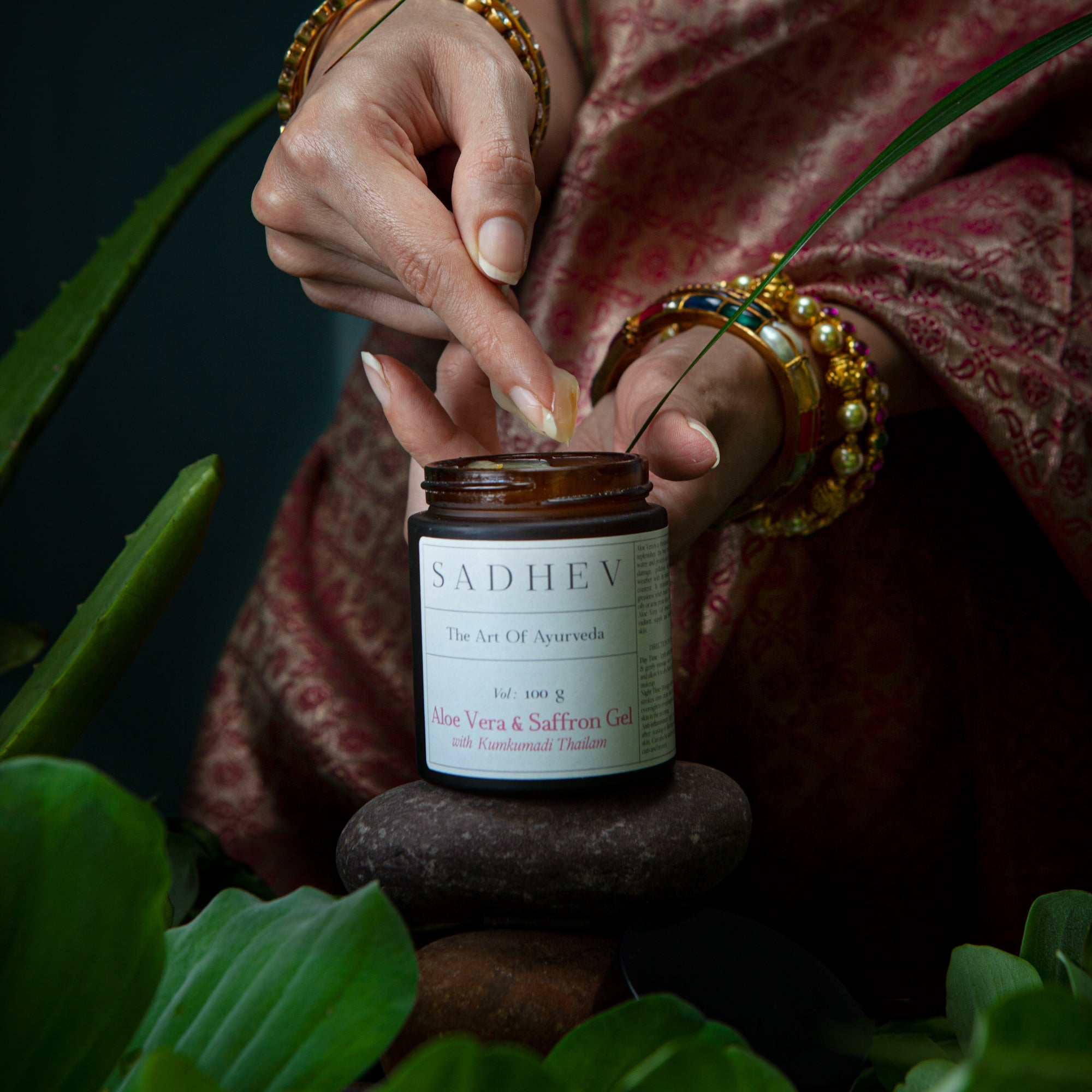
The barrier rebuilds itself from lipid-rich nourishment, which is the Ayurvedic Snehana principle applied directly to this specific repair process. Kumkumadi Tailam, applied nightly, delivers saffron, sandalwood and vetiver through an oil format specifically because oil-based delivery reaches the skin’s own lipid layer more effectively than water-based products — supporting the barrier’s lipid replenishment during exactly the recovery window it needs.
Step Four — Protect During Recovery
Sunscreen becomes even more essential during barrier recovery, since compromised skin has reduced natural protection against UV-triggered inflammation, which would further delay repair. Daily mineral sunscreen prevents the recovery process from being repeatedly interrupted by new UV-driven stress.
How Long Barrier Repair Actually Takes
▸ Days one to five: Reduced stinging and tightness as the ongoing depleting factors — harsh cleanser, active overload — are removed from the routine.
▸ Weeks two to four: Visible reduction in flaking, redness and reactivity as the lipid matrix begins rebuilding under consistent gentle care.
▸ Weeks four to eight: The barrier reaches a genuinely restored state where previously irritating products can typically be reintroduced one at a time, allowing the skin to demonstrate whether it tolerates each addition before the next is added.
Chronic, long-standing barrier damage — built up over months or years of harsh cleansing — can take longer than this baseline timeline, which is why prevention through a consistently gentle routine is significantly easier than repair once damage has become entrenched.
For the complete guide to choosing the right SADHEV facial cleanser by skin type, including the Zein value science behind the Sensitive Skin variant referenced above: see our facial cleanser guide.
For the complete guide to identifying your dosha skin type, since Vata and Pitta-dominant skin are both particularly prone to barrier vulnerability for different reasons: see our dosha skin type guide.
For the complete guide to reetha, the sulphate-free cleansing base across every SADHEV hair product, and why the same barrier-preserving logic applies to the scalp as much as the face: see our reetha guide.
SADHEV. Luxury Ayurvedic Care. Ayurveda in our bloodline.
Explore SADHEV formulations built to support, not strip, the skin barrier.
— Written by SADHEV Ayurvedic Experts, rooted in a 200-year vaidyar lineage.


