




Rose water is one of the most used and most misunderstood skincare ingredients in India. It appears in everything from premium Ayurvedic formulations to grocery store bottles costing fifty rupees. It is recommended for every skin type, every skin concern and every step of the routine by everyone from Ayurvedic practitioners to lifestyle influencers.
Most of what is sold as rose water shares the name and almost nothing else with the genuine article. Understanding the difference between steam-distilled rose water and its imitators is not a minor technical detail. It is the difference between a product with documented therapeutic properties and one that provides fragrance and nothing else.
This guide covers what genuine steam-distilled rose water is, how it is made, what it actually does at the level of the skin's biology and how to use it correctly. It also explains why the application timing — the detail that most guides get wrong — determines whether rose water produces a visible difference or merely smells pleasant.
|
“Most products sold as rose water share the name. Steam-distilled Centifolia rose water shares the name and delivers the therapeutic compounds that make the name worth having.” |
What Rose Water Actually Is — And What It Is Not
Genuine rose water is produced by steam distillation of fresh rose petals. Steam is passed through rose petals at controlled temperature and pressure. The aromatic and therapeutic compounds in the petals volatilise with the steam, are carried through a condensation system and collect as rose water — the condensed hydrosol — on the other side. This process preserves the full spectrum of active compounds present in the fresh rose: phenylethyl alcohol, flavonoids, terpenes, anthocyanins and the anti-inflammatory agents responsible for rose water's documented therapeutic effects.
Most products sold as rose water are not this. They fall into three categories.
Rose extract dissolved in water — a concentrate of rose fragrance compounds added to a water base. Produces the characteristic smell but contains a fraction of the therapeutic compounds present in steam-distilled rose water.
Synthetic rose fragrance in water — the cheapest and most common version in mass-market products. Contains no rose-derived therapeutic compounds. Produces the smell through synthetic chemistry.
Rose oil diluted in water — rose absolute or otto diluted in water, which is unstable and separates. Provides some therapeutic benefit but is formulated differently from the hydrosol produced by steam distillation.
The distinction matters because the phenylethyl alcohol, flavonoids and anti-inflammatory terpenes that produce rose water's documented effects — pH restoration, anti-inflammatory action, mild astringency, barrier support — are only present in meaningful concentrations in genuine steam-distilled rose water. The imitators smell like roses. They do not perform like them.
|
Source |
Fresh petals of Rosa centifolia (Cabbage Rose) |
|
Process |
Steam distillation — steam through petals, condensed to hydrosol |
|
Primary active compounds |
Phenylethyl alcohol, flavonoids, geraniol, linalool, citronellol |
|
Skin pH |
Approximately 5.5 — matches skin's natural slightly acidic pH |
|
Ayurvedic classification |
Cooling, anti-Pitta, anti-inflammatory, Varnya (radiance-enhancing) |
|
SADHEV sourcing |
Centifolia rose, steam-distilled, 1,000 petals per bottle |
|
Appropriate for |
All skin types including sensitive and oily |
Why Centifolia Rose — Not All Roses Are Equal
The therapeutic quality of steam-distilled rose water depends significantly on the variety of rose used. Rosa centifolia — the Cabbage Rose, also called the Rose of a Hundred Petals — produces a higher concentration of phenylethyl alcohol and therapeutic flavonoids than the Rosa damascena (Damask Rose) used in most commercial rose water production.
Phenylethyl alcohol is the primary aromatic compound in rose water and also one of its primary anti-inflammatory and antimicrobial agents. Higher phenylethyl alcohol concentration means stronger fragrance, stronger anti-inflammatory action and stronger antimicrobial properties. Centifolia rose water consistently produces a higher phenylethyl alcohol concentration than damask rose water from the same distillation process.
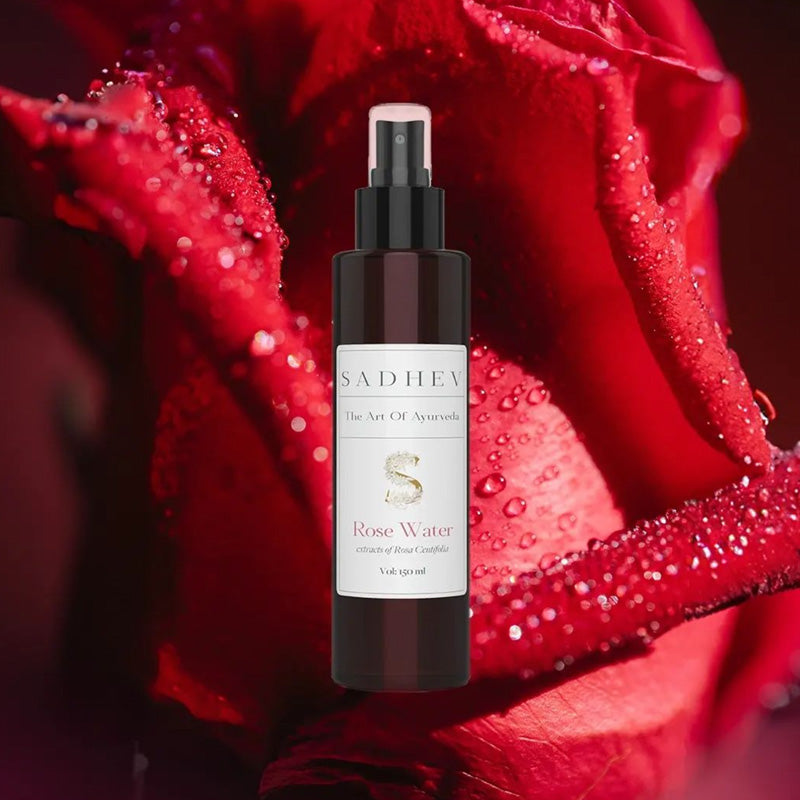
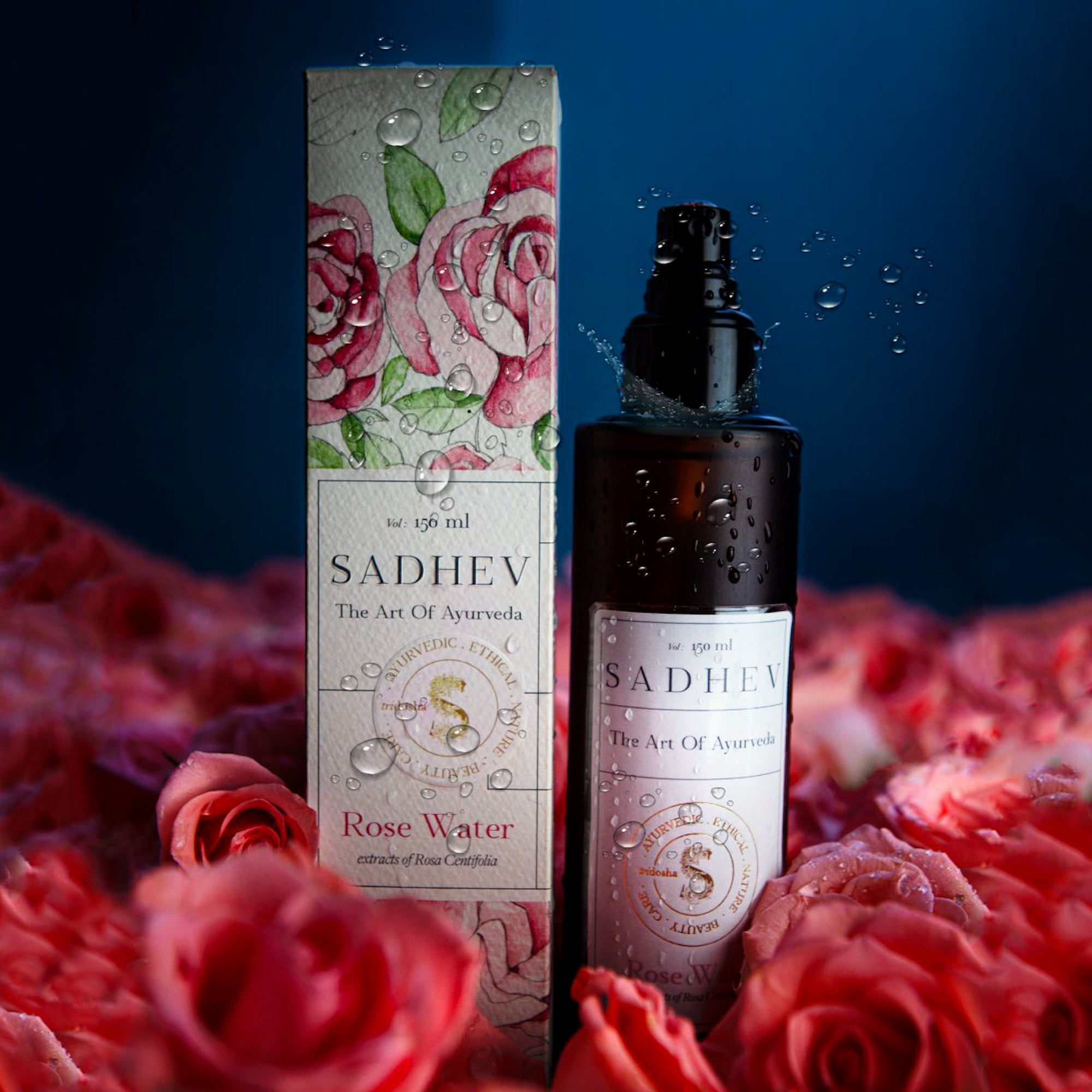
SADHEV Rose Water uses Centifolia roses — the variety with the highest documented concentration of active therapeutic compounds among cultivated rose varieties. Each bottle is made from approximately 1,000 rose petals through pure steam distillation with no additives, no synthetic fragrance and no preservatives beyond the natural antimicrobial properties of the rose compounds themselves.
What Steam-Distilled Rose Water Does for Skin
1. pH Restoration After Cleansing
This is rose water's most practically important function and the reason it belongs in every skincare routine regardless of skin type or concern. The skin's surface has a naturally slightly acidic pH of 4.5 to 5.5 — the environment in which the skin's microbiome thrives, in which the enzymes that maintain the skin barrier function correctly and in which the beneficial bacteria that prevent pathogenic overgrowth can sustain themselves.
Cleansing — even with a gentle, sulphate-free cleanser — temporarily disrupts this pH, pushing the skin surface toward alkaline. An alkaline skin surface is less hospitable to the beneficial microbiome, more hospitable to Cutibacterium acnes and other skin-disrupting bacteria, and less efficient at processing the products applied afterward. Rose water's natural pH of approximately 5.5 restores the skin surface to its correct environment immediately after cleansing.
This is not a minor technical benefit. Products applied to correctly pH-balanced skin penetrate more effectively and produce better results than the same products applied to alkaline, post-cleansing skin. The rose water step is what makes the serum and moisturiser applied afterward work as designed.
2. Anti-Inflammatory Action
The flavonoids and terpenes in steam-distilled rose water — kaempferol, quercetin, myricetin, geraniol and linalool — provide documented anti-inflammatory action at the skin surface. They reduce the inflammatory mediators that cause redness, reactive skin and the chronic low-grade inflammation that drives both accelerated ageing and post-inflammatory hyperpigmentation.
For Indian skin, which is prone to heat-triggered Pitta inflammation and post-inflammatory hyperpigmentation from even mild skin irritation, this anti-inflammatory action is particularly valuable. A chilled rose water spritz applied after cleansing reduces surface inflammation immediately and visibly — the skin looks calmer, more even-toned and less reactive within seconds of application.
This is the classical Ayurvedic understanding of rose as an anti-Pitta ingredient — cooling, soothing and calming the heat and inflammation that Pitta drives in the skin. The biochemical mechanism has since confirmed what classical Ayurvedic classification described.
3. Mild Astringent Action Without Alcohol
Rose water provides gentle astringent action through its naturally occurring tannins — tightening the skin surface and reducing the appearance of pores without the barrier disruption, dryness and rebound oiliness that alcohol-based toners cause. This makes it the correct toner for oily and combination skin — providing the tightening and pore-minimising action that oily skin benefits from without the compensatory sebum overproduction that alcohol toners trigger.
For dry and sensitive skin, the astringent action is mild enough not to exacerbate dryness while still providing the toning benefit that prepares the skin for the moisturiser that follows.
4. Surface Hydration and Moisture Locking
Rose water is a natural humectant — it draws moisture to the skin surface and helps retain it. Applied to slightly damp skin immediately after cleansing, it locks in the residual moisture from the wash while adding its own layer of hydration. The moisturiser applied afterward seals both in — making the combination of rose water plus moisturiser significantly more effective than moisturiser alone on dry skin.
This is why the application timing matters so specifically: slightly damp skin, not wet skin and not dry skin. On wet skin, rose water dilutes and runs off without penetrating. On dry skin, the humectant mechanism has less moisture to work with at the surface. The slightly damp window — the state the skin is in after patting once with a towel — is when rose water absorbs most effectively and produces its maximum hydration benefit.
5. Scalp and Hair Benefits
Applied to the scalp, steam-distilled rose water restores the scalp's slightly acidic pH after shampooing, provides anti-inflammatory action that reduces scalp irritation and dandruff-associated inflammation, and delivers mild astringent compounds that help regulate excess sebum on oily scalps. Applied to hair ends, it provides lightweight conditioning and moisture without the heaviness of leave-in conditioners.
The mid-week scalp refresh — spraying rose water directly to the scalp between wash days — removes surface sebum buildup and restores the scalp environment without the disruption of additional washing. For people who experience scalp heaviness or mild itching between wash sessions, this is one of the most effective and most practical interventions available.
How to Use Rose Water Correctly — The Details That Matter
The Application Timing
Apply rose water on slightly damp skin — not wet, not dry. After cleansing, pat the face once with a clean towel so it is no longer dripping but still carries a trace of moisture. This is the window. Spritz or pat the rose water immediately. Allow it to settle for thirty seconds. Then apply the next product.
This timing is the single detail most consistently missed in rose water use — and it determines whether the product produces a visible difference or simply adds fragrance to the routine. On dry skin, the humectant action has nothing to work with. On slightly damp skin, it amplifies the existing moisture and pulls it into the skin.
The Refrigerator Ritual
Keep rose water in the refrigerator. A chilled spritz of rose water on slightly damp skin produces a noticeably different effect from room-temperature application. The cooling action reduces the Pitta-related heat flushing that is common in Indian skin through summer and monsoon. It immediately calms post-cleansing redness. It reduces morning puffiness around the eyes and jawline. And it creates the conditions for the anti-inflammatory compounds to work on calmed, cooled skin rather than on heat-reactive skin.
The refrigerator application is not a luxury ritual. It is a practical technique that produces better results from the same product. The chilled rose water spritz in the morning has become one of the most consistently praised steps in SADHEV's customers' routines — the one they describe as making an immediate visible difference before anything else has been applied.
Morning and Evening Use
Rose water is appropriate morning and evening — unlike actives such as Vitamin C which are morning-specific or face oils which are evening-specific. Morning application prepares the pH-balanced surface for the Vitamin C Serum and moisturiser that follow. Evening application after cleansing prepares the skin for the Anti-Ageing Serum and Kumkumadi Tailam that work through the night.
The consistency of morning and evening application is what produces the cumulative anti-inflammatory benefit that reduces reactive skin, improves the microbiome balance that prevents breakouts and progressively calms the chronic low-grade inflammation that drives dull, uneven skin.
Rose Water for Different Skin Types — The Specific Benefits
▸ Oily skin: pH restoration after cleansing reduces the alkaline environment that feeds acne-causing bacteria. Mild astringency tightens pores without triggering compensatory sebum overproduction. Anti-inflammatory action reduces the inflammation that worsens breakouts.
▸ Dry skin: Humectant action on slightly damp skin locks in moisture before the moisturiser seals it. Anti-inflammatory compounds reduce the reactive sensitivity common in dry skin. Alcohol-free toning provides the toning step without the dryness that alcohol toners cause.
▸ Combination skin: pH restoration balances both zones simultaneously. The formulation is light enough not to add heaviness to the oily T-zone while nourishing enough to benefit the drier cheek areas.
▸ Sensitive skin: One of the few active toners appropriate for genuine sensitive skin. No alcohol, no synthetic fragrance, no harsh astringents. Anti-inflammatory action reduces reactivity progressively with consistent use.
▸ Mature skin: Anti-inflammatory action addresses the chronic inflammation that drives accelerated ageing. Humectant hydration supports the barrier that becomes more vulnerable with age. pH restoration ensures the anti-ageing actives applied afterward work at their full effectiveness.
The Quality Question — How to Identify Genuine Rose Water
Three questions to ask before buying any rose water:
Is it steam-distilled? The label should specify steam distillation or hydrosol. If it says rose extract, rose fragrance or does not specify the production method, it is not genuine rose water.
What rose variety is used? Centifolia or Damask are the therapeutic varieties. Generic "rose" on a label provides no assurance of therapeutic quality.
Does it contain additives? Genuine steam-distilled rose water requires no preservatives, no alcohol and no fragrance — it is naturally antimicrobial and naturally aromatic. Any of these additions suggests the base is not genuine steam-distilled rose water being compensated for with preservatives and fragrance.
SADHEV Rose Water specifies: steam-distilled Centifolia rose, 1,000 petals per bottle, no alcohol, no synthetic fragrance, no parabens. These are not marketing claims — they are the specifications that distinguish a therapeutic product from a fragrant water.
For the complete morning and evening Ayurvedic skincare ritual including exactly how rose water fits into every step of the sequence: see our complete SADHEV ritual guide.
For the complete guide to building a skincare routine from the correct sequence including why each step prepares the skin for the next: see our skincare routine guide.
SADHEV. Luxury Ayurvedic Care. Ayurveda in our bloodline.
Experience SADHEV steam-distilled Centifolia Rose Water.
— Written by SADHEV Ayurvedic Experts, rooted in a 200-year vaidyar lineage.


