




An aloe vera plant on the balcony or in the kitchen garden is one of the most common fixtures in Indian households, kept specifically for the moment a leaf gets snapped off and the clear gel inside applied directly to the skin — for a sunburn, an itchy patch, or simply as a cooling, everyday moisturiser. It is one of the most direct, unprocessed beauty rituals still widely practised, and for good reason: the gel genuinely works.
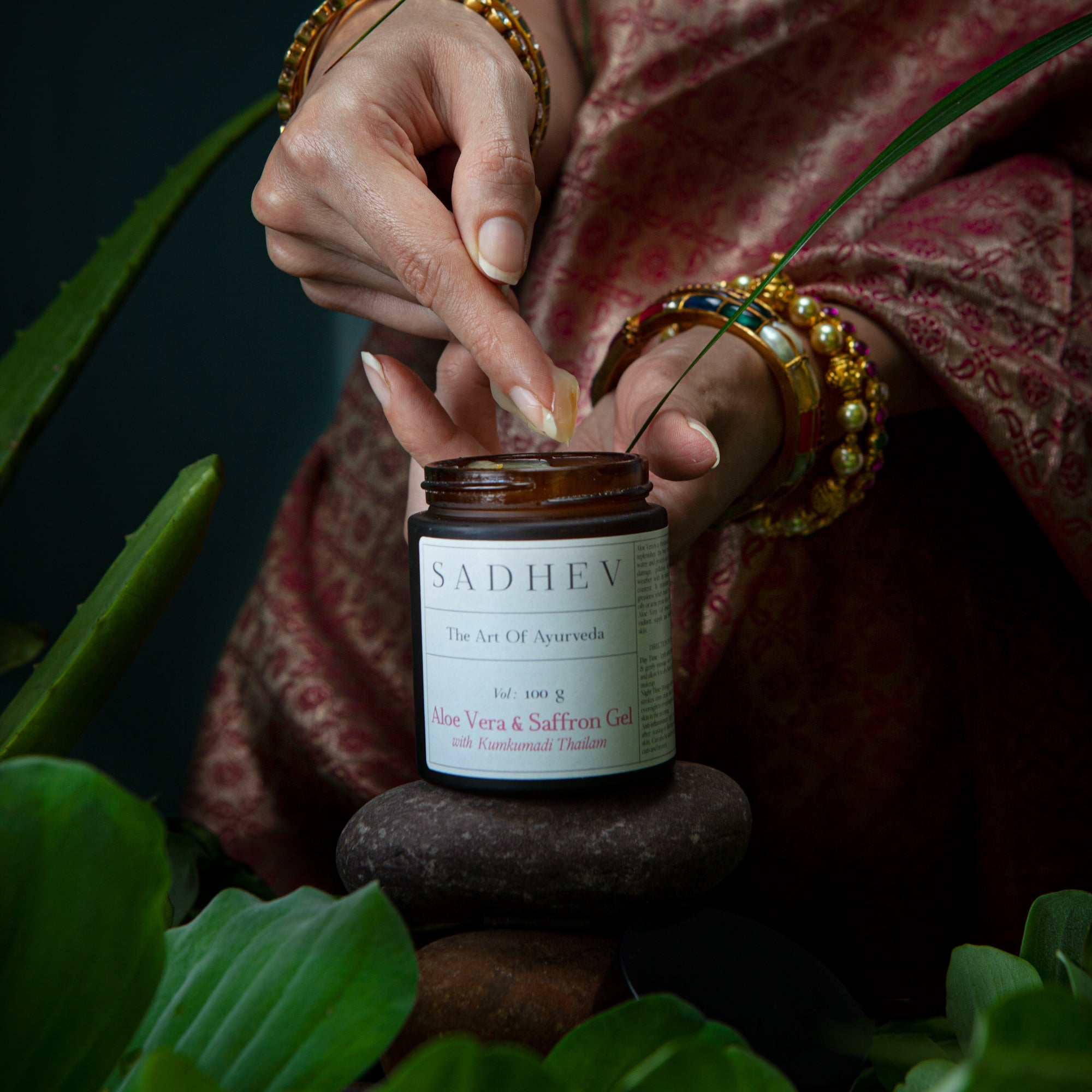
This pairing looks specifically at what happens to that gel the moment the leaf is cut, why the window for genuine benefit is far shorter than most people realise, and how SADHEV Aloe Vera & Saffron Gel was built to solve exactly that problem while keeping the same base ingredient.
|
“The aloe plant on your balcony is not the problem. The forty minutes between cutting the leaf and using the gel is where most of the benefit quietly disappears.” |
What Fresh Aloe Gets Right
The clear gel inside an aloe vera leaf is genuinely rich in acemannan, a polysaccharide with well-documented humectant and anti-inflammatory properties, alongside a composition that is roughly 98 to 99 percent water — which is precisely why it provides such immediate, noticeable cooling and hydration when applied fresh. This is real, active plant chemistry, not a placebo effect, and it explains why fresh aloe has been used across generations specifically for sunburn, minor irritation and everyday hydration.
Applied within minutes of cutting the leaf, the gel is at its most potent — acemannan intact, the anti-inflammatory compounds fully active, delivering exactly the calming, cooling benefit the tradition is built on.
Where the Freshly Cut Gel Falls Short
The critical detail almost nobody mentions is timing. The moment an aloe leaf is cut, its gel is exposed to air and begins oxidising — the same oxidation process covered in our homemade beauty overview, except considerably faster here than with most other raw ingredients. Acemannan and the plant’s other active compounds start degrading within roughly thirty to sixty minutes of exposure to air, which means gel scraped out, left on a counter while other preparation happens, or stored for use later in the day has already lost a meaningful share of its original potency by the time it touches skin.
There is also a less discussed issue directly beneath the clear gel layer: the yellow latex found just under the outer leaf skin, called aloin, which can cause skin irritation and staining if not carefully separated during preparation — a step that is easy to get wrong when cutting a leaf at home without the controlled processing a formulation lab uses to remove it cleanly.
How SADHEV Aloe Vera & Saffron Gel Was Built to Solve This
SADHEV Aloe Vera & Saffron Gel uses pure aloe vera processed and stabilised immediately after extraction, specifically to prevent the acemannan degradation that begins within an hour of a leaf being cut at home. The aloin latex is properly separated during controlled processing, removing the irritation risk that comes with cutting a leaf casually in the kitchen. Saffron is added on top of this stabilised aloe base, contributing the same crocin-driven brightening documented throughout our Kumkumadi Tailam formulation, delivered in a lighter, faster-absorbing gel format.
This is the same principle running through the entire Homemade Beauty series: the plant did not change. What changed is that the active compound is captured and stabilised at the moment of peak potency, rather than degrading on a kitchen counter before it ever reaches the skin.
The Honest Comparison
|
|
Fresh Aloe from the Plant |
SADHEV Aloe Vera & Saffron Gel |
|
Active compound |
Acemannan, at peak potency only in the first 30-60 minutes after cutting |
Acemannan, stabilised immediately after extraction |
|
Irritation risk |
Aloin latex must be carefully separated by hand |
Removed during controlled processing |
|
Additional actives |
None beyond the plant itself |
Saffron crocin for brightening |
|
Shelf stability |
Must be used within the hour, cannot be stored |
Formulated for extended, stable use |
|
Consistency |
Varies by plant, leaf size and cutting technique |
Identical formulation every time |
|
Absorption |
Can feel sticky or leave residue depending on the leaf |
Fast-absorbing, no residue |
If You Still Want to Use Fresh Aloe
For anyone who wants to keep using the plant directly, a few adjustments meaningfully improve the result. Use the gel within thirty minutes of cutting the leaf, and do not store the cut leaf or scraped gel for later use. Cut close to the base of a mature leaf rather than the tip, since older, lower leaves generally contain a higher concentration of the beneficial gel relative to the yellow latex layer. Rinse the cut end briefly and let the yellow latex drain out before scraping the clear gel, reducing the irritation risk from aloin contamination. And patch test on a small area first, since individual sensitivity to fresh aloe varies more than most people expect.
For the complete guide to the SADHEV Aloe Vera & Saffron Gel, including exactly when to choose it over a richer cream and how to use it correctly: see our Aloe Vera Gel guide.
For the complete guide to identifying your dosha skin type, since Pitta-dominant skin in particular benefits from aloe’s cooling, anti-inflammatory action: see our dosha skin type guide.
SADHEV. Luxury Ayurvedic Care. Ayurveda in our bloodline.
Experience SADHEV Aloe Vera & Saffron Gel — the same plant, stabilised at peak potency.
— Written by SADHEV Ayurvedic Experts, rooted in a 200-year vaidyar lineage.


