




The question of face oil versus moisturiser is one of the most common points of confusion in skincare. The two products look different, feel different and are marketed very differently. What is less clear is what they actually do differently — and whether the right answer for your skin is one, the other, or both used together.
Ayurveda does not have this confusion. Classical skincare formulation has always distinguished clearly between water-based preparations for surface hydration and oil-based preparations for deep tissue nourishment. The two serve different functions, penetrate to different depths and produce different outcomes. Understanding this distinction is the most practical thing you can do for your skincare routine.
|
“A moisturiser hydrates the surface of the skin. A face oil nourishes the tissue beneath it. One replenishes what evaporates. The other feeds what is there.” |
What a Moisturiser Does
A moisturiser — whether a cream, lotion or gel — is primarily a water-based formulation. Its main function is to deliver hydration to the outermost layer of the skin and to seal that hydration in place, slowing transepidermal water loss. It works at the surface level of the epidermis, where water content determines the skin's plumpness, smoothness and immediate comfort.
Moisturisers typically contain a combination of humectants (ingredients that draw water to the skin, such as hyaluronic acid or aloe vera), emollients (ingredients that smooth the skin surface, such as fatty acids) and occlusives (ingredients that form a barrier to prevent water from evaporating, such as plant waxes). They are effective at maintaining surface hydration and creating an immediate sensation of softness and comfort.
What they do not do is penetrate deeply into the skin tissue. The molecular structure of most water-based moisturiser components limits them to the surface layers. This is appropriate for their function — hydrating the surface — but it means they do not deliver therapeutic ingredients to the deeper tissue where ageing, pigmentation and structural changes originate.
What a Face Oil Does
A face oil — particularly a classical Ayurvedic oil preparation — works at a fundamentally different depth. Oils are lipophilic: they mix with the skin's own lipid layer and penetrate through it into the deeper layers of the epidermis and dermis. This penetration allows an oil to deliver its active compounds where a water-based moisturiser cannot reach.
This is the principle behind classical Ayurvedic tailam preparations. Kumkumadi Tailam, for example, is not simply saffron-infused oil applied to the skin surface. It is a preparation where the therapeutic compounds of saffron, sandalwood, vetiver and other ingredients have been transferred into an oil base through a traditional extraction process, and that oil base then carries those compounds into the deeper skin layers on application. The skin receives nourishment at a depth that a moisturiser structurally cannot access.
Face oils also reinforce the skin's lipid barrier directly — adding to the natural oil layer that protects the skin and retains moisture. This barrier-reinforcing action is distinct from what a moisturiser does and produces longer-lasting results, particularly for dry, ageing or compromised skin.
Do You Need Both?
For most skin types and most concerns, the answer is yes — but used in the correct order and for different purposes.
A lightweight gel moisturiser provides the surface hydration that keeps skin comfortable, plump and ready to absorb. A face oil applied after — or for night use, in place of the moisturiser as the final step — delivers deep nourishment and seals everything in. The two work at different depths and address different needs. They are complementary, not substitutes for each other.
For oily or combination skin: a lightweight gel moisturiser in the morning with the face oil at night is the typical approach. The gel does not add heaviness during the day. The oil provides the deep nourishment that prevents the skin from producing excess sebum in compensation for a lack of nourishment.
For dry or mature skin: both morning and evening, with the face oil as the final step after the moisturiser to seal in hydration and deliver the deeper nourishment that dry skin needs most.
In the SADHEV Routine
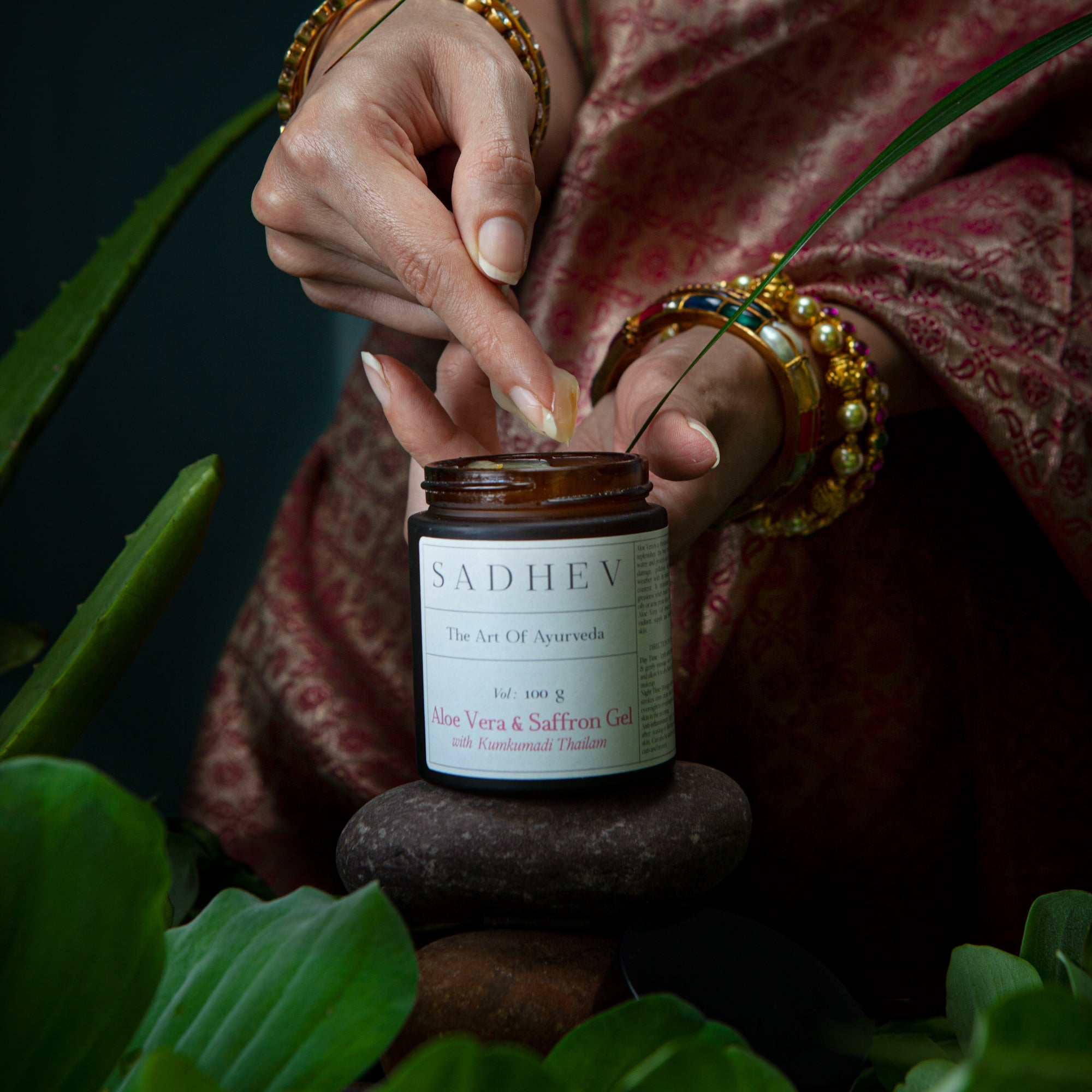
SADHEV Aloe Vera & Saffron Gel with Kumkumadi Tailam is a gel-texture moisturiser that functions as the surface hydration step. Lightweight, absorbed quickly, it hydrates and provides saffron-driven brightening at the epidermal level. Used morning and evening after toning and treatment.
SADHEV Kumkumadi Tailam is the face oil — applied at night after the gel as the final step, or on its own for dry and mature skin. Three to five drops pressed into clean, toned skin after the gel has absorbed delivers saffron, sandalwood and vetiver into the deeper skin layers while the skin is in its nocturnal repair cycle. The gel and Kumkumadi Tailam are designed to work together: the gel hydrates the surface, the tailam nourishes the tissue beneath it.
For the complete morning and evening routine showing the exact order in which gel and oil are applied, see our Ayurvedic skincare routine guide.
For a deeper understanding of what Kumkumadi Tailam is and why the classical tailam preparation method delivers saffron more effectively than a serum, read our guide on what Kumkumadi Tailam is and how to use it.
SADHEV. Luxury Ayurvedic Care. Ayurveda in our bloodline.
Use both — at the right depth, in the right order. Shop SADHEV Aloe Vera & Saffron Gel with Kumkumadi Tailam and SADHEV Kumkumadi Tailam. Explore the full SADHEV face care range.
— Written by SADHEV Ayurvedic Experts, rooted in a 200-year vaidyar lineage.


