




Retinol is the most researched anti-ageing ingredient in skincare. It is also one of the most poorly tolerated — producing peeling, redness, sun sensitivity and the prolonged adjustment period that causes many people to abandon it before seeing results. For Indian skin, which tends toward higher sensitivity and stronger melanin reactivity, the irritation problem is particularly pronounced.
Bakuchiol is the plant-derived compound that delivers retinol-equivalent anti-ageing results through a different mechanism — without the irritation, without the sun sensitivity, without the mandatory adjustment period and without the pregnancy contraindication that limits retinol use.
It is not a new discovery. Bakuchiol comes from the seeds of Psoralea corylifolia — known in Ayurveda as Bakuchi. Its therapeutic properties for skin have been documented in classical Ayurvedic texts for centuries. What is new is the clinical research that has compared it directly to retinol and confirmed that the classical Ayurvedic understanding was correct.
|
“Bakuchiol delivers retinol-equivalent results through a fundamentally different mechanism — which is exactly why it produces the results without the side effects.” |
What Bakuchiol Is
Bakuchiol is a meroterpene phenol extracted from the seeds of Psoralea corylifolia — commonly called babchi in Hindi and Bakuchi in Sanskrit. The plant is a leguminous herb native to India and Sri Lanka, cultivated traditionally across the subcontinent. Its seeds have been used in classical Ayurveda for skin conditions, vitiligo, hair growth and anti-ageing for thousands of years.
The compound bakuchiol was first isolated and characterised in 1966 but did not attract significant dermatological research attention until the 2010s, when studies began comparing it directly to retinol for anti-ageing efficacy. The landmark 2018 study published in the British Journal of Dermatology demonstrated that bakuchiol at 0.5% concentration produced comparable results to retinol at 0.5% concentration for wrinkle reduction, skin firmness and pigmentation improvement — with significantly fewer adverse effects.
|
Botanical name |
Psoralea corylifolia |
|
Ayurvedic name |
Bakuchi — also called Somaraji |
|
Active compound |
Bakuchiol — a meroterpene phenol |
|
Classical use |
Skin conditions, vitiligo, anti-ageing, hair growth |
|
Modern research |
Comparable to retinol 0.5% for anti-ageing with fewer side effects (BJD 2018) |
|
Pregnancy safety |
Safe — unlike retinol which is contraindicated in pregnancy |
|
Sun sensitivity |
None — unlike retinol which requires sun avoidance |
How Bakuchiol Works — The Mechanism
Bakuchiol and retinol produce similar anti-ageing results through different mechanisms. Understanding this distinction explains both why bakuchiol works and why it does not cause the side effects that retinol does.
Retinol — How It Works and Why It Irritates
Retinol is a form of Vitamin A that works by binding to retinoic acid receptors in the skin cells, triggering a cascade of gene expression changes that increase cell turnover, stimulate collagen production and reduce the matrix metalloproteinases that break down collagen. This receptor-binding mechanism is highly effective — and it is also what causes the irritation.
The rapid increase in cell turnover that retinol drives produces the peeling and flaking of the adjustment period. The receptor-binding causes initial inflammation. The disruption to the skin barrier during adjustment increases sun sensitivity significantly. For Indian skin with higher melanin reactivity, this inflammation during the adjustment period can trigger post-inflammatory hyperpigmentation — making the skin darker in the areas where retinol was applied during the sensitive adjustment phase.
Bakuchiol — How It Works Differently
Bakuchiol does not bind to retinoid receptors. Instead, it activates the same downstream gene expression pathways that retinol ultimately produces — collagen synthesis stimulation, retinol-like gene upregulation, matrix metalloproteinase inhibition — through a different upstream mechanism that does not involve the receptor binding that causes retinol's side effects.
The practical consequence is significant. Bakuchiol produces the anti-ageing results — increased collagen, reduced fine lines, improved skin firmness, more even tone — without the rapid cell turnover disruption, without the barrier compromise, without the inflammation and without the sun sensitivity. It achieves the same destination through a route that does not damage the barrier on the way.
Additionally, bakuchiol is stable in sunlight — which means it can be used morning and evening without the sun avoidance that retinol requires. And because it does not disrupt the barrier or cause the adjustment period inflammation, it does not trigger the post-inflammatory hyperpigmentation that makes retinol particularly risky for Indian skin tones.
|
“Bakuchiol reaches the same destination as retinol — increased collagen, reduced fine lines, more even tone — through a route that does not damage the barrier on the way.” |
Bakuchiol Benefits for Skin
1. Fine Lines and Wrinkles
Bakuchiol stimulates collagen type I and III synthesis — the primary structural proteins that keep skin firm and reduce the appearance of fine lines. It also inhibits matrix metalloproteinases — the enzymes that break down existing collagen — providing both the construction and the preservation of collagen simultaneously. Over eight to twelve weeks of consistent use, measurable reduction in fine line depth and improved skin firmness are well-documented outcomes.
2. Skin Firmness and Elasticity
Beyond collagen, bakuchiol stimulates elastin production — the protein that gives skin its ability to spring back from expression and movement. Loss of elastin is one of the primary causes of skin that looks saggy or loses its bounce. Bakuchiol addresses both the firmness component through collagen and the elasticity component through elastin stimulation simultaneously.
3. Pigmentation and Even Tone
Bakuchiol inhibits tyrosinase — the enzyme that drives melanin overproduction — providing brightening and pigmentation-reducing action alongside its anti-ageing mechanism. This dual action makes it particularly well-suited to Indian skin, where pigmentation from sun damage, pollution and post-inflammatory marks is often as much of a concern as fine lines. One ingredient addressing both simultaneously is clinically and practically significant.
4. Antioxidant Protection
Bakuchiol provides antioxidant protection that neutralises the free radicals generated by UV exposure and pollution before they can damage skin cells and break down collagen. This protective action works alongside the collagen stimulation — one preserving existing collagen from oxidative damage while the other builds new collagen. The combination is more effective than either mechanism alone.
5. Anti-Inflammatory Action
Unlike retinol, which causes initial inflammation as part of its mechanism, bakuchiol has documented anti-inflammatory properties. It reduces the inflammatory cytokines that drive skin ageing, redness and reactive skin conditions. For Indian skin that tends toward sensitivity and inflammation, this anti-inflammatory action is a meaningful additional benefit rather than a trade-off.
Who Should Use Bakuchiol
Bakuchiol is appropriate for a significantly wider range of people than retinol. Where retinol is contraindicated in pregnancy, during breastfeeding, for highly sensitive skin and for people prone to post-inflammatory hyperpigmentation — bakuchiol is appropriate for all of these groups.
▸ Mature skin concerned about fine lines, firmness and pigmentation — the primary indication.
▸ Sensitive skin that has reacted to retinol or other anti-ageing actives — bakuchiol does not trigger the adjustment period inflammation.
▸ Indian and South Asian skin tones with post-inflammatory hyperpigmentation concerns — the absence of retinol's adjustment period inflammation removes the risk.
▸ Pregnant or breastfeeding women seeking anti-ageing skincare — bakuchiol has no known contraindication.
▸ Anyone who wants anti-ageing benefits without dedicating separate morning and evening products — bakuchiol is stable in sunlight and can be used at both times.
The only group for whom retinol may be preferred over bakuchiol is people who have already completed the retinol adjustment period and are seeing strong results without adverse effects. For everyone else, bakuchiol is either the better choice or the appropriate choice.
How to Use Bakuchiol Correctly
Bakuchiol is most effective in serum format, applied after cleansing and toning, before moisturiser. Unlike retinol, it does not require a gradual introduction — there is no adjustment period to manage. It can be started at full use from the first application.
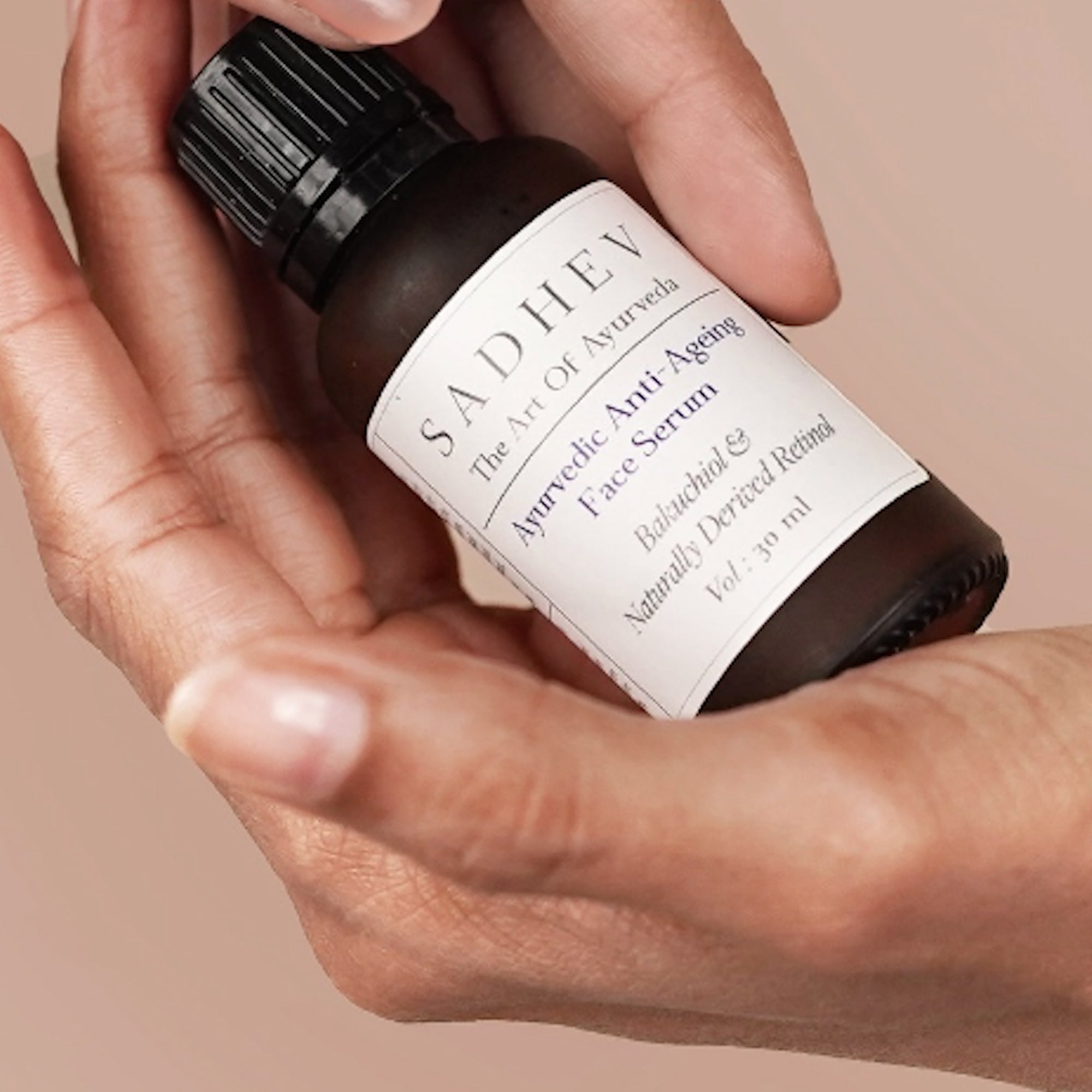
Apply SADHEV Ayurvedic Anti-Ageing Face Serum after cleansing and toning, morning or evening. Allow it to absorb for sixty seconds before applying moisturiser. In the morning, follow with sunscreen as the final step — not because bakuchiol requires sun protection the way retinol does, but because daily UV protection is non-negotiable for any anti-ageing routine.
In the evening, SADHEV Ayurvedic Anti-Ageing Face Cream applied after the serum seals in the bakuchiol and provides complementary nourishment through the night. The serum and cream are formulated as a system — the serum delivers the bakuchiol treatment, the cream supports and sustains the skin environment in which bakuchiol works most effectively.
Bakuchiol and Kumkumadi Tailam — The Ayurvedic Night Protocol
For mature skin seeking comprehensive anti-ageing treatment, bakuchiol serum and Kumkumadi Tailam used together in the evening produce results that neither achieves alone. The bakuchiol stimulates collagen and elastin through its retinol-equivalent mechanism. The Kumkumadi Tailam delivers saffron's antioxidant and brightening action, sandalwood's anti-inflammatory compounds and vetiver's calming properties through the skin's lipid layer during the nocturnal repair cycle.
The correct sequence: cleanse, tone, Anti-Ageing Serum, Anti-Ageing Cream, then Kumkumadi Tailam as the final step pressed gently into the skin. The oil goes last — it penetrates the skin's own lipid layer and seals everything above it, while delivering its own therapeutic compounds to the deepest accessible skin layer.
The Realistic Timeline for Bakuchiol Results
▸ Weeks two to four: Improved skin texture and reduced surface roughness. Bakuchiol's cell communication effects begin producing more orderly surface cell turnover without the disruption retinol causes.
▸ Weeks four to eight: Visible reduction in fine line depth and improved skin tone evenness as collagen stimulation and tyrosinase inhibition produce measurable changes.
▸ Weeks eight to twelve: Meaningful improvement in skin firmness and elasticity as elastin production responds to consistent bakuchiol stimulation. Existing pigmentation begins to fade progressively.
▸ Months three to six: The structural improvement that consistent bakuchiol use produces — firmer, more even, more resilient skin — is fully observable and continues to improve with sustained use.
Because bakuchiol does not cause the adjustment period disruption that makes retinol's early weeks challenging, the results appear without the initial apparent worsening that many retinol users experience. Progress is steady from the first week rather than starting with two to four weeks of looking worse before looking better.
Why Bakuchiol is Particularly Right for Indian Skin
Indian skin presents a specific combination of characteristics that make bakuchiol more appropriate than retinol as an anti-ageing active. Higher melanin concentrations mean stronger reactivity to inflammation — the adjustment period inflammation that retinol causes is more likely to produce post-inflammatory hyperpigmentation on Indian skin than on lighter skin tones. The year-round UV intensity of the Indian climate makes the mandatory sun avoidance during retinol use practically difficult. And the prevalence of sensitive and reactive skin types across the Indian population means the gentler mechanism of bakuchiol is clinically more appropriate for a larger proportion of people.
The Ayurvedic tradition understood this intuitively long before the clinical research confirmed it. Bakuchi — bakuchiol's plant source — has been used in classical Ayurvedic skin formulations for centuries, specifically for skin conditions prevalent in the Indian climate and skin types common across the subcontinent. The modern clinical evidence for bakuchiol is the confirmation of what traditional Ayurvedic practice already knew.
|
“Ayurveda used Bakuchi for skin for centuries before dermatology confirmed why it works. The 2018 clinical research is not a discovery — it is a validation.” |
For the complete anti-ageing Ayurvedic skincare routine including morning and evening sequences for mature skin: see our complete SADHEV ritual guide.
For the complete guide to how ashwagandha complements bakuchiol in addressing the internal stress pathway that accelerates skin ageing: see our ashwagandha guide.
SADHEV. Luxury Ayurvedic Care. Ayurveda in our bloodline.
Explore SADHEV's bakuchiol anti-ageing range.
— Written by SADHEV Ayurvedic Experts, rooted in a 200-year vaidyar lineage.


