



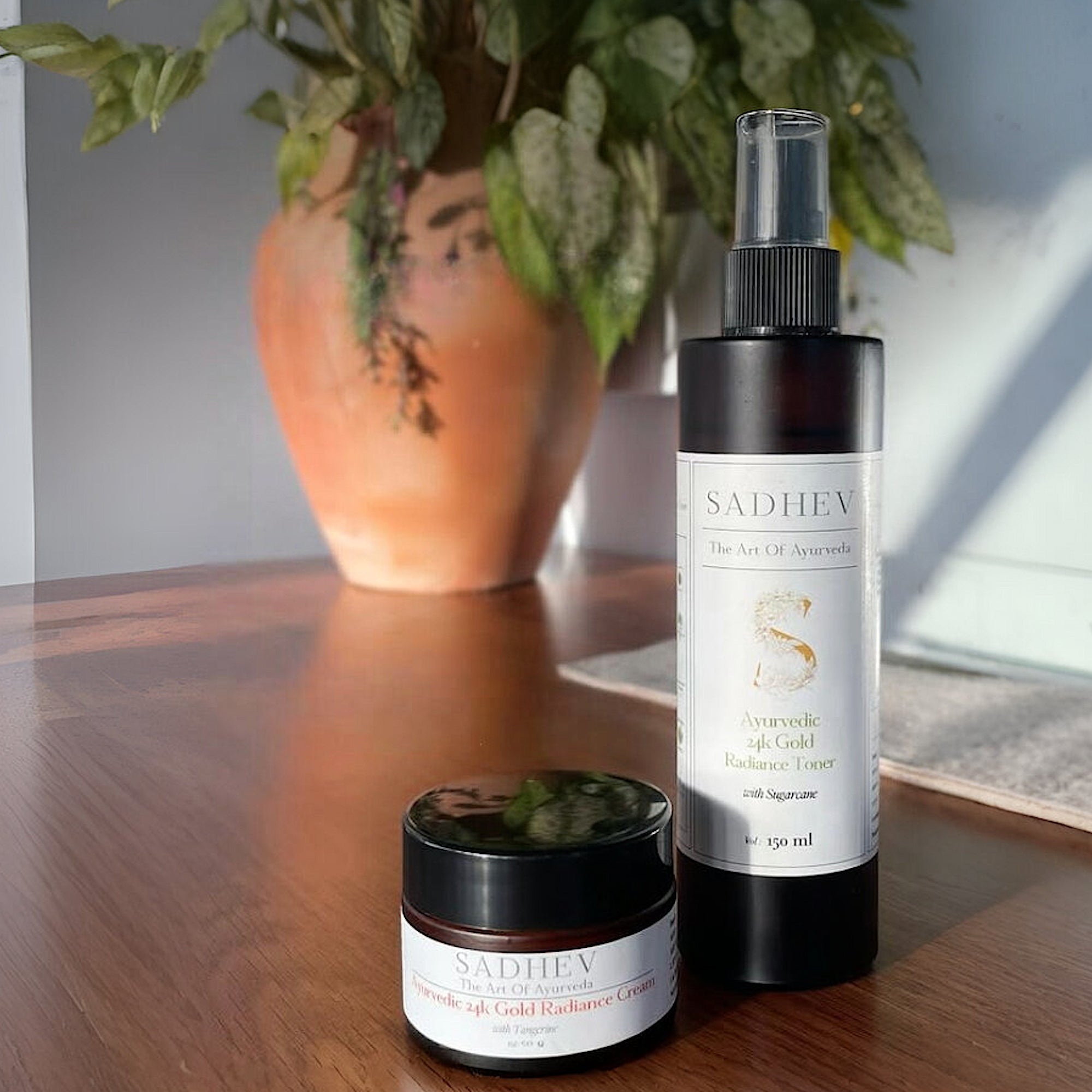
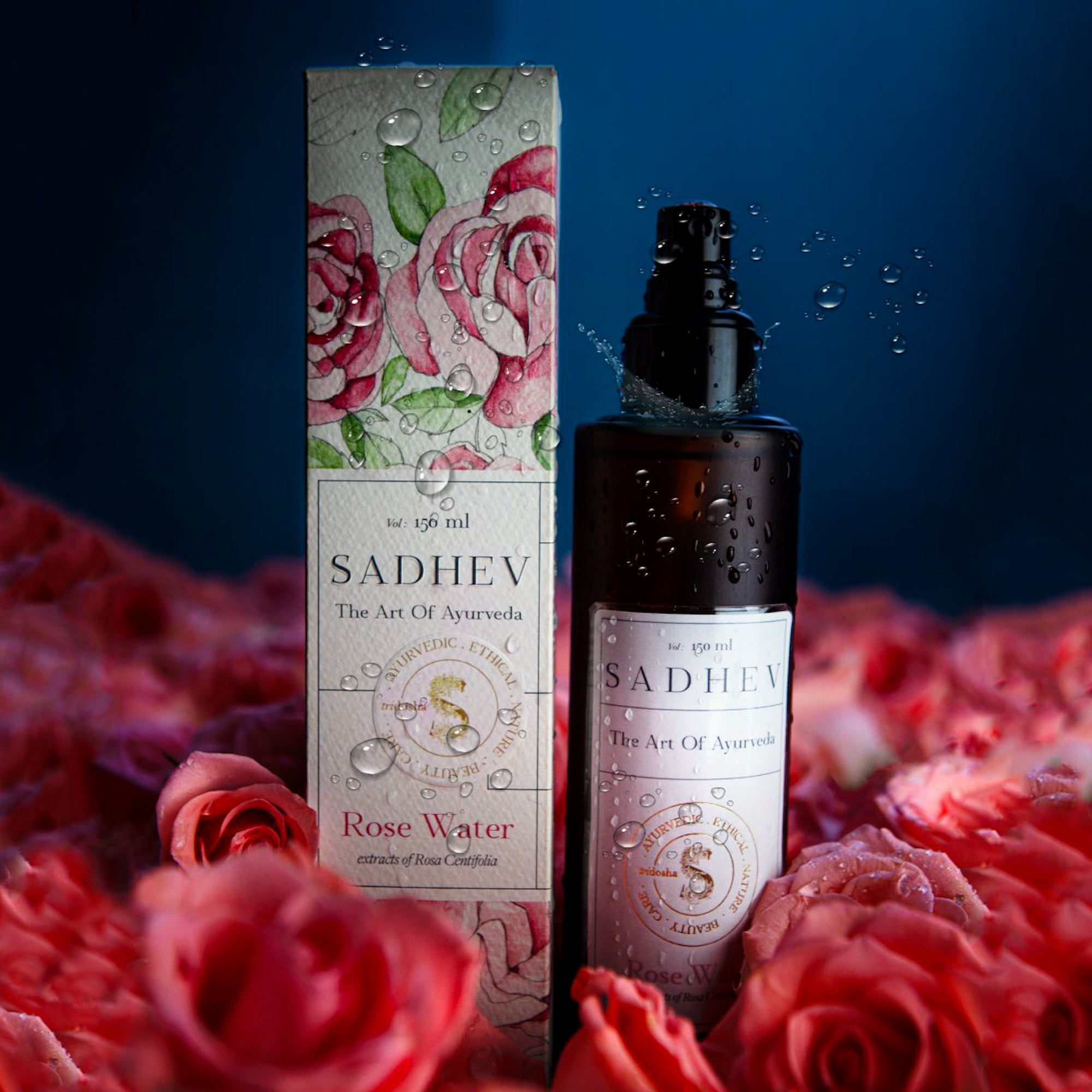
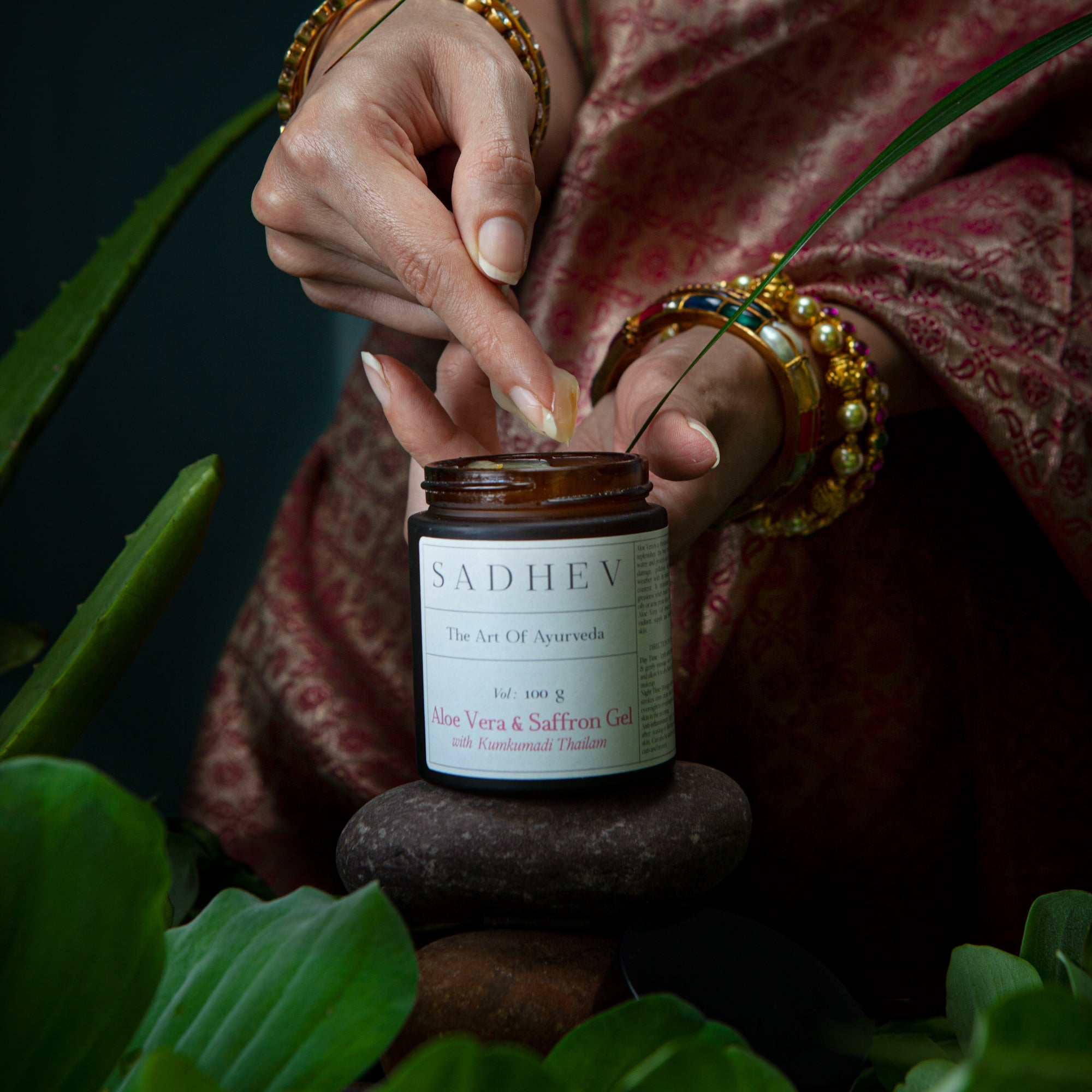
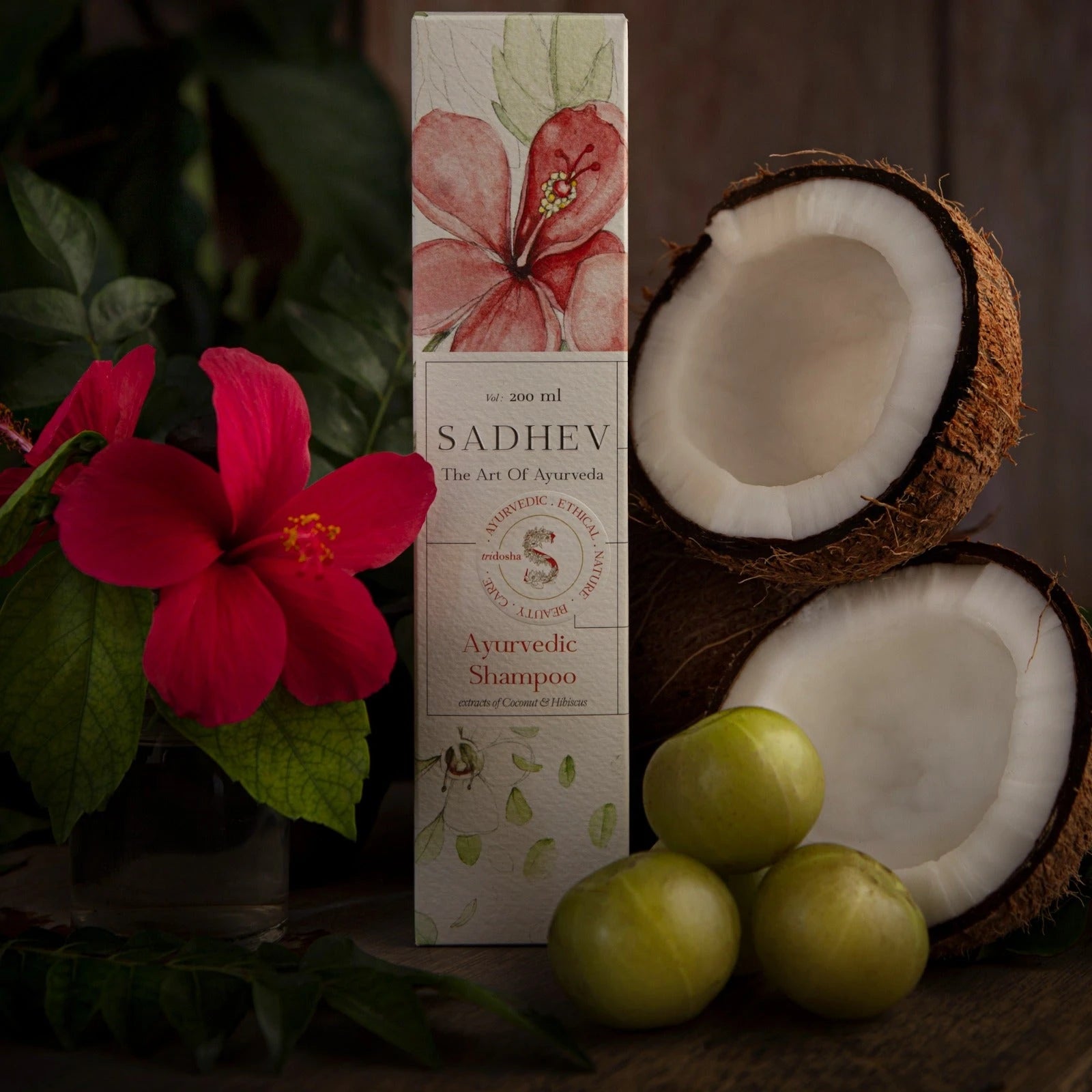

Rose water is one of those ingredients that appears everywhere. In grocery stores, in pharmacy skincare aisles, in premium beauty boutiques and in Ayurvedic formulations that are thousands of years old. The name is the same across all of them. The product is not.
There is a significant difference between rose water produced by mixing rose fragrance or rose extract with water — which is what most mass-market rose waters are — and rose water produced by steam distilling fresh rose petals, which captures not just the fragrance but the full spectrum of therapeutic compounds present in the flower. Ayurveda has always used the latter. And it has done so with a specific type of rose.
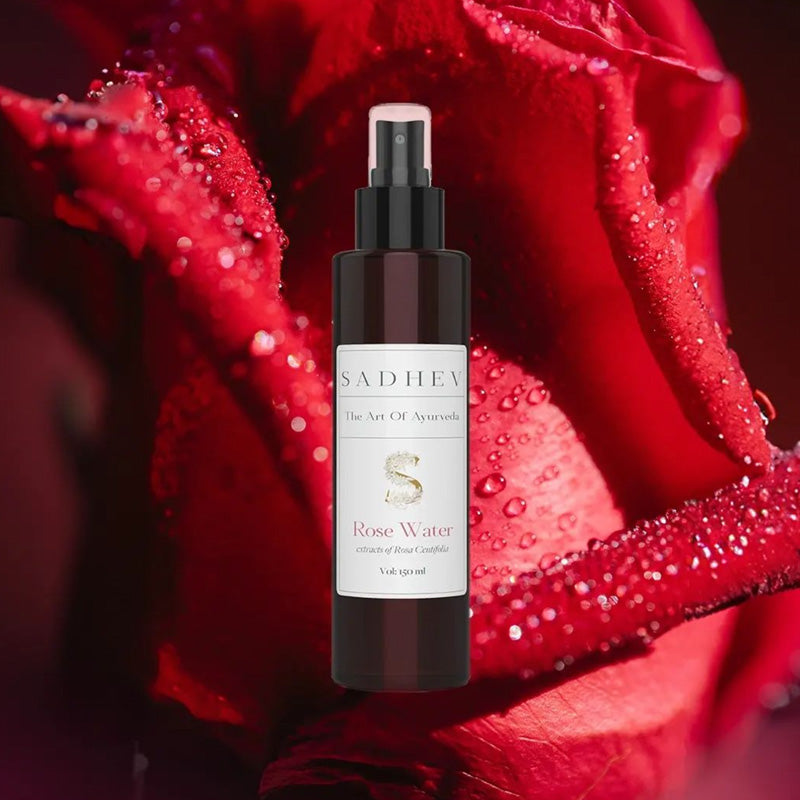
SADHEV’s Rose Water is steam-distilled from Centifolia roses — the hundred-petalled rose that has been used in classical Ayurvedic and perfumery traditions for centuries for the complexity and potency of its aromatic and therapeutic compounds. Understanding what makes this specific rose and this specific production method different is the first step to understanding what rose water can actually do for skin.
|
“Rose water in Ayurveda is not a fragrance ingredient. It is a therapeutic toner with documented actions on skin pH, hydration and inflammation that have been observed and refined across thousands of years of vaidyar practice.” |
The Centifolia Rose — Why the Variety Matters
Not all roses produce rose water of equal quality. The therapeutic properties of rose water depend on the concentration and profile of the active compounds in the petals — primarily rose oxide, geraniol, citronellol, nerol, linalool and a range of phenylethyl alcohol compounds that are responsible for both the fragrance and the skin-active effects.
Rosa centifolia — the Centifolia or cabbage rose — is recognised across Ayurvedic, Persian and European botanical traditions as producing petals with an exceptionally rich concentration of these compounds. Its hundred petals, dense and layered, yield a rose water through steam distillation that is significantly more concentrated in active compounds than rose water produced from lower-grade varieties.
SADHEV sources Centifolia roses from Bulgaria — one of the world’s most established rose-growing regions, where the climate, soil and centuries of cultivation expertise produce roses of consistent, traceable quality. This sourcing decision follows the same principle that governs every ingredient SADHEV uses: true origin, peak quality, verified provenance.
Steam Distillation — Why the Production Method Matters
The production method determines what ends up in the bottle. Steam distillation passes steam through fresh rose petals, causing the aromatic and therapeutic compounds to vaporise. This vapour is then condensed back into liquid form, producing a rose water that contains the full hydrophilic compound profile of the fresh flower.
Rose water produced by dissolving rose extract or synthetic fragrance in water contains none of these compounds. It smells of rose. It does not behave like rose water. The skin cannot tell the difference between a molecule present in the flower and a synthetic analogue by fragrance alone, but it can tell the difference in terms of how it responds therapeutically.
Steam-distilled rose water is what Ayurveda has always used. The classical texts that document its therapeutic actions were written about the steam-distilled product. When those actions are attributed to rose water today, they apply to the steam-distilled version. SADHEV’s Rose Water is steam-distilled from fresh Centifolia petals. No shortcuts. No synthetic fragrance. No alcohol.
|
“The difference between steam-distilled rose water and fragrance-water is the difference between a therapeutic toner and a pleasant mist. The skin knows.” |
What Rose Water Actually Does for Skin
Restores and Maintains pH Balance
The skin’s surface has a naturally slightly acidic pH of between 4.5 and 5.5. This acidity is not incidental — it is the environment in which the skin’s protective microbiome thrives and in which its enzyme systems function correctly. Cleansing disrupts this pH, temporarily making the skin more alkaline. A toner applied after cleansing restores the pH to its natural range before the next skincare step is applied.
Steam-distilled rose water has a natural pH of between 4.0 and 4.5 — slightly more acidic than the skin’s surface, which means it gently restores the skin’s natural acidity after cleansing without overshooting. This pH-restoring action is one of the primary reasons Ayurveda uses rose water as the step between cleansing and treatment. It is not a cosmetic extra. It is a preparation step that makes everything that follows more effective.
Hydrates and Supports the Moisture Barrier
Rose water acts as a humectant — it draws moisture to the skin’s surface and helps retain it. The phenylethyl alcohol and other compounds in steam-distilled rose water interact with the skin’s surface in a way that supports the moisture barrier rather than disrupting it. Applied after cleansing and before a serum or moisturiser, rose water adds a layer of hydration that the subsequent products then seal in, producing a more sustained hydrating effect than either alone would achieve.
This is the classical Ayurvedic sequencing: cleanse, tone with rose water, treat, moisturise. Each step amplifies the next. The rose water is not optional in this sequence. It is the preparation that makes the treatment step more effective.
For the complete Ayurvedic skincare routine that shows exactly how rose water fits into the morning and evening sequence, see our Ayurvedic skincare routine guide.
Soothes Inflammation and Reduces Redness
Rose water has well-documented anti-inflammatory properties. The compounds in steam-distilled Centifolia rose water — particularly geraniol, citronellol and rose oxide — inhibit inflammatory pathways in the skin, reducing redness, calming reactive skin and supporting recovery from irritation caused by environmental exposure, shaving, cleansing or sensitivity.
This is the action that makes rose water particularly valuable for Pitta-type skin in classical Ayurveda — skin that tends to be warm, sensitive and reactive. The cooling, soothing properties of rose water address the Pitta excess that drives skin inflammation, providing relief without the heaviness of thicker, oil-based soothing products. It is also the reason rose water has been used in classical Ayurveda for eye care and for calming skin after sun exposure.
Tightens Pores and Controls Excess Oil
Rose water has a natural mild astringent action that temporarily tightens the appearance of pores and controls excess sebum production on the skin’s surface. Applied after cleansing, this action removes any residual impurities the cleanser has loosened but not fully removed, tightens the pore opening and creates a smooth, refined skin surface for the application of serums and moisturisers.
For oily and combination skin, this astringent action is particularly valuable. It reduces the oily shine that can develop through the day without stripping the skin’s natural oils or disrupting its moisture balance. A light application of rose water to the face mid-day — after makeup if worn — refreshes the skin and controls oiliness without disturbing the skincare layers underneath.
Antioxidant Protection
The phenolic compounds in steam-distilled rose water provide antioxidant protection to the skin’s surface, neutralising free radicals before they can cause oxidative damage to skin cells. This protection is most relevant in the morning routine when the skin is about to face UV exposure and environmental pollution. Rose water applied after cleansing and before serum and sunscreen adds an antioxidant layer that works in synergy with the protection provided by those subsequent products.
Supports the Microbiome
The skin’s surface microbiome — the community of beneficial microorganisms that live on the skin and contribute to its health, immunity and barrier function — thrives at the skin’s naturally acidic pH. Products that disrupt this pH — alkaline soaps, harsh toners containing alcohol — disrupt the microbiome, potentially leading to sensitivity, breakouts and barrier compromise over time.
Steam-distilled rose water, with its natural pH in the skin’s healthy range and its absence of alcohol or synthetic preservatives, supports rather than disrupts the microbiome. This is one of the reasons classical Ayurveda uses rose water as a foundational toning step rather than more aggressive astringents — it prepares the skin without harming the ecosystem that protects it.
|
“Rose water does not do one thing for skin. It does several things simultaneously — pH restoration, hydration, soothing, astringency and antioxidant protection — in a single, gentle step.” |
How to Use SADHEV Rose Water Correctly
Rose water is most effective when applied to freshly cleansed skin that is still slightly damp — either by spraying directly onto the face or by applying with clean hands using gentle pressing motions. Do not rub. Allow it to absorb for thirty seconds before applying the next step.
In the morning, rose water is applied after cleansing and before the Vitamin C serum and moisturiser. In the evening, it is applied after cleansing and before the under eye gel and Kumkumadi Tailam. In both cases it serves the same function: restoring pH, adding hydration and preparing the skin surface for optimal absorption of what follows.
SADHEV’s Rose Water contains no alcohol — which means it can be used as frequently as needed without the drying effect that alcohol-based toners produce. It can also be used as a mid-day refresh spray over makeup, as a cooling mist during warm weather and as a gentle soothing application on irritated or sunburned skin.
SADHEV Rose Water is used as the toning step in our complete Ayurvedic skincare routine. For the full morning and evening sequence in which it appears, read our skincare routine guide.
Why Ayurveda Has Always Used Rose Water
Classical Ayurvedic texts document rose — known as Shatapatri, meaning the hundred-petalled flower — as cooling, soothing and beneficial to both the skin and the mind. Its use in toning preparations, eye care and cooling treatments for Pitta conditions is documented across multiple classical texts and represents thousands of years of consistent clinical observation by vaidyar practitioners.
The modern understanding of rose water’s mechanisms — its pH-balancing effect, its anti-inflammatory compounds, its astringent action, its microbiome-supporting properties — explains precisely what the classical practitioners were observing. They did not have the chemistry to describe it in those terms. They had something equally valuable: generations of accumulated observation that produced reliable, reproducible results across different patients and different skin conditions.
SADHEV’s Rose Water carries that lineage forward. Steam-distilled from Centifolia roses, formulated without alcohol or synthetic additives, it is rose water as Ayurveda has always understood it — not a fragrance product dressed in botanical language, but a therapeutic toner with a documented history of efficacy that stretches back further than any clinical trial.
SADHEV. Luxury Ayurvedic Care. Ayurveda in our bloodline.
Experience SADHEV Rose Water — steam-distilled from Centifolia roses, alcohol-free, rooted in a 200-year Ayurvedic lineage. Shop SADHEV Rose Water or explore the full SADHEV Ayurvedic skincare range.
— Written by SADHEV Ayurvedic Experts, rooted in a 200-year vaidyar lineage.


